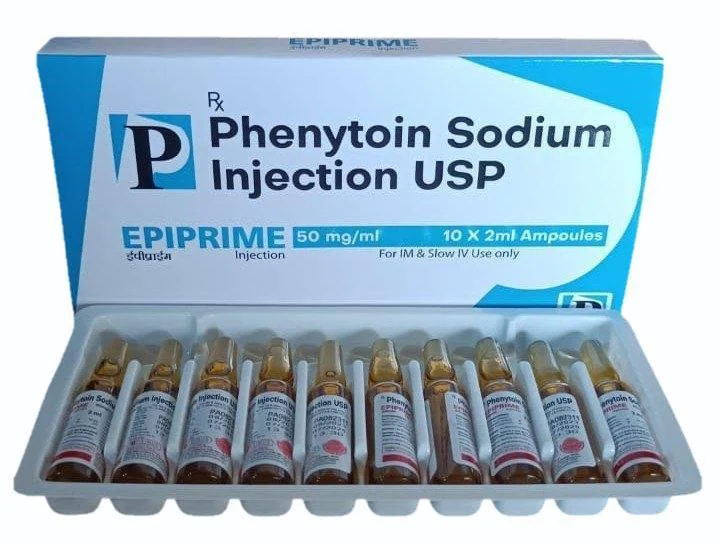
Route: Intravenous (IV) or Intramuscular (IM) (IV preferred for emergencies)
Indication:
Control of status epilepticus (prolonged or repeated seizures)
Prevention and treatment of seizures during neurosurgery
Second-line therapy for tonic-clonic (grand mal) and complex partial seizures when oral therapy is not feasible
2. Nature of the Medicine
Category: Anticonvulsant / Antiepileptic
Mechanism of Action: Stabilizes neuronal membranes and decreases seizure activity by altering sodium ion transport and increasing the threshold for electrical excitation in the motor cortex.
3. Advantages
Rapid onset of action, especially useful in emergency settings
Effective for acute management of life-threatening seizures
Long duration of action compared to some other IV antiepileptics
4. Common Packaging
Vial: Glass ampoule or vial
Concentration: 50 mg/mL
Volume per vial: Typically 2 mL or 5 mL (100 mg or 250 mg per vial)
Presentation: Single-dose vial
5. Storage Conditions
Temperature: Store below 25°C (77°F); do not refrigerate
Light Protection: Protect from light
Stability: Avoid freezing; precipitation may occur if stored improperly
6. Patient Advice
This injection is usually given in a hospital under medical supervision.
Inform healthcare providers about:
Allergies (especially to phenytoin or other hydantoins)
Liver or heart conditions
Use of other medications (as phenytoin has many drug interactions)
Do not attempt self-administration.
Possible side effects may include:
Dizziness, drowsiness
Irritation at injection site
Hypotension (low blood pressure)
Arrhythmias (irregular heartbeat)
Report immediately if you experience:
Skin rash, fever, swollen glands (signs of hypersensitivity)