
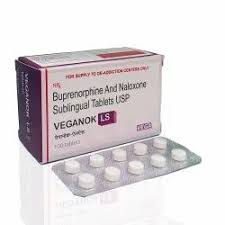
Here is the clinical profile of Buprenorphine (0.4 mg) + Naloxone (0.1 mg) Sublingual Tablet — without brand names:
💊 Buprenorphine 0.4 mg + Naloxone 0.1 mg (Sublingual Tablet)
✅ DESCRIPTION
This is a combination sublingual tablet used primarily in the treatment of opioid dependence.
- Buprenorphine is a partial opioid agonist, reducing cravings and withdrawal.
- Naloxone is an opioid antagonist, included to prevent misuse by injection.
When taken sublingually as directed, naloxone has minimal effect. If injected, it blocks opioid effects and may precipitate withdrawal — discouraging abuse.
🧪 FORMULATION
- Active Ingredients:
- Buprenorphine hydrochloride – 0.4 mg
- Naloxone hydrochloride – 0.1 mg
- Form: Sublingual tablet
- Route: Sublingual (under the tongue)
🌿 NATURE
- Buprenorphine: Partial µ-opioid receptor agonist & κ-receptor antagonist
- Naloxone: Pure opioid antagonist (competitive blocker at µ-receptors)
📌 USES
- Maintenance therapy for opioid dependence
- Detoxification phase for opioid use disorder
- Helps reduce illicit opioid use by stabilizing the patient
🌟 ADVANTAGES
- Lower abuse potential than buprenorphine alone
- Reduces withdrawal symptoms and cravings
- Naloxone deters IV abuse
- Can be administered in outpatient settings under supervision
- Lower risk of respiratory depression than full opioid agonists
⚠️ PRECAUTIONS
Common Side Effects:
- Headache, insomnia, dizziness
- Sweating, constipation, nausea
- Anxiety, depression, dry mouth
Serious Risks:
- Respiratory depression (especially with sedatives/alcohol)
- Hepatic impairment
- Precipitated withdrawal if started too early
- Risk of misuse if not monitored
❌ CONTRAINDICATIONS
- Known hypersensitivity to either component
- Severe respiratory depression
- Acute alcohol, benzodiazepine, or barbiturate intoxication
👩⚕️ USE IN SPECIAL POPULATIONS
- Pregnancy: Use only if benefits outweigh risks — may cause neonatal opioid withdrawal
- Breastfeeding: Monitor infant; low levels in breast milk
- Children: Not approved below 16 years
- Elderly: Use with caution due to altered metabolism
🔄 INTERACTIONS
- CNS depressants (alcohol, benzodiazepines, antipsychotics) → ↑ risk of respiratory depression
- CYP3A4 inhibitors (e.g. erythromycin) → ↑ buprenorphine levels
- CYP3A4 inducers → ↓ effectiveness
- May interact with antidepressants and antihypertensives
💡 ADMINISTRATION ADVICE
- Place under the tongue and let dissolve fully
- Do not chew, swallow, or inject
- Avoid eating or drinking until dissolved
- Initial dosing should be supervised
- Use with caution in opioid-naive patients
🧊 STORAGE
- Store at 20–25°C (68–77°F)
- Protect from light and moisture
- Controlled substance – secure storage mandatory
- Keep away from children