
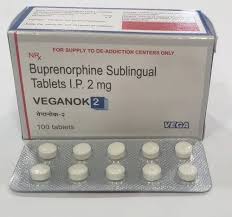
Here is the detailed profile of the Buprenorphine 2 mg + Naloxone 0.5 mg Sublingual Tablet — without brand names:
💊 Buprenorphine 2 mg + Naloxone 0.5 mg (Sublingual Tablet)
✅ DESCRIPTION
This fixed-dose combination is used for the treatment of opioid dependence.
- Buprenorphine: A partial opioid agonist, reduces cravings and withdrawal symptoms.
- Naloxone: An opioid antagonist, included to deter misuse (especially injection abuse).
When taken sublingually, naloxone has minimal activity, but if injected, it can precipitate withdrawal.
🧪 FORMULATION
- Buprenorphine hydrochloride equivalent to 2 mg
- Naloxone hydrochloride equivalent to 0.5 mg
- Dosage form: Sublingual tablet
- Route: Sublingual (under the tongue)
🌿 NATURE
- Buprenorphine: Partial µ-opioid receptor agonist; κ-receptor antagonist
- Naloxone: Competitive µ-opioid receptor antagonist
📌 USES
- Opioid dependence treatment, both initiation and maintenance
- Harm reduction by reducing illicit opioid use
- Helps patients transition to recovery under medical supervision
🌟 ADVANTAGES
- Reduces cravings and withdrawal without producing intense euphoria
- Naloxone prevents IV misuse
- Safer profile than full agonists (like morphine or heroin)
- May be used in outpatient-based de-addiction programs
⚠️ PRECAUTIONS
Common Side Effects:
- Headache, sweating, mouth numbness
- Sleep disturbances, constipation, nausea
- Anxiety or mood changes
Serious Risks:
- Respiratory depression (especially with CNS depressants)
- Liver function abnormalities
- Precipitated withdrawal if initiated too early after last opioid use
- Dependence and misuse if not monitored
❌ CONTRAINDICATIONS
- Allergy to buprenorphine or naloxone
- Severe respiratory or hepatic impairment
- Concurrent alcohol or sedative overdose
👩⚕️ SPECIAL POPULATIONS
- Pregnancy: Use with caution — may cause neonatal withdrawal
- Breastfeeding: Buprenorphine may pass into milk in small amounts
- Elderly: Dose adjustment may be needed
- Pediatrics: Not recommended under 16 years
🔄 DRUG INTERACTIONS
- Alcohol, benzodiazepines, and CNS depressants → ↑ risk of sedation and respiratory depression
- CYP3A4 inhibitors (e.g., ketoconazole) → ↑ buprenorphine levels
- CYP3A4 inducers (e.g., carbamazepine) → ↓ effectiveness
- May interact with SSRIs, antihypertensives, and MAOIs
💡 ADMINISTRATION GUIDELINES
- Place tablet under the tongue until fully dissolved
- Do not chew, crush, swallow, or inject
- Avoid eating/drinking until absorption is complete
- First dose should be medically supervised
- Avoid abrupt discontinuation to prevent withdrawal
🧊 STORAGE
- Store at 20–25°C (68–77°F)
- Keep in original, moisture-resistant packaging
- Controlled substance – secure storage required
- Keep away from children