
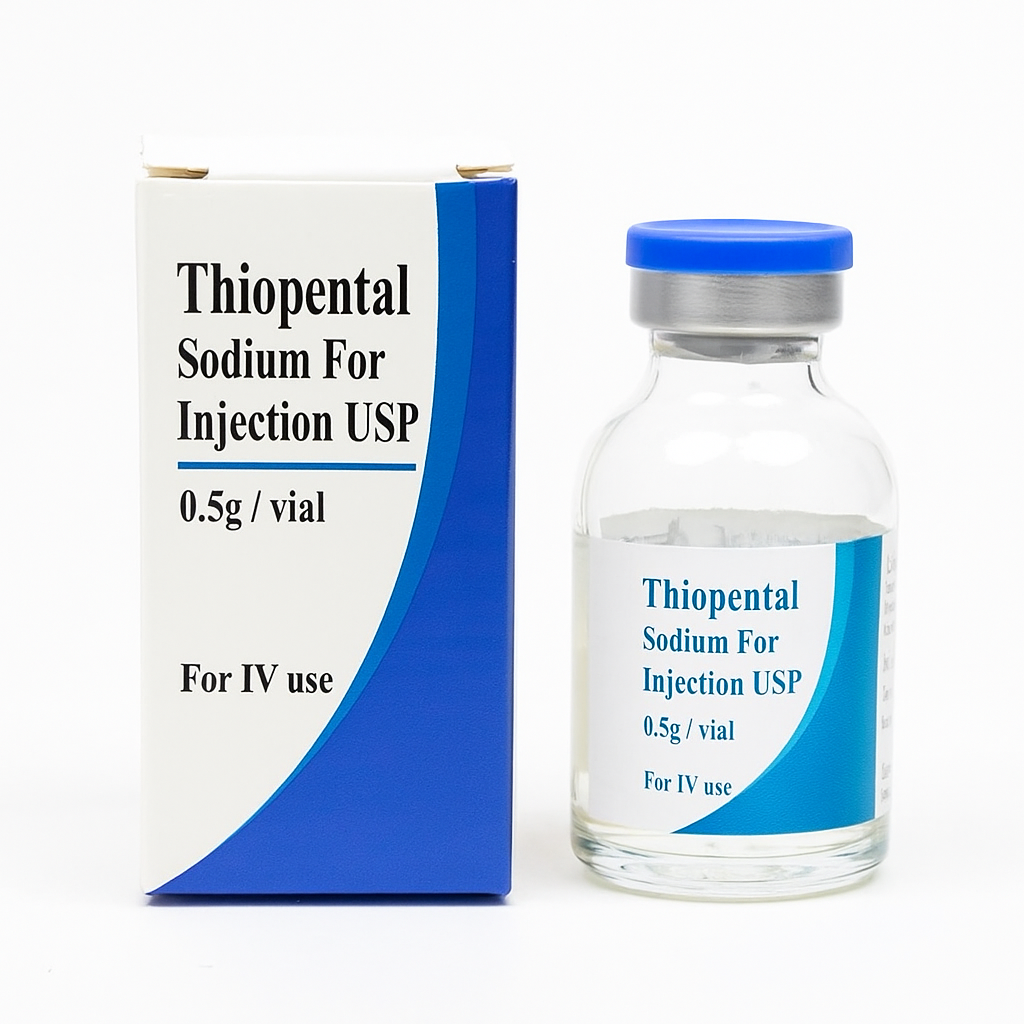
💉 Thiopentone Sodium Powder for Injection – 0.5 g
📝 Prescription Information
- Generic Name: Thiopentone Sodium (also known as Thiopental Sodium)
- Strength: 0.5 g (500 mg) per vial (to be reconstituted before use)
- Form: Sterile powder for injection (lyophilized)
- Reconstitution: Usually with sterile water to achieve desired concentration (e.g., 2.5% solution)
- Route: Intravenous (IV) only
- Class: Barbiturate – general anesthetic
- Schedule: Prescription-only (POM); controlled substance in some countries
💊 Uses
Thiopentone is a short-acting barbiturate used primarily for:
- Induction of general anesthesia
- Emergency control of seizures (status epilepticus)
- Reduction of intracranial pressure in head trauma
- Anesthesia in electroconvulsive therapy (ECT)
- Rapid sequence intubation (RSI) in emergency settings
- Barbiturate coma induction in neurocritical care (rare)
🌿 Nature of Thiopentone
- Physical Form: Yellowish-white sterile powder
- Solubility: Soluble in water (alkaline pH after reconstitution ~10–11)
- Onset of Action: Within 30 seconds of IV injection
- Duration: 5–10 minutes (anesthetic action)
- Metabolism: Hepatic, with redistribution from brain to fat and muscle
- Mechanism: Acts on GABA-A receptors, enhancing inhibitory neurotransmission
✅ Advantages
- Rapid Induction
- Provides fast onset of anesthesia — useful for intubation and emergencies.
- Short Duration
- Wears off quickly due to redistribution — useful for short procedures.
- Anticonvulsant Effect
- Effective in controlling seizures, especially status epilepticus.
- Reduces Intracranial Pressure
- Used in neurosurgical cases or severe head injuries.
- Inexpensive & Reliable
- Still widely used in resource-limited settings.
⚠️ Precautions
- Respiratory Depression
- Can cause apnea, especially with rapid administration — airway support essential.
- Hypotension
- Causes vasodilation and myocardial depression — use cautiously in hypovolemic patients.
- Intra-arterial Injection Risk
- Accidental intra-arterial injection can cause severe tissue necrosis and gangrene.
- Alkaline Solution Irritant
- The high-pH solution is irritating to tissues — ensure IV access is secure.
- Not Suitable for Maintenance
- Only for induction, not maintenance of anesthesia.
- Cumulative Effect
- With repeated doses or continuous infusion, accumulation can lead to prolonged sedation.
- Porphyria Risk
- Contraindicated in patients with acute intermittent porphyria.
- Allergic Reactions
- Rare, but possible — monitor for signs of anaphylaxis.
📦 Common Packaging
- Powder Vial: 0.5 g (500 mg) per vial
- Diluent: Sterile water (typically added to make 20 mL for a 2.5% solution)
- Storage:
- Store the powder below 25°C in a dry place
- Use the reconstituted solution within 24 hours (or as per manufacturer’s label)