
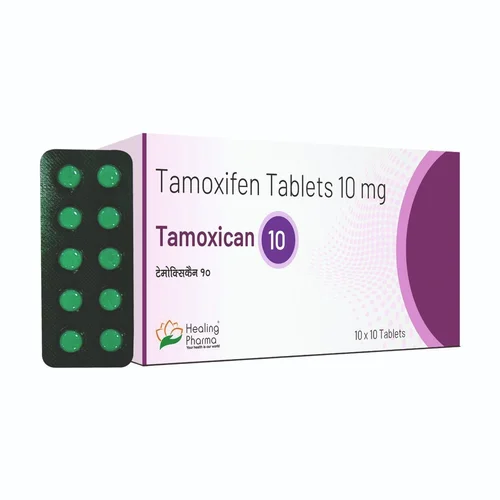
amoxifen Tablet 10 mg
1. WHAT IS IT?
Tamoxifen is an oral medication classified as a Selective Estrogen Receptor Modulator (SERM). This means it acts differently depending on the tissue type. In breast tissue, it primarily acts as an anti-estrogen, blocking the effects of estrogen, which can fuel the growth of certain breast cancers. In other tissues, like bone, it can act like estrogen. The 10 mg tablet is a common dosage for various indications.
2. NATURE (Pharmacology and Mechanism of Action)
- Classification: Selective Estrogen Receptor Modulator (SERM).
- Mechanism of Action:
- Anti-estrogenic in Breast Tissue: Tamoxifen binds to estrogen receptors in breast cancer cells, preventing natural estrogen from binding. This deprives the cancer cells of the estrogen they need to grow and multiply, thereby inhibiting tumor growth.
- Estrogenic in Other Tissues: In certain other tissues (e.g., bone), tamoxifen can have estrogen-like effects, which can be beneficial (e.g., helping to prevent bone loss in postmenopausal women). However, this estrogenic effect in other tissues, particularly the uterus, is also linked to some of its significant side effects.
- Metabolism: Tamoxifen is metabolized in the liver, primarily by CYP2D6 and CYP3A4 enzymes, into active metabolites, notably endoxifen, which contributes significantly to its anti-estrogenic effects.
3. ADVANTAGES
- Established Efficacy: Tamoxifen has been a cornerstone in hormone receptor-positive breast cancer treatment for decades, with extensive research demonstrating its effectiveness in reducing recurrence and improving survival.
- Broad Applicability: Effective in both premenopausal and postmenopausal women, as well as in men with hormone receptor-positive breast cancer. This distinguishes it from aromatase inhibitors, which are generally for postmenopausal women.
- Risk Reduction: Approved for reducing the risk of invasive breast cancer in high-risk women and preventing recurrence in individuals with ductal carcinoma in situ (DCIS) after surgery and radiation.
- Bone Benefits (in postmenopausal women): Can help prevent bone loss (osteoporosis) in postmenopausal women dueasting its estrogenic effect on bone.
- Cholesterol Lowering: May have a beneficial effect on cholesterol levels.
- Oral Administration: Convenient for long-term daily use.
4. USES (Common Indications for 10 mg strength)
Tamoxifen 10 mg is prescribed for:
- Adjuvant Treatment of Early Breast Cancer: For hormone receptor-positive breast cancer in both men and women, often following surgery, radiation, and/or chemotherapy, to reduce the risk of recurrence.
- Treatment of Advanced Breast Cancer: For metastatic breast cancer that is hormone receptor-positive.
- Ductal Carcinoma In Situ (DCIS): To reduce the risk of developing invasive breast cancer after surgery and radiation.
- Breast Cancer Risk Reduction: For women at high risk of developing breast cancer (e.g., strong family history, certain genetic mutations).
- Gynecomastia: Sometimes used off-label to treat or prevent male breast enlargement (gynecomastia), particularly in certain medical contexts.
- Infertility (Off-label in some regions): Historically used for ovulation induction, though its use for this purpose is restricted in some countries like India due to safety concerns.
5. PRECAUTIONS
Tamoxifen, while highly effective, carries important risks and precautions:
- Blood Clots (Venous Thromboembolism – VTE): Tamoxifen significantly increases the risk of serious blood clots, including Deep Vein Thrombosis (DVT) in the legs and Pulmonary Embolism (PE) in the lungs, which can be fatal.
- Symptoms to watch for: Sudden chest pain, shortness of breath, sudden cough, pain/swelling/warmth in one leg. Seek immediate medical attention.
- Risk factors: History of blood clots, prolonged immobility, recent surgery, obesity, advanced age.
- Uterine Cancer (Endometrial Cancer/Sarcoma): Tamoxifen increases the risk of developing uterine cancer due to its estrogenic effect on the uterine lining. This risk is higher with longer duration of use and in postmenopausal women.
- Symptoms to watch for: Unusual vaginal bleeding or discharge (especially in postmenopausal women), pelvic pain or pressure. Report these to your doctor immediately.
- Stroke: Increased risk of stroke, especially in postmenopausal women.
- Symptoms to watch for: Sudden numbness/weakness (especially on one side of the body), severe headache, slurred speech, vision problems, balance issues. Seek emergency medical attention.
- Pregnancy and Breastfeeding:
- Highly contraindicated in pregnancy. Can cause fetal harm.
- Women of reproductive potential must use effective non-hormonal contraception (e.g., condoms, diaphragm) during treatment and for at least 2 months (or longer, as advised by your doctor, e.g., 9 months) after stopping tamoxifen, due to its long half-life.
- Breastfeeding is not recommended as it’s unknown if tamoxifen passes into breast milk and could harm the baby.
- Liver Problems: Can cause changes in liver enzymes, fatty liver, and rarely, more severe liver damage. Liver function tests may be monitored.
- Eye Problems: Rare but can cause cataracts or retinal changes, leading to blurred vision or other visual disturbances. Regular eye exams are advisable.
- Drug Interactions:
- Warfarin (blood thinner): Tamoxifen can increase the effect of warfarin, leading to increased bleeding risk. Close monitoring of INR is essential.
- Certain Antidepressants (SSRIs): Some antidepressants (e.g., paroxetine, fluoxetine) can inhibit the CYP2D6 enzyme, which is crucial for converting tamoxifen into its active metabolite, endoxifen. This can reduce tamoxifen’s effectiveness. Discuss all medications with your doctor.
- Grapefruit Juice/Seville Oranges: May interfere with tamoxifen metabolism. Avoid or limit consumption.
- Herbal Supplements: Certain supplements like black cohosh, turmeric (curcumin in high doses), and St. John’s Wort may interact. Always inform your doctor about all supplements.
- Bone Pain/Tumor Flare: Some patients, especially those with metastatic disease, may experience a temporary increase in bone or tumor pain when starting tamoxifen due to an initial “flare” effect.
- Ovarian Cysts: Can occur in premenopausal women.
6. STORAGE
- Store Tamoxifen tablets at room temperature (typically 20°C to 25°C or 68°F to 77°F).
- Keep in the original container, protected from moisture, heat, and direct light.
- Do not refrigerate or freeze.
- Keep out of reach of children.