
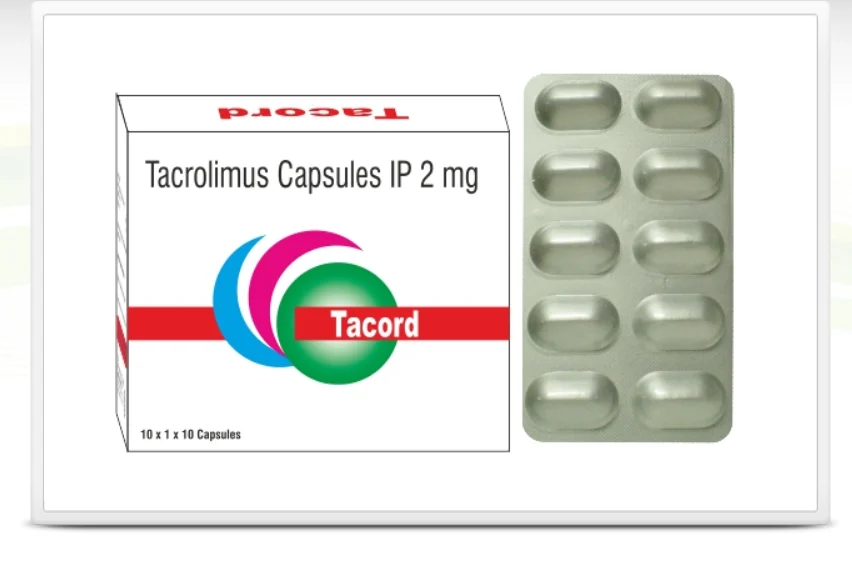
Description:
- Tacrolimus 2 mg capsules are hard gelatin capsules containing 2 milligrams of the active ingredient, tacrolimus.
- Like other strengths, the appearance (color, markings) can vary by manufacturer (e.g., Prograf, Hecoria, or generic versions).
- It is a macrolide immunosuppressant and a calcineurin inhibitor. It works by targeting calcineurin, an enzyme essential for the activation of T-lymphocytes, which are key immune cells responsible for recognizing and attacking foreign (transplanted) organs. By inhibiting this process, tacrolimus helps the body accept the new organ.
Advantages/Benefits:
- Effective Organ Rejection Prophylaxis: Crucial for preventing the immune system from attacking and rejecting a transplanted organ (kidney, liver, heart, lung).
- Flexible Dosing: The availability of a 2 mg capsule, along with other strengths (0.5 mg, 1 mg, 5 mg), provides healthcare providers with the flexibility to fine-tune the dosage to achieve optimal therapeutic tacrolimus levels in the blood, which is vital for both efficacy and minimizing side effects.
- Improved Graft Survival: Contributes significantly to the long-term success and survival of the transplanted organ.
Uses:
- Primary Indication: Prevention of organ rejection in patients who have received an allogeneic (from a donor) organ transplant, including:
- Kidney transplant
- Liver transplant
- Heart transplant
- Lung transplant
- Treatment of Rejection: Can also be used to treat episodes of organ rejection.
- Off-label Uses (under strict medical supervision): May be used for certain severe autoimmune diseases or conditions where strong immunosuppression is required, such as:
- Crohn’s disease (especially fistulizing)
- Graft-versus-host disease (GVHD) following bone marrow transplant
- Severe atopic dermatitis (though topical forms are more common for skin conditions)
- Other inflammatory conditions resistant to conventional therapies.
Nature:
- Potent Immunosuppressant: It significantly weakens the body’s immune response.
- Calcineurin Inhibitor: Its specific mechanism involves inhibiting calcineurin, thereby preventing T-cell activation.
- Narrow Therapeutic Index Drug: This is a critical characteristic. The difference between an effective dose and a toxic dose is small. This necessitates rigorous therapeutic drug monitoring (TDM), involving frequent blood tests to measure tacrolimus trough levels (the lowest concentration of the drug in the blood, usually just before the next dose). The target range for tacrolimus levels varies depending on the type of organ transplanted and the time since transplantation.
- Oral Administration: Designed to be taken by mouth.
- Not Interchangeable with Extended-Release Forms: It is crucial to note that immediate-release tacrolimus capsules (like the 2 mg capsule) are NOT interchangeable with extended-release tacrolimus formulations (e.g., Astagraf XL, Envarsus XR). These different formulations have different absorption profiles and dosing schedules, and switching between them must only be done under strict physician supervision.
Storage:
- Store below 30°C (86°F): Keep the capsules at room temperature.
- Protect from light and moisture: Store in the original blister pack or container, away from direct sunlight, excessive heat, and humidity.
- Keep out of reach of children: Always ensure all medications are stored safely away from children.
- Swallow whole: Do not crush, chew, or open the capsules.
- Proper Disposal: Dispose of any unused or expired medication according to local guidelines, often through pharmacy take-back programs.