
✅ Generic Name:
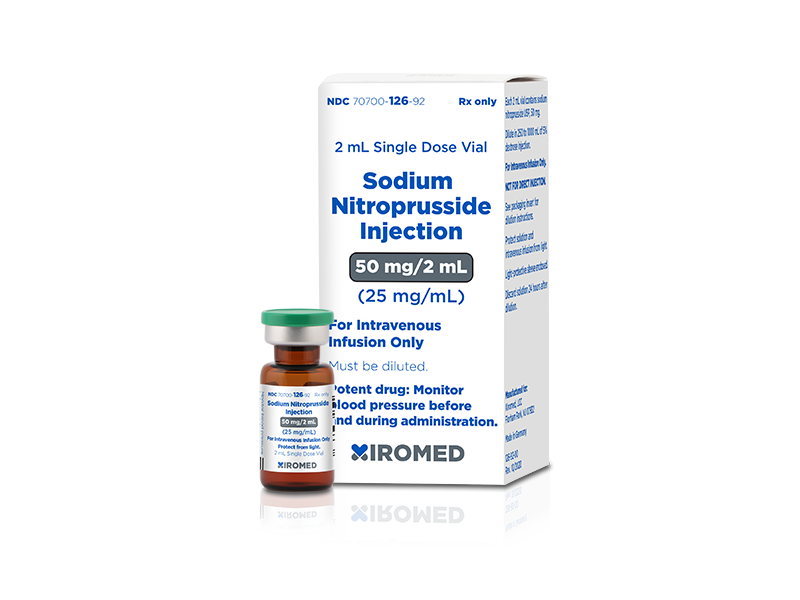
Sodium Nitroprusside Injection 10 mg/mL
✅ Prescription Status:
Prescription-only (Rx) – Must be administered in a hospital setting under medical supervision.
📄 Description:
Sodium nitroprusside is a potent vasodilator used in emergencies to rapidly lower blood pressure. It is supplied as a sterile, light-sensitive solution, typically in amber glass vials or ampoules. Each mL contains 10 mg of sodium nitroprusside.
🌿 Nature / Drug Class:
- Pharmacologic Class: Vasodilator
- Therapeutic Class: Antihypertensive
- Mechanism of Action:
- Releases nitric oxide, which activates guanylate cyclase, increasing cyclic GMP in vascular smooth muscle
- Results in direct relaxation of arterioles and venules, causing reduced preload and afterload, and thus lowered blood pressure
🎯 Purpose / Indications:
- Hypertensive emergencies (immediate BP control)
- Acute heart failure with high systemic vascular resistance
- Controlled hypotension during surgery (to reduce bleeding)
- Aortic dissection (along with beta-blockers)
✅ Advantages:
- Very rapid onset (within 30 seconds)
- Easily titratable (dose can be adjusted minute-to-minute)
- Controls both arterial and venous tone
- Short duration of action – effects disappear within 1–10 minutes of stopping infusion
- Useful in critical care and surgical settings
📦 Common Packaging:
- Glass ampoules or vials (typically amber-colored to protect from light)
- Volume: 2 mL, 5 mL, or 10 mL
- Concentration: 10 mg/mL (must be diluted before use)
- Labeled: “Protect from light”
❄️ Storage Conditions:
- Protect from light (decomposes when exposed – forms toxic byproducts)
- Store at 2°C to 8°C (refrigerated) until use
- Use diluted solution immediately; discard unused portion after preparation
- Do not use if solution turns blue, green, or red (indicates degradation)
👨⚕️ Patient Advice / Precautions (for clinicians):
- Administer by IV infusion only (never as a bolus)
- Continuous blood pressure monitoring is required
- Dilute only in 5% dextrose before use
- Start infusion slowly, and adjust based on response
- Monitor for:
- Excessive hypotension
- Cyanide toxicity (especially with prolonged use, high doses, or impaired renal function)
- Thiocyanate toxicity with long infusions
- Avoid prolonged use (>48 hours) unless absolutely necessary
- Co-administer sodium thiosulfate if needed to prevent cyanide accumulation
⚠️ Special Precautions:
- Contraindicated in:
- Compensatory hypertension (e.g., due to AV shunt or coarctation)
- Hypotension, vitamin B12 deficiency, or Leber’s optic atrophy
- Pregnancy Category C – use only if clearly needed
- Requires intensive care setting with trained personnel