
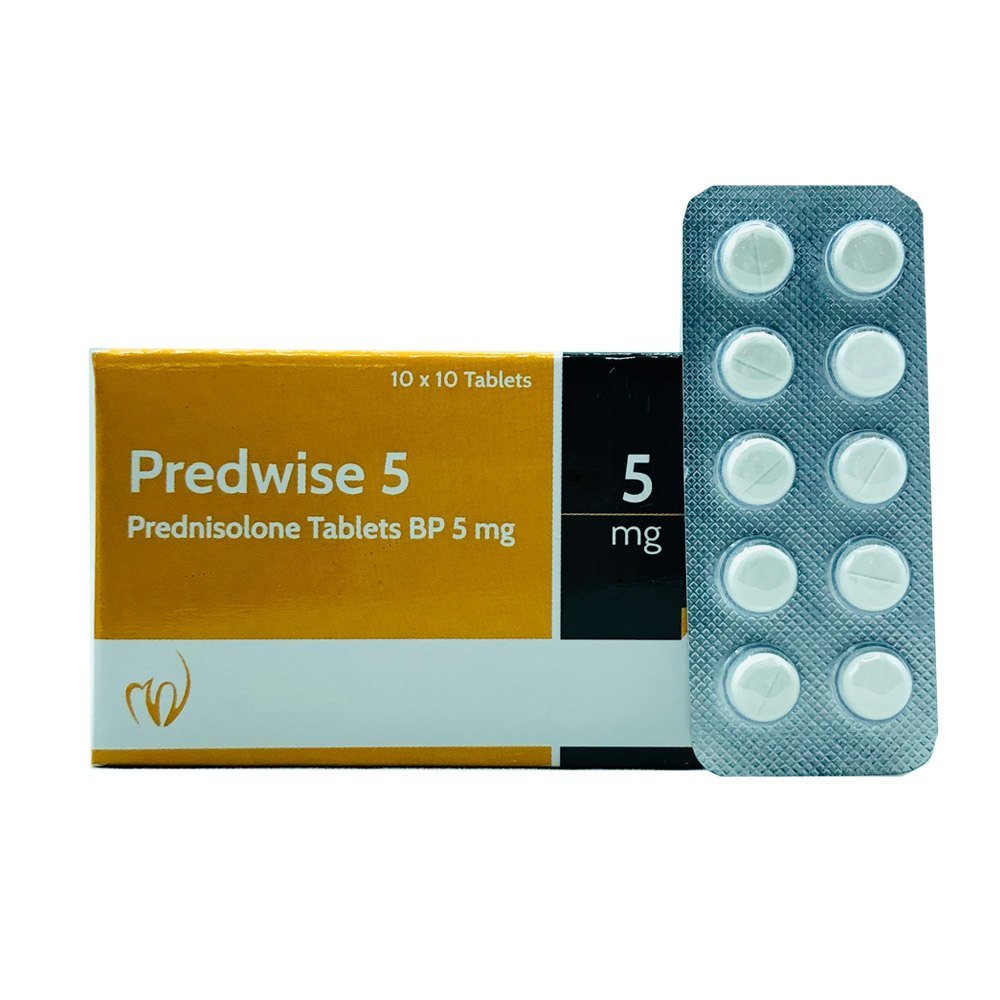
💊 Prednisolone Tablet 5 mg – As Licensed
📄 Description:
Prednisolone is a synthetic glucocorticoid corticosteroid used to treat a variety of inflammatory, autoimmune, and allergic disorders. The 5 mg tablet is a commonly prescribed oral dose for both acute and chronic conditions.
💊 Prescription / Use:
- Indications:
- Bronchial asthma, COPD
- Rheumatoid arthritis, lupus (SLE)
- Inflammatory bowel disease (Crohn’s disease, ulcerative colitis)
- Nephrotic syndrome
- Severe allergic reactions (e.g., angioedema)
- Skin conditions (eczema, psoriasis)
- Cancers (as part of chemotherapy protocols)
- Adrenal insufficiency (as replacement therapy)
- Dosage (Adults):
- Varies widely depending on the condition
- Maintenance dose: 5–15 mg/day
- Acute treatment: 20–60 mg/day initially, then tapered
- Always under medical supervision
🔬 Nature:
- Drug class: Glucocorticoid corticosteroid
- Form: Oral tablet
- Strength: 5 mg
- Route: Oral
- Onset of action: Within hours
- Duration: Intermediate-acting steroid (12–36 hours)
🌟 Advantages:
- Effective anti-inflammatory and immunosuppressive agent
- Well absorbed orally
- Flexible dosing for short-term or long-term use
- Inexpensive and widely available
- Useful across multiple medical specialties
📦 Common Packaging:
- Blister packs or strips
- Typically available in 10, 15, 30, or 100 tablets per pack
- Each tablet clearly marked and scored for dose splitting if needed
- Label includes strength, batch, expiry, and manufacturer
🧊 Storage:
- Store at room temperature (15–25°C)
- Keep away from moisture and light
- Store in original packaging
- Keep out of reach of children
⚠️ Precautions:
- Use with caution in patients with:
- Diabetes (may raise blood sugar)
- Hypertension
- Osteoporosis
- Peptic ulcer disease
- Active infections (especially TB, fungal infections)
- Glaucoma or cataracts
- Common side effects (especially with prolonged use):
- Weight gain, bloating
- Mood swings, anxiety, insomnia
- Elevated blood sugar or blood pressure
- Muscle weakness
- Increased risk of infections
- Gastric irritation or ulcers
- Skin thinning, delayed wound healing
👩⚕️ Patient Advice:
- Take exactly as prescribed — do not self-adjust dose
- Take with food to reduce stomach upset
- Do not stop suddenly if used for more than a few days — taper gradually
- Monitor for side effects like swelling, mood changes, vision issues
- If diabetic, monitor blood sugar more frequently
- Avoid contact with sick individuals — increased infection risk
- Carry a Steroid Alert Card if on long-term therapy
- Inform all healthcare providers (including dentists) about steroid use
- Report any persistent fever, pain, or swelling to your doctor