
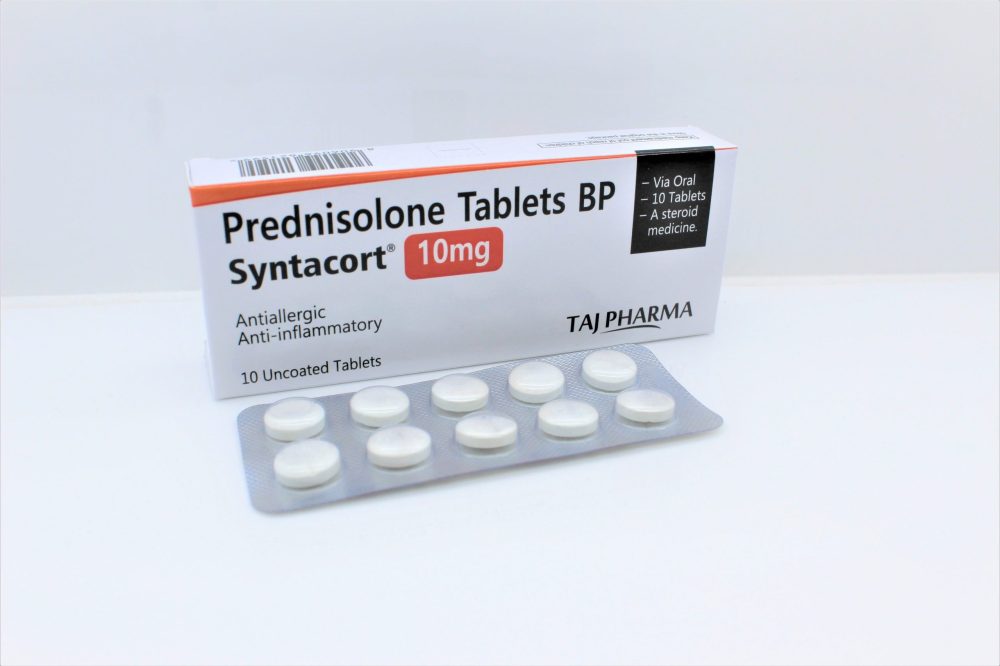
Prednisolone Tablet 10 mg is a widely used corticosteroid medication. Here’s a comprehensive overview:
Prednisolone Tablet 10 mg
1. WHAT IS IT?
Prednisolone is a synthetic corticosteroid, often referred to simply as a “steroid.” It mimics the effects of cortisol, a hormone naturally produced by the adrenal glands. The 10 mg tablet is an oral dosage form. It’s crucial to distinguish it from anabolic steroids, which are used for muscle building and have different effects.
2. NATURE (Pharmacology and Mechanism of Action)
- Classification: Prednisolone belongs to the glucocorticoid class of corticosteroids.
- Mechanism of Action:
- Anti-inflammatory: It works by reducing the body’s inflammatory response. It suppresses the release of substances in the body that cause inflammation (like prostaglandins and leukotrienes), thereby alleviating swelling, redness, pain, and itching.
- Immunosuppressive: It can suppress the immune system. This is beneficial in autoimmune diseases where the immune system mistakenly attacks the body’s own tissues.
- Replacement Therapy: In conditions where the body doesn’t produce enough natural corticosteroids (e.g., Addison’s disease), prednisolone acts as a replacement.
3. ADVANTAGES
- Broad Spectrum of Use: Effective in treating a wide variety of inflammatory and autoimmune conditions.
- Rapid Action: Can provide relatively quick relief from severe symptoms.
- Oral Administration: Convenient for most patients compared to injections.
- Versatile Dosing: Can be used for short-term bursts (e.g., for acute flare-ups) or long-term maintenance therapy, with doses adjusted by the doctor.
4. USES (Common Indications for 10 mg strength)
Prednisolone 10 mg is used to treat a vast array of conditions, including but not limited to:
- Allergic Reactions: Severe allergies, allergic rhinitis (hay fever), skin rashes (e.g., eczema, dermatitis), drug allergies.
- Inflammatory Conditions:
- Arthritis: Rheumatoid arthritis, psoriatic arthritis, gouty arthritis.
- Respiratory Diseases: Asthma, COPD exacerbations.
- Skin Diseases: Psoriasis, severe eczema.
- Eye Conditions: Inflammatory eye disorders (e.g., uveitis, optic neuritis).
- Gastrointestinal Diseases: Inflammatory bowel disease (Crohn’s disease, ulcerative colitis).
- Autoimmune Diseases: Systemic lupus erythematosus (lupus), multiple sclerosis (for flare-ups), vasculitis.
- Blood Disorders: Certain anemias (e.g., hemolytic anemia), low platelet count (ITP).
- Certain Cancers: As part of chemotherapy regimens for some leukemias and lymphomas.
- Adrenal Insufficiency: To replace corticosteroids when the adrenal glands are not producing enough.
- Organ Transplant: To help prevent rejection of transplanted organs.
5. PRECAUTIONS
Prednisolone has numerous precautions, especially with long-term use, due to its systemic effects.
- Do NOT Stop Abruptly: If taken for more than a few weeks or at high doses, stopping suddenly can lead to adrenal insufficiency (withdrawal symptoms), which can be life-threatening. The dose must be tapered down gradually under a doctor’s supervision.
- Increased Risk of Infection: Suppresses the immune system, making patients more susceptible to infections (bacterial, viral, fungal, parasitic) and can mask their symptoms. Avoid exposure to people with contagious diseases (e.g., chickenpox, measles).
- Existing Medical Conditions: Use with extreme caution and inform your doctor if you have:
- Diabetes: Can increase blood sugar levels.
- High Blood Pressure: Can worsen hypertension.
- Osteoporosis: Can lead to bone thinning and fractures.
- Stomach Ulcers/GI Bleeding: Can worsen or cause ulcers; often prescribed with a stomach protector (e.g., PPI).
- Heart Conditions: Can lead to fluid retention and worsen heart failure.
- Kidney or Liver Disease: May alter drug metabolism.
- Glaucoma/Cataracts: Can worsen or cause these eye conditions with long-term use.
- Mental Health Issues: Can cause mood swings, anxiety, depression, and rarely psychosis.
- Thyroid Problems.
- Any active infections (especially fungal or viral like herpes simplex eye infection).
- Pregnancy and Breastfeeding: Should be used during pregnancy only if clearly needed and after careful risk-benefit assessment by a doctor. Small amounts may pass into breast milk; discuss with your doctor.
- Children: Can suppress growth in children with long-term use. Growth should be closely monitored.
- Vaccinations: Live vaccines should generally be avoided during high-dose or long-term prednisolone therapy.
- “Steroid Card”: If on long-term or high-dose therapy, you will likely be given a “steroid card” to carry, informing medical professionals of your steroid use in an emergency.
7. STORAGE
- Store Prednisolone tablets at room temperature (typically 20°C to 25°C or 68°F to 77°F), away from moisture, heat, and direct light.
- Keep the tablets in their original packaging.
- Do not store in the bathroom.
- Keep out of reach of children and pets.