
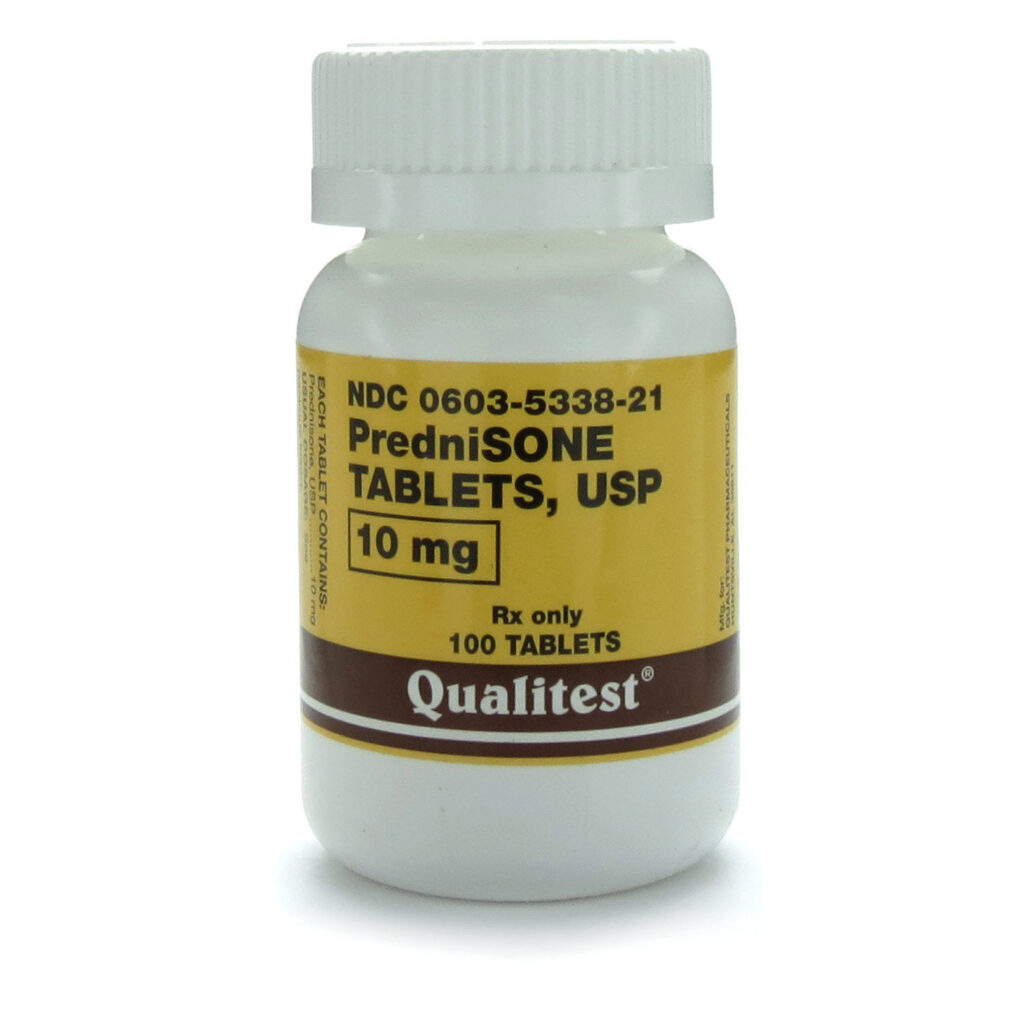
💊 Prednisolone Tablet 10 mg – As Licensed
📄 Description:
Prednisolone is a synthetic glucocorticoid corticosteroid with anti-inflammatory, immunosuppressive, and anti-allergic effects. The 10 mg tablet is used in moderate to high-dose regimens for systemic treatment of various diseases.
💊 Prescription / Use:
- Indications:
- Autoimmune diseases: rheumatoid arthritis, lupus (SLE), dermatomyositis
- Respiratory conditions: severe asthma, COPD exacerbations
- Renal disorders: nephrotic syndrome
- Gastrointestinal: ulcerative colitis, Crohn’s disease
- Neurological: multiple sclerosis exacerbations
- Skin: severe psoriasis, eczema
- Endocrine: adrenal insufficiency (add-on or substitution)
- Oncology: adjunct in certain cancers like leukemia, lymphoma
- Allergic reactions: drug allergies, angioedema
- Dosage (General Guidance):
- Adults:
- Typically 10–60 mg/day depending on the severity
- May be tapered to maintenance dose
- Children: Dose is based on weight/body surface area
- Always prescribed and adjusted by a doctor
- Adults:
- Route: Oral
🔬 Nature:
- Drug class: Glucocorticoid corticosteroid
- Form: Oral tablet
- Strength: 10 mg
- Type: Intermediate-acting steroid (duration ~12–36 hours)
🌟 Advantages:
- Broad clinical application
- Rapid action for inflammation, allergy, or immune flare-ups
- Oral form allows outpatient therapy
- Widely available and cost-effective
- Suitable for short courses or long-term maintenance
📦 Common Packaging:
- Blister packs or strips (commonly 10 or 15 tablets per strip)
- Label includes strength, batch number, expiry date, and manufacturer
- May be scored for dose adjustment
🧊 Storage:
- Store at 15–25°C (room temperature)
- Keep away from moisture and direct sunlight
- Store in original packaging
- Keep out of reach of children
⚠️ Precautions:
- Use with caution in patients with:
- Diabetes mellitus
- Hypertension
- Heart disease
- Osteoporosis
- Active infections (TB, fungal, viral)
- Peptic ulcer or gastritis
- Glaucoma or cataracts
- Side Effects (especially with long-term use):
- Increased appetite and weight gain
- Mood swings, insomnia
- Elevated blood sugar and BP
- Osteoporosis and muscle weakness
- Gastric irritation/ulcers
- Facial puffiness (“moon face”)
- Suppression of adrenal gland function
- Increased susceptibility to infections
👩⚕️ Patient Advice:
- Take exactly as prescribed; do not skip or abruptly stop
- Take with food to reduce stomach upset
- Tapering is essential if stopping after more than a few days
- Report side effects like blurred vision, swelling, fever, or mood changes
- Monitor blood pressure and sugar regularly (especially in diabetics)
- Avoid sick contacts as immunity may be reduced
- Carry a Steroid Alert Card if using long term
- Inform all healthcare providers about steroid use before surgery or dental work