
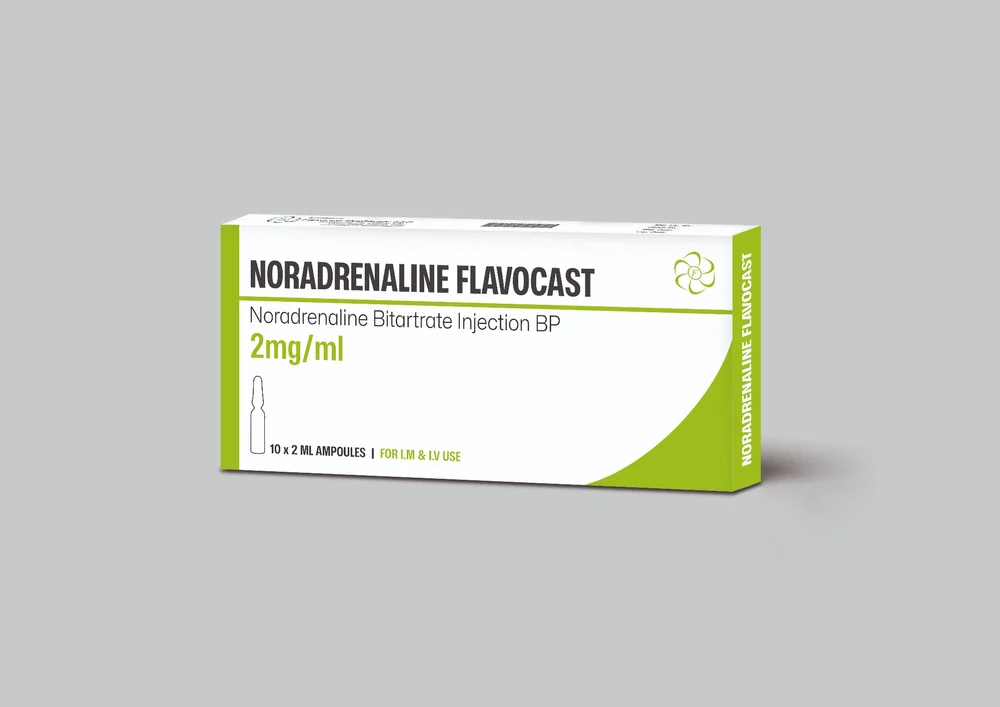
✅ Generic Name:
Noradrenaline (Norepinephrine) Injection 2 mg/mL
📄 Description:
Noradrenaline Injection is a potent vasopressor used in emergency and critical care to restore blood pressure in life-threatening hypotension. It is a synthetic catecholamine that acts primarily on alpha-adrenergic receptors, causing vasoconstriction.
- Each mL contains 2 mg of noradrenaline base (as tartrate)
- Usually supplied in ampoules for IV dilution and infusion
🌿 Nature / Drug Class:
- Pharmacologic Class: Sympathomimetic amine, Vasopressor
- Therapeutic Class: Cardiovascular agent
- Mechanism of Action:
- Primary action on α₁-receptors → systemic vasoconstriction → ↑ BP
- Mild β₁ effect → modest increase in cardiac output
- No significant effect on β₂ receptors
🎯 Purpose / Indications:
- Acute hypotension and shock states, especially:
- Septic shock (first-line vasopressor)
- Neurogenic shock
- Post-cardiac arrest hypotension
- Drug-induced hypotension (e.g., spinal anesthesia)
- Adjunct in cardiopulmonary resuscitation (CPR)
✅ Advantages:
- Rapid action to restore perfusion pressure
- Dose-dependent vasoconstriction
- Effective even in profound septic or distributive shock
- Titrated precisely via IV infusion
💉 Dosage & Administration:
- Route: Intravenous infusion only (preferably via central line)
- Must be diluted before use
- Common dilution:
- Mix 4 mg in 250 mL dextrose 5% or NS → 16 mcg/mL
- Usual infusion rate:
- Start at 2–4 mcg/min, titrate to effect (may go up to 30 mcg/min or more)
- OR weight-based: 0.05–0.5 mcg/kg/min
⚠️ Do not give as IV bolus. Always administer via infusion pump.
📦 Common Packaging:
- Supplied in ampoules or vials, 1 mL or 2 mL
- Concentration: 2 mg/mL
- Labeled as noradrenaline base or tartrate Example: Noradrenaline 2 mg/mL = Norepinephrine base equivalent 2 mg
❄️ Storage Conditions:
- Store at 20–25°C (68–77°F)
- Protect from light and moisture
- Do not freeze
- Discard if solution appears brown or discolored
👨⚕️ Patient Advice / Precautions:
- For use in ICU, emergency, or critical care units only
- Central venous access preferred to avoid extravasation
- Report signs of limb discoloration or numbness
- Requires continuous monitoring of BP and ECG