
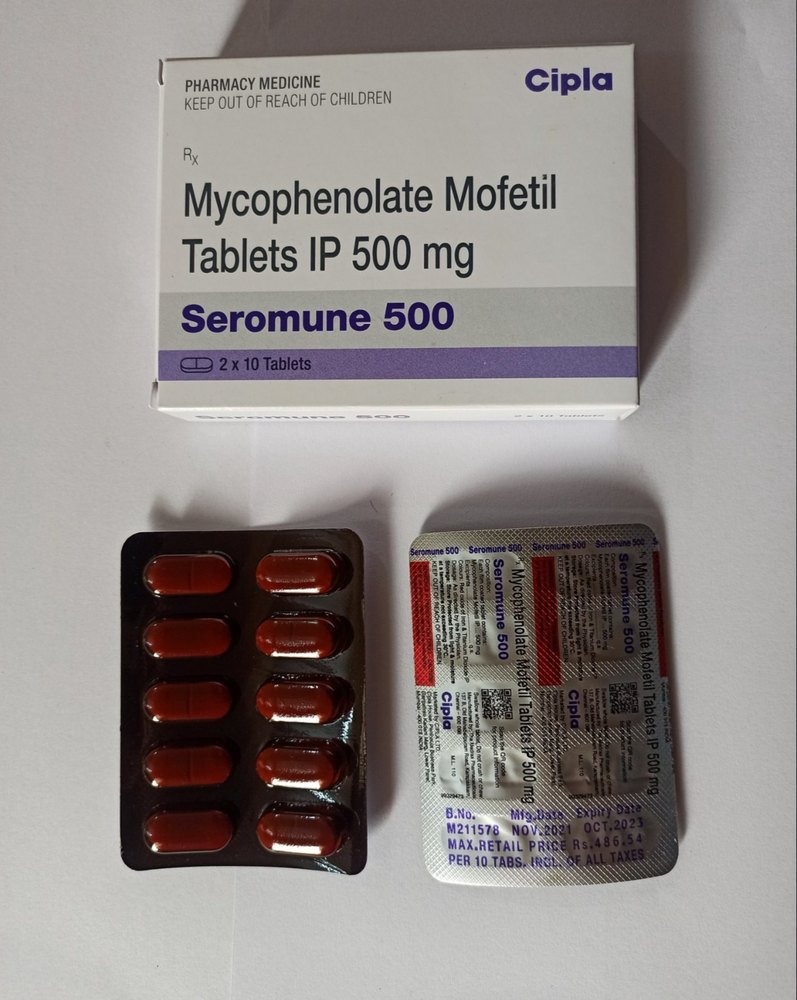
Mycophenolate Mofetil Tablet 500 mg
1. DESCRIPTION / WHAT IS IT?
Mycophenolate mofetil Tablet 500 mg contains 500 milligrams of the active pharmaceutical ingredient, mycophenolate mofetil (MMF). It is usually available as a film-coated tablet, often oval or oblong, and may be scored.1 MMF is categorized as an immunosuppressive agent and an antimetabolite.2
It functions as a prodrug, meaning it’s pharmacologically inactive upon ingestion but is rapidly and extensively converted in the body, primarily by esterases, into its active metabolite: mycophenolic acid (MPA).3 MPA is the molecule directly responsible for the drug’s therapeutic immunosuppressive effects.
2. NATURE (Pharmacology and Mechanism of Action)
- Classification: Immunosuppressant, Antimetabolite (specifically, an inhibitor of purine synthesis).4
- Mechanism of Action: The active metabolite, mycophenolic acid (MPA), exerts its immunosuppressive effect by selectively inhibiting the proliferation of lymphocytes (T and B cells), which are the primary mediators of the immune response, especially in allograft rejection.5
- MPA is a selective, uncompetitive, and reversible inhibitor of inosine monophosphate dehydrogenase (IMPDH).6
- IMPDH is a crucial enzyme in the de novo pathway of purine nucleotide synthesis.7 Lymphocytes are highly dependent on this de novo pathway for the rapid synthesis of guanosine nucleotides, which are essential building blocks for DNA and RNA replication during cell division. Other cell types can utilize alternative “salvage pathways” for purine synthesis, making lymphocytes particularly susceptible to MPA’s effects.
- By inhibiting IMPDH, MPA effectively depletes the guanosine nucleotide pools within lymphocytes, thereby arresting their proliferation and inhibiting their function. This action leads to a targeted suppression of the immune response without causing significant myelosuppression in other cell lines to the same extent as some other antimetabolites.
3. ADVANTAGES
- Potent Immunosuppression: The 500 mg strength allows for effective dosing to achieve significant immunosuppression, critical for preventing acute cellular rejection of transplanted organs.
- Targeted Action: It specifically targets the de novo purine synthesis pathway in lymphocytes, leading to relatively selective immunosuppression.8
- Improved Transplant Outcomes: MMF has significantly contributed to improving graft survival rates and reducing acute rejection episodes in solid organ transplant recipients (kidney, heart, liver) when used as part of a multi-drug immunosuppressive regimen.9
- Steroid-Sparing Potential: Often used in combination with calcineurin inhibitors (like cyclosporine or tacrolimus) and corticosteroids.10 MMF can allow for the reduction or even gradual withdrawal of corticosteroid doses over time, which helps minimize the long-term side effects associated with steroid use.11
- Versatility: Effective across various types of solid organ transplants and increasingly recognized for its utility in a range of severe autoimmune diseases.12
- Oral Administration: Convenient for long-term daily management by patients, facilitating adherence to complex post-transplant regimens.
4. USES (Indications)
Mycophenolate mofetil Tablet 500 mg is primarily indicated for:
- Organ Transplant Rejection Prophylaxis: Used in combination with other immunosuppressants (such as cyclosporine or tacrolimus, and corticosteroids) to prevent acute organ rejection in patients who have received a kidney, heart, or liver transplant.13
- Autoimmune Diseases (Off-label / Specific Indications): Due to its potent immunosuppressive properties, MMF is increasingly used off-label for the management of various severe autoimmune diseases, often when other treatments have failed or are contraindicated. Common examples include:
- Lupus Nephritis: A severe kidney inflammation associated with Systemic Lupus Erythematosus (SLE).14
- Other manifestations of Systemic Lupus Erythematosus.
- Certain types of vasculitis (inflammation of blood vessels).15
- Inflammatory Bowel Disease (Crohn’s Disease and Ulcerative Colitis) that is refractory to other treatments.16
- Pemphigus vulgaris and Bullous Pemphigoid (autoimmune blistering skin disorders).17
- Some cases of Myasthenia Gravis.18
5. STORAGE
- Store Mycophenolate mofetil tablets at room temperature, generally between 20°C to 25°C (68°F to 77°F).19 Some manufacturers may specify a temperature not exceeding 30°C.
- Keep the tablets in their original container (e.g., blister pack or bottle), tightly closed, to protect them from moisture and light.20
- Important Safety Note: Tablets should be swallowed whole and should NOT be crushed, chewed, or broken.21 Direct contact with the powder from a broken tablet can be irritating to the skin, eyes, or mucous membranes, and accidental inhalation should be avoided.22 If a tablet is broken, handle it with care (e.g., wearing gloves) and dispose of it safely.
- Keep out of reach of children and pets.