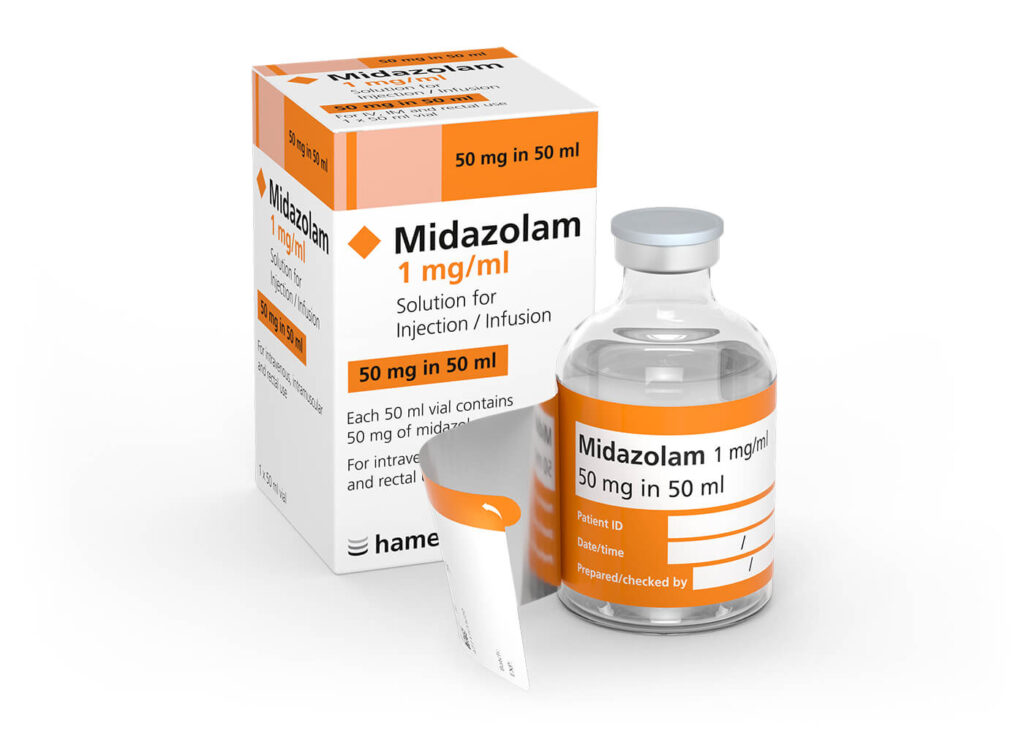
Midazolam 1 mg/mL Injection is a short-acting benzodiazepine used for:
Sedation before diagnostic or surgical procedures (e.g. endoscopy, dental work)
Induction and maintenance of anesthesia
Sedation in intensive care units (ICU)
Status epilepticus (acute seizure management)
Anxiolysis or premedication before surgery
📄 2. Description:
Form: Clear, colorless to pale yellow solution
Strength: 1 mg of Midazolam per 1 mL
Available Volumes: Often in 1 mL, 2 mL, 5 mL, or 10 mL ampoules or vials
Route:
IV (intravenous)
IM (intramuscular)
SC (subcutaneous) – rarely
Buccal/rectal (off-label emergency seizure use)
🔬 3. Nature / Drug Class:
Class: Benzodiazepine
Mechanism of Action: Enhances the action of GABA (gamma-aminobutyric acid), the main inhibitory neurotransmitter in the CNS → Produces sedative, anxiolytic, muscle relaxant, anticonvulsant, and amnesic effects
🌟 4. Advantages:
Rapid onset and short duration
Water-soluble formulation (less irritation than diazepam)
Multiple routes of administration
Useful in emergency seizure control
Effective for conscious sedation and induction of anesthesia
📦 5. Common Packaging:
Pack Type
Contents
Glass ampoule
1 mg/mL × 1, 5 or 10 mL
Multidose vial
10 mL, 50 mL (preserved)
Single-dose vial
1 mL or 5 mL (preservative-free for IV use)
🧊 6. Storage Conditions:
Store at 15–30°C (59–86°F)
Protect from light
Do not freeze
Use immediately after opening for single-dose vials
Observe expiry and color clarity—discard if discolored or particles present
👩⚕️ 7. Patient Advice:
Should only be administered by trained personnel
May cause drowsiness, confusion, or amnesia — rest post-injection
Avoid driving, alcohol, or operating machinery for 24 hours post-use
Tell your doctor if you have:
Respiratory disease
Liver/kidney problems
Sleep apnea
Inform about all medications, especially opioids, CNS depressants, or antifungals (interactions)
🎯 8. Purpose / Clinical Use:
Clinical Use
Purpose
Conscious sedation
Minor procedures, endoscopy, dental work
Induction of anesthesia
Before surgery
Seizure emergency (Status Epilepticus)
Fast anticonvulsant effect
ICU sedation
For intubated or mechanically ventilated patients
Anxiolysis
Preoperative medication
⚠️ 9. Warnings / Precautions:
Risk of respiratory depression — monitor continuously during administration
Titration required — dose adjusted by response and age
Caution in:
Elderly
Debilitated or chronically ill patients
Paradoxical reactions (agitation, hallucinations) may occur rarely