
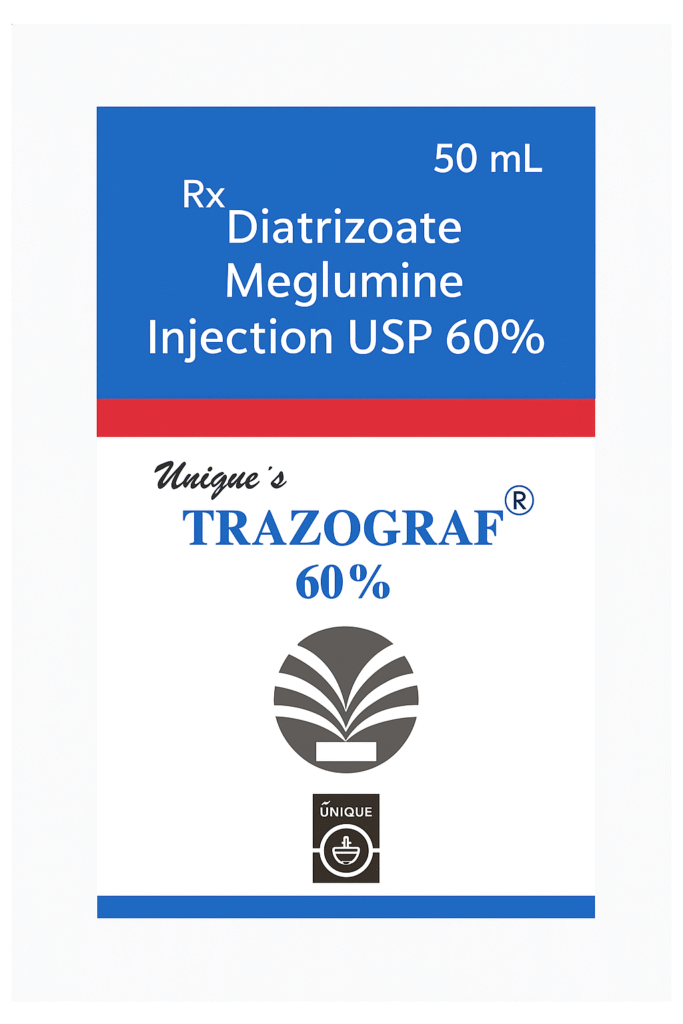
💉 Meglumine Diatrizoate Injection 60% w/v
📌 1. Prescription / Indication:
Meglumine diatrizoate is a high-osmolality iodinated contrast agent used for diagnostic radiographic procedures. It is primarily used in:
- Intravenous urography (IVU/IVP)
- Retrograde urography
- Angiography (peripheral, cerebral, and visceral)
- Gastrointestinal tract imaging (oral or rectal, particularly in suspected perforation)
- CT scans with contrast
- Hysterosalpingography (HSG)
- Myelography (in specific, diluted forms)
📄 2. Description:
- Formulation: Aqueous solution of meglumine diatrizoate
- Concentration: 60% w/v (i.e., 60 g of diatrizoate meglumine per 100 mL)
- Iodine content: ~292 mg iodine/mL (for 60% w/v)
- Appearance: Clear, colorless to pale yellow sterile solution
- Osmolality: High (~1500–2100 mOsm/kg, depending on exact formulation)
🌟 3. Advantages:
- Widely available and cost-effective
- Useful in GI perforations where barium is contraindicated
- Effective for rapid visualization in emergency radiology
- Still useful in resource-limited settings
🔬 4. Nature / Class:
- Class: Ionic, high-osmolar contrast medium
- Active agent: Diatrizoate (also called amidotrizoate)
- Iodinated X-ray contrast media
- Excretion: Renal (mostly unchanged)
📦 5. Common Packaging:
- Strengths: Typically 60% w/v
- Volume: Supplied in 20 mL, 50 mL, 100 mL vials or ampoules
- Brand names: Gastrografin® (when mixed with sodium diatrizoate), Urografin®, Renografin®
🧊 6. Storage:
- Store at 20–25°C (68–77°F)
- Do not freeze
- Protect from light and heat
- Discard unused portion after opening (single-dose only)
👩⚕️ 7. Patient Advice:
- Inform your provider if you have:
- Allergies to iodine or contrast agents
- Kidney issues, heart disease, or asthma
- Ensure proper hydration before and after the procedure
- May cause temporary side effects:
- Nausea, flushing, metallic taste, or warmth
- Serious side effects (rare): anaphylaxis, renal impairment, cardiac arrhythmia
- Diabetics on metformin may need temporary interruption of the drug
🎯 8. Purpose and Use by Route:
| Route | Use |
|---|---|
| Intravenous (IV) | Urography, angiography, CT with contrast |
| Oral/rectal | GI tract imaging, especially with perforation |
| Intrauterine | Hysterosalpingography (HSG) |
| Intra-arterial | Angiographic studies |
⚠️ Precautions:
- High osmolality → increased risk of adverse reactions, especially in:
- Elderly
- Renal impairment
- Cardiac patients
- Not recommended for intrathecal use (due to neurotoxicity risk)
- Use with caution in infants and dehydrated patients