
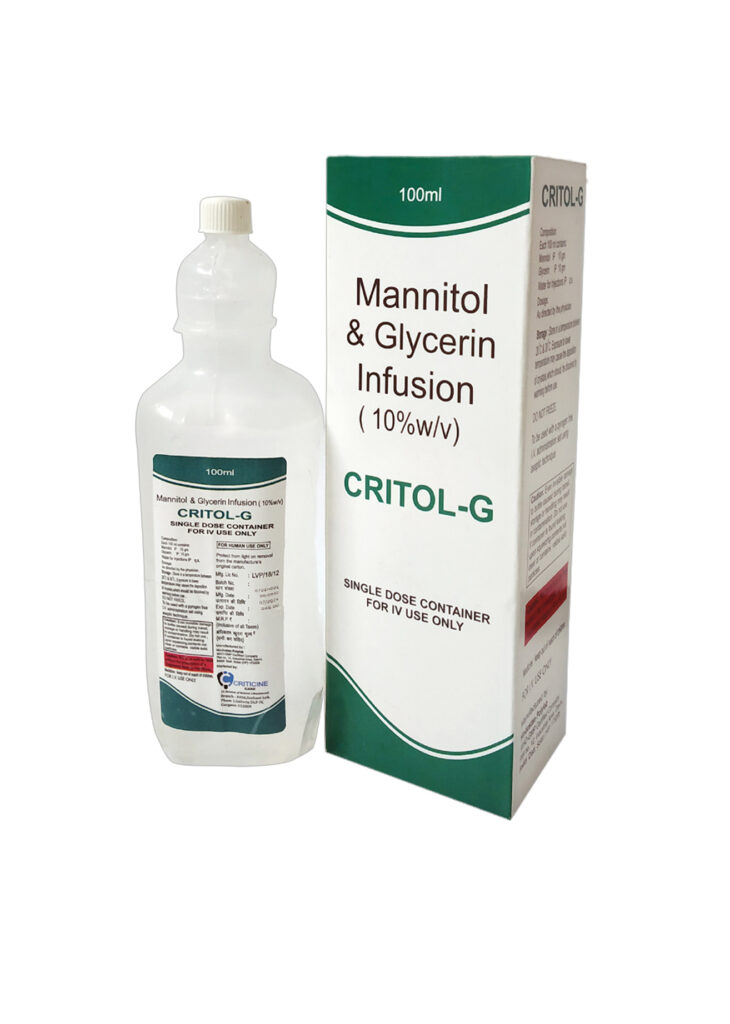
💉 Mannitol Injection 10% – As Licensed
📄 Description:
Mannitol 10% Injection is a sterile, non-pyrogenic solution of mannitol, a type of osmotic diuretic and renal diagnostic aid. It is used to reduce intracranial pressure, intraocular pressure, and promote diuresis in cases of acute kidney failure or drug toxicity.
🧾 Prescription / Use:
Indications:
- Cerebral edema / increased intracranial pressure
- Acute glaucoma (reducing intraocular pressure)
- Promote diuresis in acute renal failure
- Prevent renal damage from toxic substances
- Used in renal function testing
Dosage:
- Depends on clinical condition and weight
- 0.25–2 g/kg IV over 30–60 minutes
- Dose and rate adjusted based on urine output, renal function, and response
Route: Intravenous (IV) infusion
Strength: 10% = 10 g Mannitol per 100 mL
🔬 Nature:
- Class: Osmotic diuretic
- Mechanism: Increases plasma osmolality, drawing water from tissues into blood and enhancing urine output
- Effect: Reduces pressure in brain and eyes, enhances elimination of toxins via kidneys
🌟 Advantages:
- Rapid reduction of intracranial and intraocular pressure
- Helps in preventing or managing acute renal failure
- Clears nephrotoxic substances
- Useful in emergency neurosurgical or ophthalmologic settings
📦 Common Packaging:
- Available in glass or plastic infusion bottles/vials
- Standard volume: 100 mL, 250 mL, 500 mL
- Clearly labeled with concentration, batch, expiry, and sterility assurance
🧊 Storage:
- Store at 20°C to 25°C (room temperature)
- Do not refrigerate, as crystallization may occur
- If crystals form, warm the solution and shake to dissolve
- Use only if solution is clear and free from particles
⚠️ Precautions:
Contraindications:
- Established anuria (no urine production)
- Severe dehydration
- Active intracranial bleeding (unless during craniotomy)
- Pulmonary edema or heart failure
- Known hypersensitivity
Use with caution in:
- Renal impairment
- Cardiac patients (can cause fluid overload)
- Electrolyte imbalances
Monitoring:
- Serum electrolytes (Na+, K+)
- Renal function tests (BUN, creatinine)
- Urine output
- Serum osmolality
- Signs of volume overload (edema, lung crepitations)
👩⚕️ Patient Advice:
- Administered only in hospital or clinical settings
- Patients may experience headache, nausea, or chills during infusion
- Notify staff of symptoms like chest discomfort, shortness of breath, or low urine output
- Do not self-administer; requires strict monitoring
- Avoid fluid overload – intake is often restricted during use