
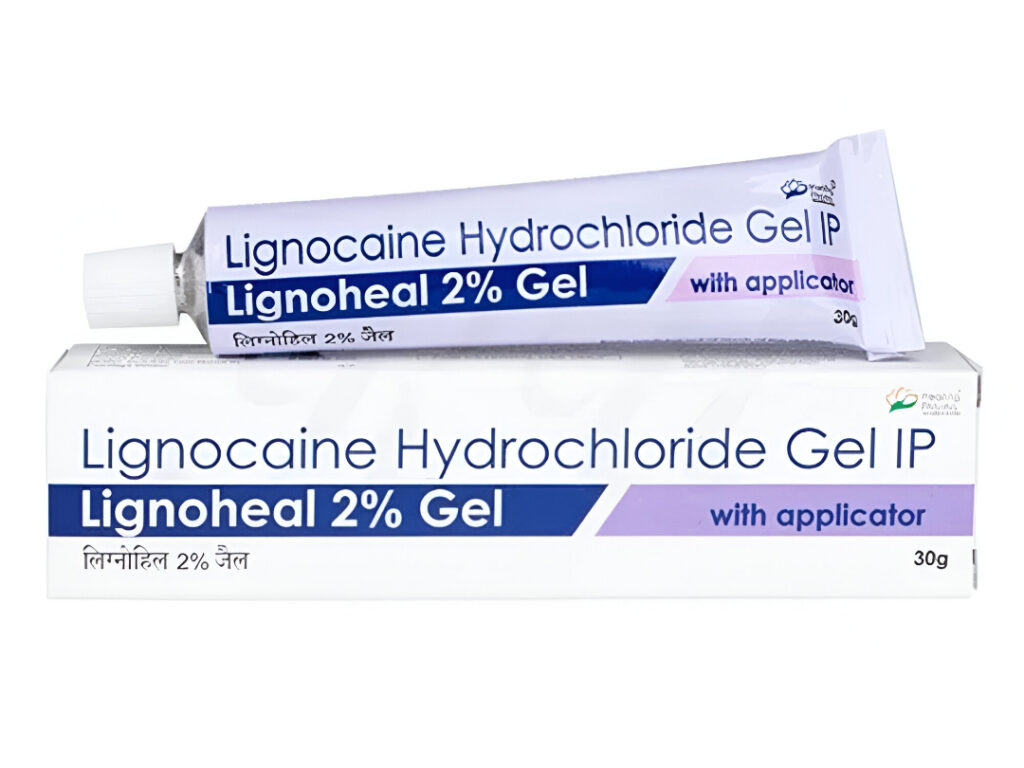
💊 Lignocaine Topical (2%–5%)
Lignocaine, also known as Lidocaine, is a widely used amide-type local anesthetic. In topical form, it is used to relieve pain, itching, or discomfort in specific areas by numbing the surface of the skin or mucous membranes.
📘 Common Topical Forms & Strengths
| Form | Strength | Usage Area |
|---|---|---|
| Gel | 2%, 5% | Oral, anal, vaginal, dental procedures |
| Ointment | 5% | Skin, hemorrhoids, minor burns |
| Cream | 2.5%, 5% | Skin (e.g. EMLA cream with prilocaine) |
| Spray | 10% (but applied sparingly) | Oral mucosa, throat, dental use |
| Patch | 5% | Post-herpetic neuralgia, localized pain |
| Viscous Solution | 2% | Oral mucosa, sore throat, esophageal pain |
| Mouthwash / Rinse | 2% | Dental, oral mucositis |
🧴 Available Topical Preparations
- Lignocaine Gel 2%
- Lignocaine Gel 5%
- Lignocaine Cream 2.5% (e.g., in combination with Prilocaine – EMLA)
- Lignocaine Ointment 5%
- Lignocaine Patch 5%
- Lignocaine Spray (10%) – use with caution, especially in mucosal areas
🩺 Common Medical Uses
- Local anesthesia for:
- Dental and oral procedures
- Minor burns or cuts
- Hemorrhoids or anal fissures
- Vaginal or urethral discomfort
- Pre-injection or cannulation (numbing skin)
- Treatment of:
- Post-herpetic neuralgia (patch)
- Oral ulcers or mucositis (gel or rinse)
- Premature ejaculation (numbing creams)
🌿 Nature
- Pharmacologic Class: Local anesthetic (amide)
- Onset of Action: 1–5 minutes (topical)
- Duration: ~30–60 minutes (varies by form and site)
- Mechanism: Blocks voltage-gated sodium channels, preventing nerve signal transmission
✅ Advantages
- Non-invasive, easy to apply
- Fast onset of local pain relief
- Multiple formulations for different uses (skin, mucosa, genitals, etc.)
- Well-tolerated, minimal systemic absorption when used correctly
⚠️ Precautions
- Do not apply over large areas or broken skin – risk of systemic toxicity
- Avoid ingestion (especially spray/gel used in mouth/throat) unless medically supervised
- Toxic dose (systemic): >5 mg/kg in adults
- Signs of overdose/toxicity:
- Drowsiness, confusion, dizziness
- Seizures
- Cardiac arrhythmias
- Use with caution in:
- Children
- Elderly
- Liver dysfunction
🚫 Contraindications
- Known hypersensitivity to amide anesthetics
- Severe heart block or conduction issues
- Broken/inflamed skin (for strong formulations)
📦 Storage & Handling
- Store at room temperature (15–25°C)
- Keep away from light and heat
- Keep out of reach of children