
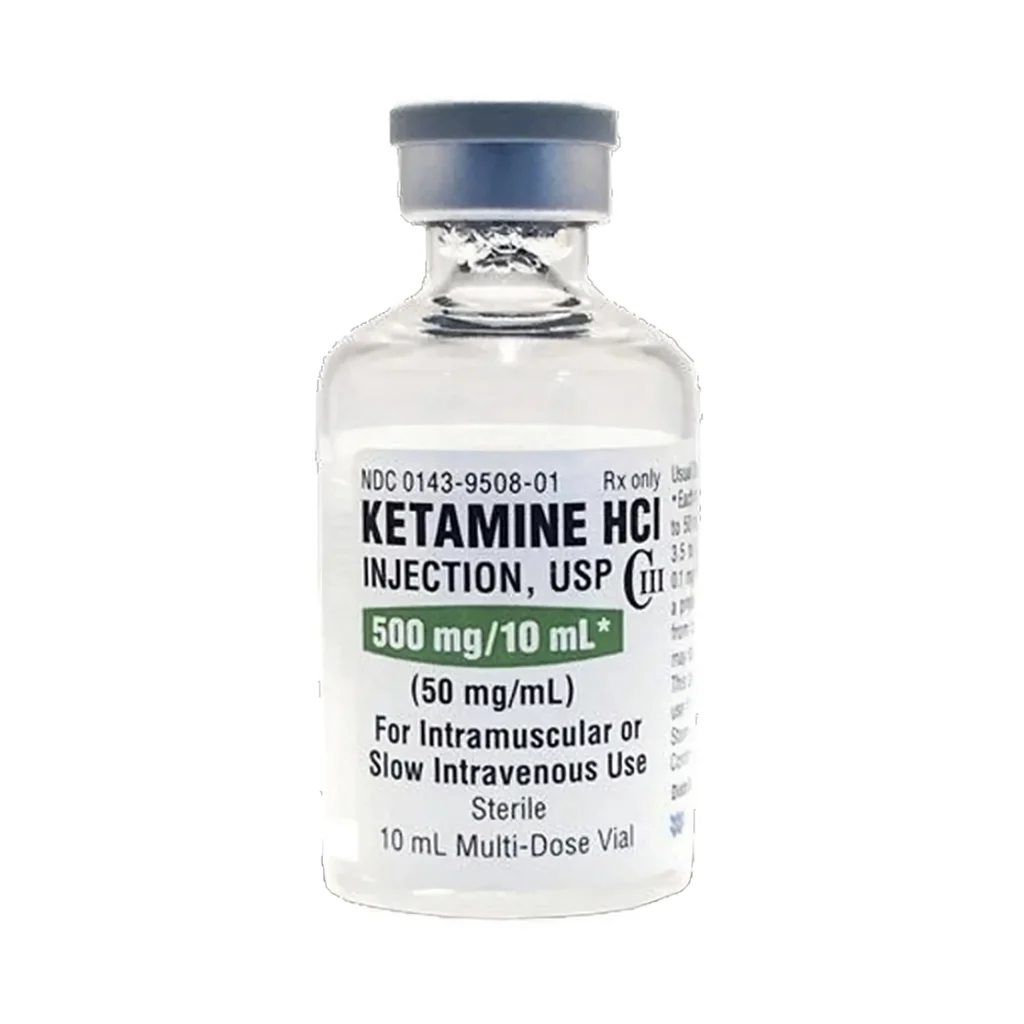
Ketamine Injection 50 mg/mL
📝 Prescription Information
- Generic Name: Ketamine Hydrochloride
- Brand Names: Ketalar, Ketanest, Ketmin
- Strength: 50 mg/mL
- Form: Injectable solution (for IV or IM use)
- Classification: Dissociative anesthetic; Schedule III controlled substance
- Packaging: Usually in 10 mL or 20 mL vials
💊 Uses
Ketamine 50 mg/mL is used in human and veterinary medicine for:
- Induction and maintenance of anesthesia
- Emergency surgical procedures (when other anesthesia is not available)
- Procedural sedation
- Analgesia in acute trauma or burn injuries
- Short-term immobilization of agitated patients
- Treatment-resistant depression (off-label, low-dose infusion)
- Pediatric anesthesia (due to minimal respiratory depression)
🌿 Nature of Ketamine
- Form: Clear, colorless or slightly yellow solution
- Chemical Class: Phencyclidine derivative
- Mechanism: NMDA receptor antagonist
- Onset of Action:
- IV: ~30 seconds
- IM: 3–5 minutes
- Duration: 5–15 minutes (anesthesia); analgesia may last longer
- Metabolism: Hepatic (liver), excreted by kidneys
- Solubility: Water-soluble
- pH: ~3.5–5.5
✅ Advantages
- Rapid Induction
- Ideal for emergency anesthesia or battlefield/trauma settings.
- Preserves Airway Reflexes
- Unlike other anesthetics, ketamine does not usually depress respiration significantly.
- Cardiovascular Supportive
- Causes increased heart rate and blood pressure—beneficial in shock or hypotension.
- Dual Action
- Acts as both an anesthetic and analgesic.
- Useful in Various Routes
- Can be given IV, IM, intranasally, or orally (off-label use).
- Minimal Risk of Respiratory Depression
- Safe in children and during field use.
- Broad Use
- Used in emergency medicine, ICU, psychiatry (for depression), and pain clinics.
⚠️ Precautions
- Emergence Delirium
- May cause vivid dreams, hallucinations, confusion after awakening—especially in adults. Co-administering a benzodiazepine may reduce this.
- Elevated ICP or IOP
- Use with caution in patients with raised intracranial pressure (ICP) or intraocular pressure (IOP).
- Substance Abuse Risk
- Recreational misuse (known as “Special K”) can lead to dependency or bladder toxicity.
- Liver or Kidney Impairment
- Use with caution due to hepatic metabolism and renal excretion.
- Hypertension & Heart Disease
- Avoid or monitor closely due to its cardiovascular stimulating effects.
- Pregnancy Category C
- Use only if clearly needed and benefits outweigh risks.
- Interaction with CNS Depressants
- Combined use with opioids, benzodiazepines, or alcohol can increase risk of sedation and respiratory depression.