
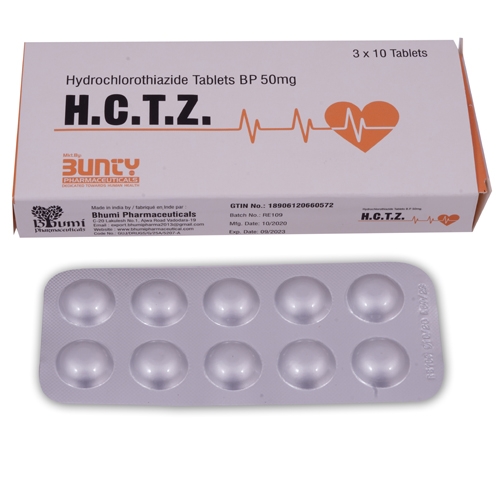
💊 Hydrochlorothiazide Tablet 50 mg – As Licensed
📄 Description:
Hydrochlorothiazide is a thiazide diuretic used to treat hypertension, fluid retention (edema) due to various causes, and prevent kidney stones in patients with high calcium levels. It increases urine output by acting on the kidneys, thereby lowering blood pressure and reducing fluid overload.
🧾 Prescription / Use:
Indications:
- Essential hypertension
- Edema associated with heart failure, liver cirrhosis, renal disorders
- Prevention of recurrent calcium-containing kidney stones
- Nephrogenic diabetes insipidus
Dosage:
- Adults: 25–100 mg daily, in single or divided doses
- Typical dose: 50 mg once daily or 25 mg twice daily
- Children: Dosing based on weight (1–2 mg/kg/day)
Route: Oral
Frequency: Once or twice daily
**Preferably taken in the morning to reduce night-time urination
🔬 Nature:
- Pharmacological class: Thiazide diuretic
- Mechanism of action: Inhibits sodium and chloride reabsorption in the distal renal tubule
- Effects: Increases sodium and water excretion, reduces plasma volume, and lowers blood pressure
🌟 Advantages:
- Cost-effective for long-term BP control
- Synergistic effect when combined with ACE inhibitors, ARBs, or beta-blockers
- Reduces cardiovascular risk (stroke, heart attack)
- Used in edema management from various causes
- Can lower urinary calcium levels, reducing risk of calcium kidney stones
📦 Common Packaging:
- Tablet strength: 50 mg
- Supplied in blister packs or bottles
- Standard packs: 10, 30, or 100 tablets
- Each tablet clearly labeled with drug name, dose, batch, expiry date
🧊 Storage:
- Store at 15–30°C (room temperature)
- Keep away from moisture and direct light
- Store in original packaging to maintain stability
⚠️ Precautions:
Contraindications:
- Anuria (inability to urinate)
- Hypersensitivity to hydrochlorothiazide or sulfa drugs
- Severe electrolyte imbalance
Use with caution in:
- Diabetics (may increase blood sugar)
- Gout (can raise uric acid levels)
- Renal/hepatic dysfunction
- Patients at risk of electrolyte disturbances (hypokalemia, hyponatremia, hypomagnesemia)
Drug Interactions:
- NSAIDs reduce diuretic effect
- Lithium toxicity risk increases
- Potentiates antihypertensive drugs
- Can increase blood sugar and cholesterol
Monitoring:
- Electrolytes (especially potassium, sodium)
- Renal function
- Blood pressure
- Uric acid and blood glucose
👩⚕️ Patient Advice:
- Take preferably in the morning to avoid sleep disturbances due to urination
- Maintain hydration, but avoid excessive salt intake
- Eat potassium-rich foods (bananas, oranges) if advised
- Report symptoms like muscle cramps, fatigue, dizziness, or palpitations
- Avoid alcohol unless cleared by a doctor
- Follow up regularly for blood pressure and blood tests
- Do not discontinue abruptly without medical advice