
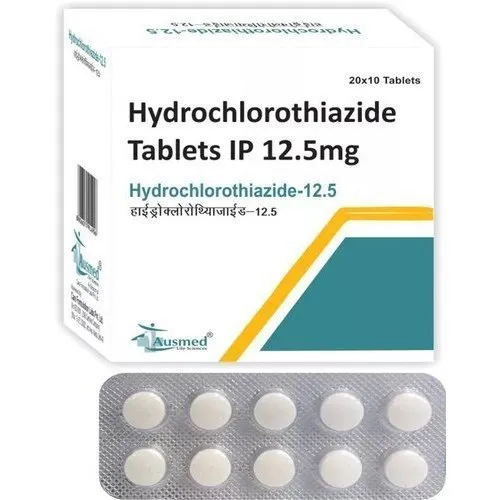
✅ Generic Name:
Hydrochlorothiazide Tablet 12.5 mg (also abbreviated as HCTZ)
✅ Prescription Status:
Prescription-only medicine (Rx) – Should be taken under medical supervision.
📄 Description:
Hydrochlorothiazide 12.5 mg is a thiazide diuretic (water pill) used to treat high blood pressure (hypertension) and fluid retention (edema). It works by helping the kidneys eliminate excess salt (sodium) and water, lowering blood volume and blood pressure.
Each tablet contains 12.5 mg of Hydrochlorothiazide as the active ingredient.
🌿 Nature / Class:
- Pharmacologic class: Thiazide diuretic
- Therapeutic class: Antihypertensive, Diuretic
- Mechanism of action: Inhibits sodium and chloride reabsorption in the distal renal tubules, promoting excretion of water and electrolytes → reduces blood pressure and edema
🎯 Purpose / Indications:
- Hypertension (high blood pressure) – alone or in combination with other antihypertensives
- Edema due to congestive heart failure, liver cirrhosis, kidney disorders
- May be used to prevent kidney stones in certain cases
- Often used in combination medications (e.g., with Enalapril, Losartan, etc.)
✅ Advantages:
- Reduces blood pressure and fluid overload
- Helps reduce cardiovascular risk when used for hypertension
- Effective in combination with ACE inhibitors or ARBs
- Generally well tolerated at 12.5 mg dose (lower risk of side effects)
📦 Common Packaging:
- Available in blister packs or bottles
- Usually packed as:
- 10 tablets per strip
- Boxes of 30, 50, or 100 tablets
- Tablets are usually white, round or oval
❄️ Storage Conditions:
- Store at 15°C to 30°C (59°F to 86°F)
- Keep in a cool, dry place, away from light and moisture
- Store in original packaging
- Keep out of reach of children
👨⚕️ Patient Advice / Precautions:
- Take in the morning to avoid nighttime urination
- May be taken with or without food
- Drink enough fluids unless advised otherwise
- Common side effects:
- Increased urination, dizziness, headache
- Low potassium levels (hypokalemia) → may need supplements
- Muscle cramps, fatigue, electrolyte imbalance
- Regular monitoring of electrolytes, kidney function, and blood pressure is advised
- Inform your doctor if you have gout, diabetes, kidney or liver problems
- Avoid alcohol and stand slowly from sitting/lying to avoid dizziness
- Not recommended during pregnancy unless clearly needed
- Caution in elderly patients