
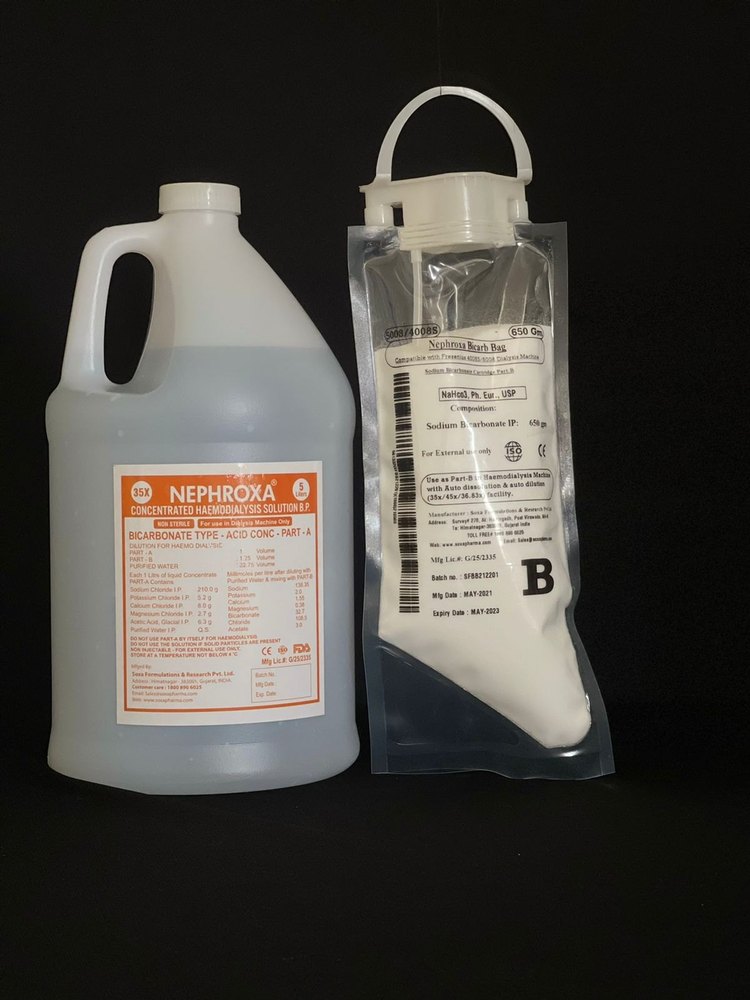
💧 Haemodialysis Fluid (As Licensed)
Also called dialysate, haemodialysis fluid is a sterile, balanced electrolyte solution used in hemodialysis procedures to help remove waste products, excess electrolytes, and fluid from the blood.
📌 1. Prescription / Indication:
Used in patients with:
- Acute or chronic kidney failure
- End-stage renal disease (ESRD)
- Drug poisoning or metabolic disorders requiring dialysis
📄 2. Description:
- Haemodialysis fluid is composed to closely match the electrolyte composition of plasma.
- It helps in the exchange of solutes across a semipermeable membrane in a dialyzer.
🔬 3. Nature / Composition:
Typical ingredients (per liter, varies by manufacturer and prescription):
| Component | Range |
|---|---|
| Sodium (Na⁺) | 135–145 mmol/L |
| Potassium (K⁺) | 0–4 mmol/L |
| Calcium (Ca²⁺) | 1.25–1.75 mmol/L |
| Magnesium (Mg²⁺) | 0.25–1.0 mmol/L |
| Chloride (Cl⁻) | 95–105 mmol/L |
| Bicarbonate (HCO₃⁻) | 32–38 mmol/L |
| Glucose | 0–2 g/L |
✅ May be acetate-based or bicarbonate-based (bicarbonate is preferred now due to better tolerance).
🌟 4. Advantages:
- Corrects acid–base balance and electrolyte abnormalities
- Removes urea, creatinine, and toxins
- Tailorable for individual patient needs (e.g., potassium-free for hyperkalemia)
- Safer and more biocompatible formulations available today
📦 5. Common Packaging:
- Single-chamber bags (acid + base mixed in one)
- Dual-chamber bags (acidic and bicarbonate components separated)
- Volume: Usually in 5 L or 10 L sterile bags
- Connectable to dialysis machines directly
🧊 6. Storage:
- Store at room temperature (15–25°C)
- Keep away from freezing and direct sunlight
- Use before expiry date
- Once connected to dialysis equipment, use within specified time (usually within 24 hours)
👩⚕️ 7. Patient Advice:
- The fluid is never injected or infused directly
- It is part of an external dialysis machine
- Report symptoms like:
- Muscle cramps
- Light-headedness
- Hypotension
- Allergic reactions (rare, but can occur)
🎯 8. Purpose:
- Acts as a cleansing medium during dialysis
- Supports electrolyte homeostasis
- Assists in fluid removal when ultrafiltration is applied
- Helps in correction of metabolic acidosis