
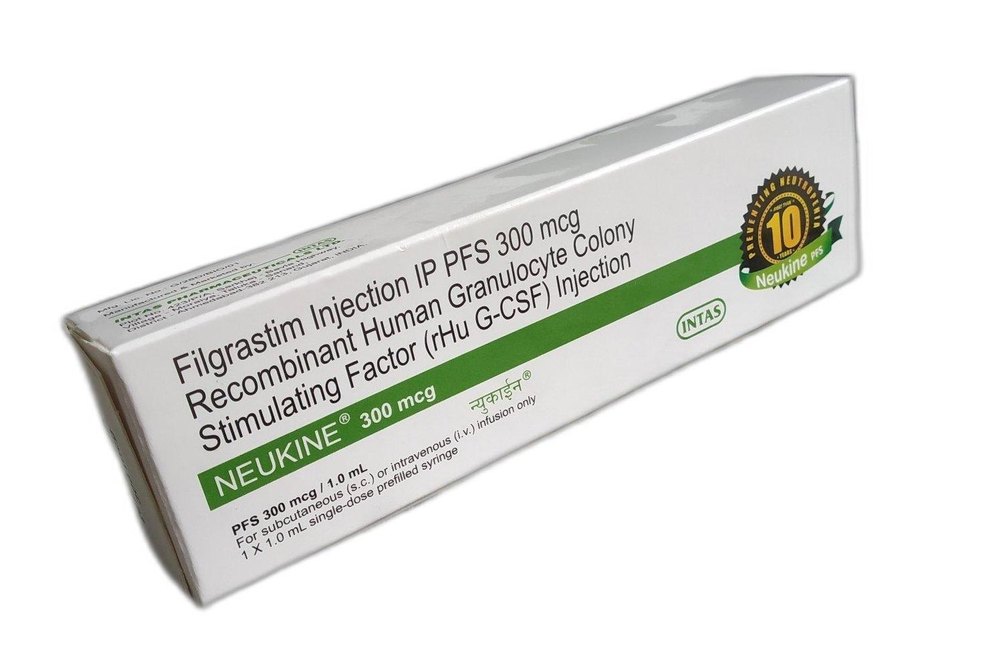
Filgrastim Injection 300 mcg
Description
Filgrastim 300 mcg is a sterile solution for injection that contains the active ingredient Filgrastim. It is a recombinant human granulocyte colony-stimulating factor (G-CSF), a synthetic version of a protein naturally produced in the body. G-CSF plays a crucial role in the production, maturation, and release of neutrophils (a type of white blood cell essential for fighting infections) from the bone marrow. The 300 mcg dose is a common strength used to stimulate the bone marrow to produce more white blood cells.
Advantages
- Prevents and Treats Neutropenia: Highly effective in preventing and treating low white blood cell counts (neutropenia), especially those caused by chemotherapy or other conditions that suppress bone marrow function.
- Reduces Infection Risk: By increasing neutrophil counts, it significantly lowers the risk of serious infections, including febrile neutropenia, which can be life-threatening.
- Supports Cancer Treatment: Allows patients to receive their full course of chemotherapy by mitigating a common dose-limiting side effect (neutropenia).
- Aids Bone Marrow Recovery: Accelerates neutrophil recovery after bone marrow transplantation.
- Mobilizes Stem Cells: Used to mobilize hematopoietic stem cells from the bone marrow into the bloodstream for collection (leukapheresis) for autologous or allogeneic stem cell transplantation.
- Improves Survival: Can improve survival in patients exposed to high doses of radiation.
- Various Administration Routes: Can be given subcutaneously (under the skin) or intravenously (into a vein), offering flexibility in administration.
Uses
Filgrastim Injection 300 mcg is primarily used to increase neutrophil counts and reduce the risk of infection in various clinical settings:
- Chemotherapy-Induced Neutropenia: To decrease the incidence of infection (manifested as febrile neutropenia) in patients with non-myeloid malignancies receiving myelosuppressive chemotherapy. It should be given at least 24 hours after chemotherapy.
- Acute Myeloid Leukemia (AML): To reduce the time to neutrophil recovery and the duration of fever following induction or consolidation chemotherapy for AML.
- Bone Marrow Transplantation: To reduce the duration of neutropenia and related complications in patients undergoing myeloablative chemotherapy followed by bone marrow transplantation.
- Mobilization of Peripheral Blood Progenitor Cells (PBPCs): To stimulate the release of hematopoietic stem cells into the peripheral blood for collection and subsequent transplantation.
- Severe Chronic Neutropenia (SCN): For long-term administration to reduce the incidence and duration of severe infections in symptomatic patients with congenital, cyclic, or idiopathic neutropenia.
- Radiation Exposure: To increase survival in patients acutely exposed to myelosuppressive doses of radiation (hematopoietic syndrome of acute radiation syndrome).
Nature
Filgrastim is a biologic medication, specifically a recombinant human granulocyte colony-stimulating factor (r-metHuG-CSF). It is produced using recombinant DNA technology, typically in Escherichia coli (E. coli) bacteria. It functions as a hematopoietic growth factor, meaning it stimulates the growth and differentiation of blood cells.
Its mechanism of action involves:
- Binding to G-CSF Receptors: Filgrastim binds to specific G-CSF receptors on hematopoietic stem cells and progenitor cells in the bone marrow.
- Stimulating Neutrophil Production: This binding triggers a signaling cascade that promotes the proliferation (growth), differentiation (maturation), and survival of neutrophil precursors.
- Enhancing Neutrophil Release: It also facilitates the release of mature neutrophils from the bone marrow into the peripheral blood.
- Augmenting Neutrophil Function: Furthermore, it can enhance the function of existing neutrophils, such as their phagocytic activity (ability to engulf and destroy pathogens).
Essentially, Filgrastim acts as a “booster” for the body’s natural defense system against bacterial and fungal infections by specifically targeting and increasing the production of neutrophils.
Storage
- Refrigeration: Filgrastim Injection 300 mcg should be stored in a refrigerator, typically between 2°C to 8°C (36°F to 46°F).
- Protect from Light: Keep the vials or pre-filled syringes in their original carton to protect them from light, which can degrade the product.
- Do Not Freeze: Freezing can damage the protein structure and render the medication ineffective. If accidentally frozen, discard it.
- Do Not Shake: Shaking the vial or syringe vigorously can denature the protein, reducing its effectiveness.
- Room Temperature Excursion (Limited): Some brands allow for short periods (e.g., up to 24 hours or a specified duration) at room temperature (up to 25°C or 30°C) before administration, but it should be returned to refrigeration if not used within that time. Always check the specific product’s instructions for exact guidelines.
- Preparation for Injection: Allow the syringe or vial to come to room temperature for about 30 minutes before injecting to make the injection more comfortable.
- Discard Unused Portion: Single-dose vials/syringes should be used only once, and any unused portion should be discarded immediately.
- Keep Out of Reach of Children: Store the medication in a secure place, out of sight and reach of children and pets.
- Check Expiry Date: Always check the expiry date on the packaging and do not use the injection beyond this date.