
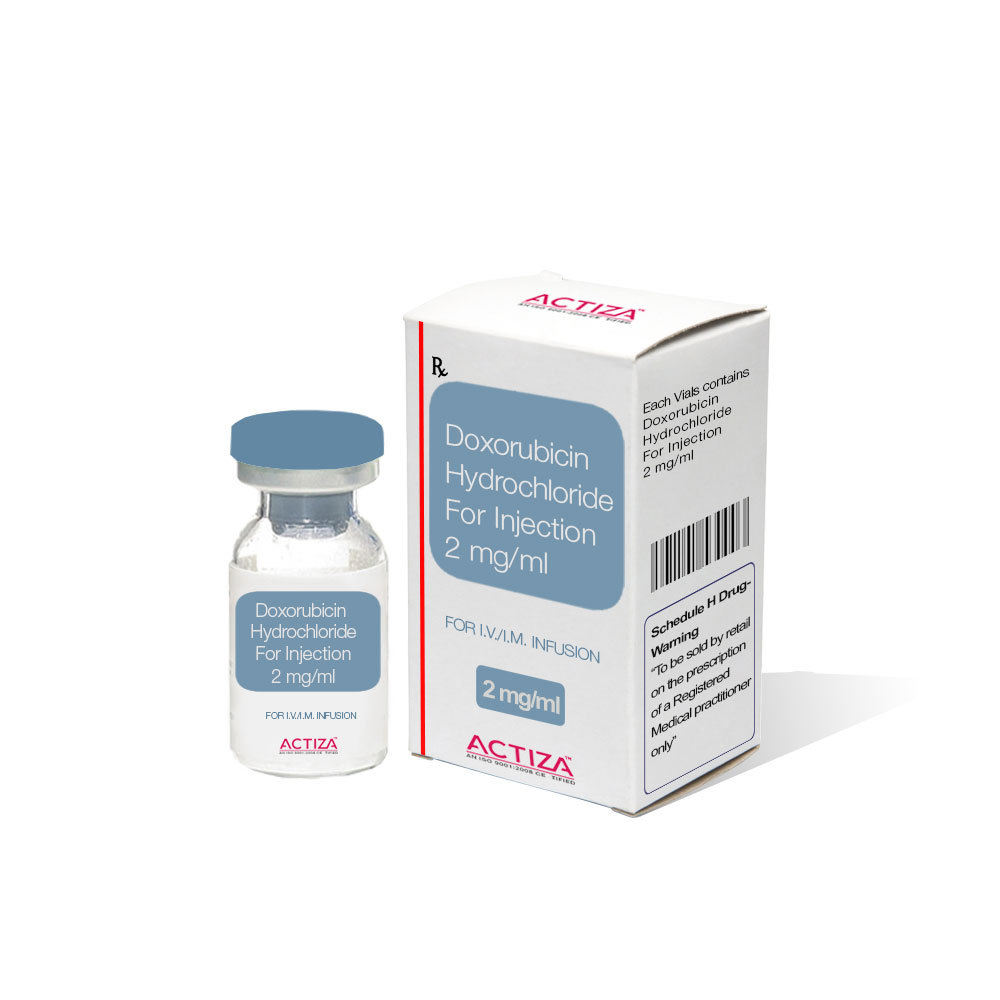
💊 Medicine Name:
Doxorubicin
💉 Formulation:
Injection – for intravenous use only (usually administered via slow IV push or infusion)
💪 Strength:
2 mg/mL in multi- or single-dose vials (commonly 5 mL, 10 mL, or 25 mL total volume)
📜 Description:
Doxorubicin is an anthracycline cytotoxic antibiotic widely used in cancer chemotherapy. The 2 mg/mL injectable solution is a ready-to-use, deep red-colored liquid, suitable for IV administration, either alone or in combination regimens.
🌿 Nature:
- Derived from Streptomyces peucetius
- Classified as a cytotoxic anthracycline
- Acts during all cell cycle phases but especially effective in S-phase and mitosis
- Vesicant – can cause severe tissue damage if extravasation occurs
- Administered only under strict medical supervision in oncology units
🌟 Advantages:
- Broad spectrum activity in hematologic malignancies and solid tumors
- Proven survival benefits in diseases like breast cancer and lymphoma
- Often part of combination chemotherapy protocols (e.g., ABVD, CHOP, AC)
- Predictable pharmacokinetics and extensive clinical experience
- 2 mg/mL strength is pre-diluted and convenient, reducing compounding time
🎯 Indications / Uses:
- Breast cancer (early and metastatic)
- Lymphomas (Hodgkin and non-Hodgkin)
- Leukemias (especially AML and ALL)
- Sarcomas (soft tissue, bone)
- Bladder cancer, lung cancer, thyroid cancer, ovarian cancer, etc.
📦 Packaging:
- Supplied as 2 mg/mL solution in sterile vials
- Common vial sizes: 10 mg/5 mL, 20 mg/10 mL, 50 mg/25 mL
- Clearly labeled as cytotoxic with red warning caps
- Compatible with infusion via central or peripheral lines, though central preferred
🧊 Storage:
- Store at 2°C to 8°C (refrigerated)
- Protect from light
- Do not freeze
- Once opened, discard unused portion as per cytotoxic waste protocols
- Follow stability guidelines if diluted for infusion (typically 4–24 hours refrigerated)
👨⚕️ Patient Advice:
- Administered in hospital/chemotherapy units only
- Red/orange urine discoloration is normal and temporary
- Inform your healthcare provider of any mouth sores, fever, chest pain, or shortness of breath
- Regular blood tests are necessary to monitor WBC/RBC/platelets, liver, and heart function (e.g., LVEF)
- Notify immediately if there’s pain, redness, or swelling at the injection site
- Avoid pregnancy and use effective contraception during and after treatment as advised
- Avoid live vaccines while receiving chemotherapy