
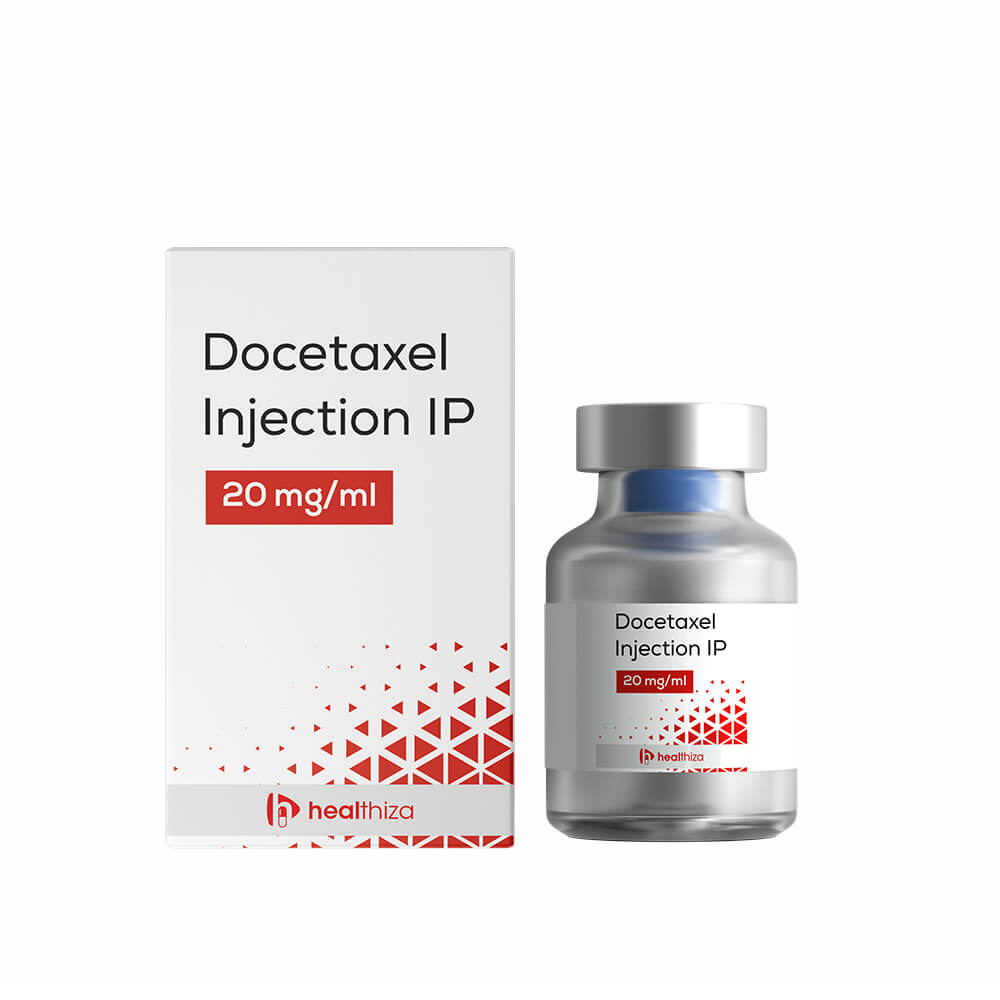
💊 Medicine Name:
Docetaxel
💉 Formulation:
Lyophilized Powder for Injection – requires reconstitution before intravenous (IV) infusion
💪 Strength:
20 mg per vial
📜 Description:
Docetaxel is a semisynthetic taxane antineoplastic agent, primarily used in the treatment of solid tumors. It works by disrupting cell division, making it highly effective in rapidly growing cancers. The 20 mg strength is typically used for lower body surface area patients or dose modifications.
🌿 Nature:
- Cytotoxic agent derived from the European yew tree
- Taxane class – similar to paclitaxel but with different pharmacologic properties
- Cell-cycle specific – mainly active during the M phase
- Requires premedication to reduce hypersensitivity reactions and fluid retention
- Non-vesicant, but still requires central venous access for high doses
🌟 Advantages:
- Broad-spectrum activity against multiple solid tumors
- Used in both monotherapy and combination regimens
- More water-soluble than paclitaxel, allowing for more consistent pharmacokinetics
- Demonstrated survival benefit in various cancers (e.g., breast, prostate, NSCLC)
- Smaller 20 mg vial allows precise dosing for elderly, renal/hepatic impaired, or dose-adjusted regimens
🎯 Indications / Uses:
- Breast cancer – early and metastatic
- Non-small cell lung cancer (NSCLC) – locally advanced or metastatic
- Prostate cancer – metastatic, hormone-refractory
- Gastric cancer – advanced stages
- Head and neck cancers – squamous cell type, locally advanced
- Occasionally used in ovarian and bladder cancers
📦 Packaging:
- Supplied in sterile vials containing 20 mg lyophilized powder
- Reconstituted with provided solvent or as per manufacturer (usually polysorbate 80 with ethanol)
- Labeled with cytotoxic handling instructions
- Must be used within specified time once reconstituted
🧊 Storage:
- Store unopened vial at 2°C to 8°C (refrigerated)
- Protect from light and freezing
- Reconstituted solution should be stored per manufacturer’s guidance (usually 2–8°C for a limited time)
👨⚕️ Patient Advice:
- Administered only in hospital/oncology settings
- Patients should be pre-medicated (usually corticosteroids) to reduce risk of fluid retention and allergic reactions
- Inform your doctor of any signs of fever, diarrhea, or tingling in fingers/toes
- Avoid live vaccines and contact with sick individuals
- Routine blood tests required during treatment to monitor counts and liver function
- Hair loss and nail changes are common but reversible