
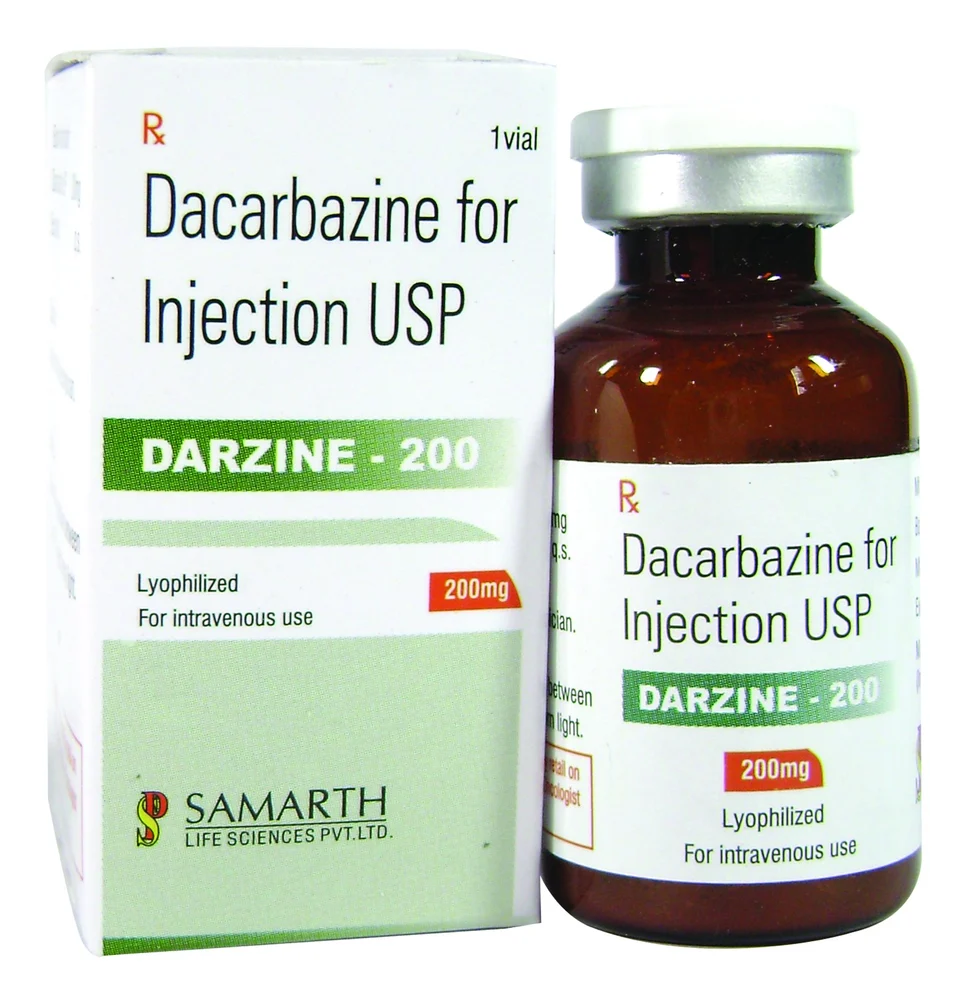
💊 Medicine Name:
Dacarbazine
💉 Formulation:
Powder for Injection (lyophilized) – for intravenous (IV) administration
💪 Strength:
200 mg per vial
📜 Description:
Dacarbazine is a cytotoxic antineoplastic agent used mainly in the treatment of malignant melanoma and Hodgkin lymphoma. It functions as an alkylating agent, although it is technically a prodrug that requires activation in the liver.
🌿 Nature:
- Alkylating-like agent (triazene group)
- Cell cycle-nonspecific, but most effective against rapidly dividing cells
- Classified as a cytotoxic chemotherapy drug
- Typically used in combination regimens (e.g., ABVD for Hodgkin lymphoma)
🌟 Advantages:
- Key component of the ABVD regimen (Adriamycin, Bleomycin, Vinblastine, Dacarbazine) – a gold-standard treatment for Hodgkin lymphoma
- Also effective as monotherapy in metastatic malignant melanoma
- Available in multiple strengths (e.g., 100 mg, 200 mg) for dosing flexibility
- Long history of clinical use with predictable toxicity profile
- Can be used in both curative and palliative oncology settings
🧾 Prescription:
- Prescription-only drug (Rx)
- Should only be administered under the supervision of qualified oncologists in hospitals or chemotherapy centers
🎯 Indications / Uses:
- Hodgkin lymphoma (in combination therapy)
- Metastatic malignant melanoma
- Also used off-label for soft tissue sarcomas and neuroendocrine tumors in selected protocols
📦 Packaging:
- Supplied as a sterile lyophilized powder in glass vials
- Reconstituted with sterile water before dilution in IV fluids
- Requires cytotoxic precautions during handling and administration
🧊 Storage:
- Store unopened vials at 15–25°C (room temperature)
- Protect from light and moisture
- Use reconstituted solution within the recommended timeframe per product guidelines
- Do not freeze the solution
👨⚕️ Patient Advice:
- Administered only in medical facilities with proper safety monitoring
- Patients must undergo frequent blood monitoring
- Avoid exposure to infections due to temporary immune suppression
- May require pre-medications to manage nausea and vomiting
- Inform the doctor of any neurological symptoms or persistent vomiting