
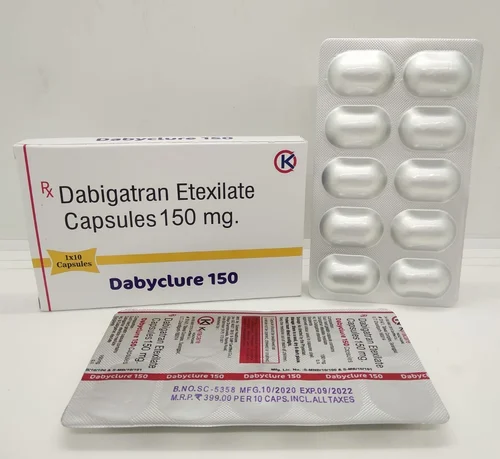
💊 Dabigatran Capsule 150 mg
🔹 1. Prescription / Indication:
Dabigatran 150 mg is prescribed for:
- Prevention of stroke and systemic embolism in non-valvular atrial fibrillation (AF)
- Treatment of Deep Vein Thrombosis (DVT) and Pulmonary Embolism (PE)
- Prevention of recurrent DVT/PE
- Sometimes used after orthopedic surgery (knee/hip replacement) to prevent clot formation
⚠️ Dabigatran 150 mg is generally used in younger patients (<75 years) and those with normal kidney function
🔹 2. Description:
- Form: Hard gelatin capsule (not tablet)
- Strength: 150 mg of dabigatran etexilate mesylate
- Appearance: Usually red and white capsule, imprinted with the strength (varies by brand)
- Route: Oral
🔹 3. Advantages:
- Fixed-dose anticoagulant – no regular INR monitoring required
- Fast onset and offset of action
- Lower risk of intracranial bleeding compared to warfarin
- Reversal agent available: Idarucizumab for emergency bleeding
- No dietary restrictions (unlike warfarin)
🔹 4. Nature / Pharmacological Class:
- Drug Class: Direct Oral Anticoagulant (DOAC)
- Subclass: Direct thrombin (Factor IIa) inhibitor
- Action: Prevents conversion of fibrinogen to fibrin, reducing clot formation
🔹 5. Common Packaging:
- Typically available in blister packs of:
- 10 capsules
- 30 capsules
- 60 capsules
⚠️ Comes in moisture-protective blisters – must be kept sealed until use.
🔹 6. Storage:
- Store at room temperature (below 25°C / 77°F)
- Keep in original foil blister until ready to take
- Protect from moisture and humidity
- Do not store in pill boxes or other containers
- Keep out of reach of children
🔹 7. Patient Advice / Counseling Points:
- Take exactly as prescribed – typically 150 mg twice daily
- Do not chew, break, or open capsules (increases bleeding risk)
- Swallow with a full glass of water
- Take with or without food
- Do not skip or stop suddenly – increases risk of stroke or clots
- Inform healthcare providers before surgery or dental work
- Avoid NSAIDs, aspirin, or other anticoagulants unless directed
- Watch for signs of bleeding:
- Unusual bruising
- Blood in stool/urine
- Nosebleeds, gum bleeding
- Headache, dizziness (signs of internal bleeding)
- Avoid alcohol and consult about interactions
🔹 8. Purpose / Use:
- Stroke prevention in patients with atrial fibrillation
- Treatment of blood clots in veins (DVT, PE)
- Long-term prevention of recurrent thromboembolism