
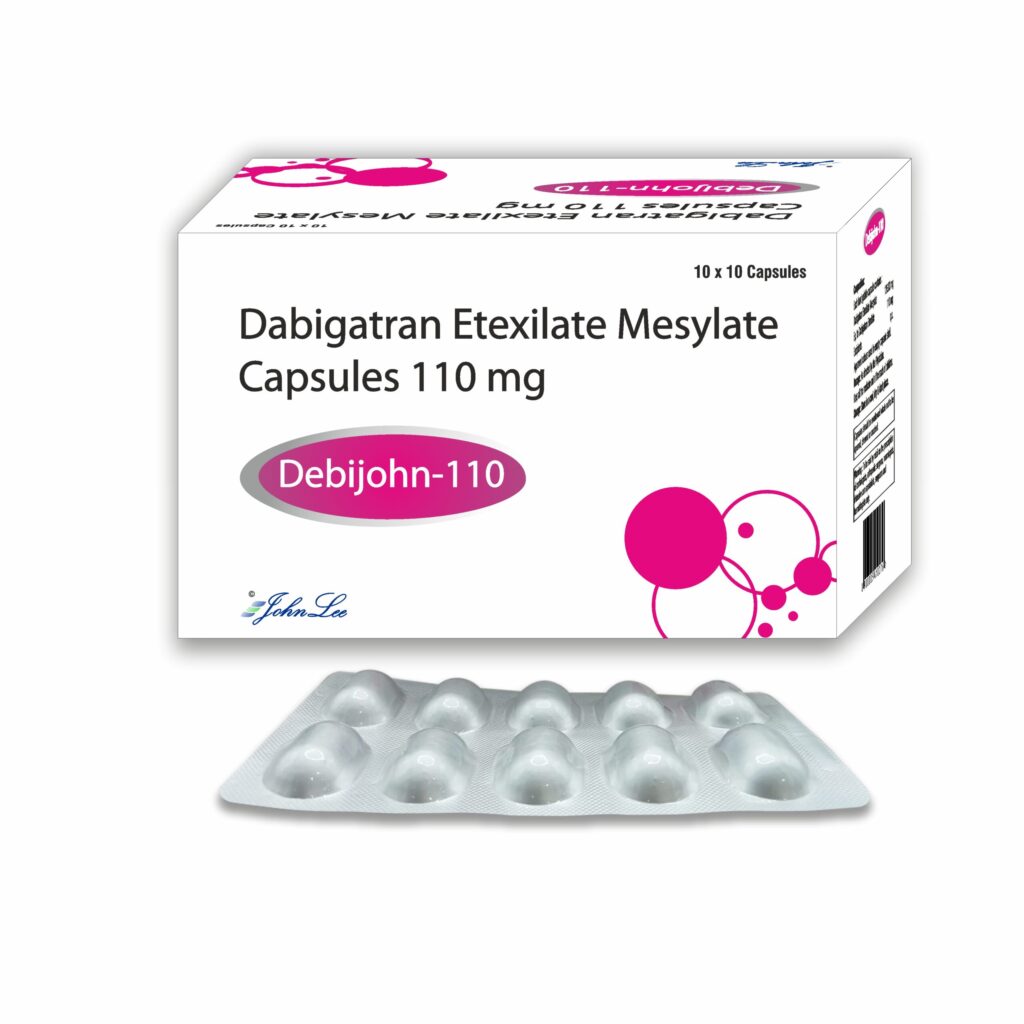
💊 Dabigatran Tablet 110 mg
🔹 1. Prescription / Indication:
Dabigatran 110 mg is an oral anticoagulant used to:
- Prevent stroke and systemic embolism in patients with non-valvular atrial fibrillation (AF)
- Prevent deep vein thrombosis (DVT) and pulmonary embolism (PE) after hip or knee replacement surgery
- Sometimes used in treatment or secondary prevention of DVT/PE
✅ 110 mg is often chosen for elderly patients (≥75 years) or those at increased bleeding risk
✅ Standard treatment dose in most adults is 150 mg twice daily (based on risk/benefit)
🔹 2. Description:
- Form: Oral capsule (not a tablet in many markets)
- Strength: 110 mg
- Appearance: Light blue and white or light-colored hard gelatin capsule
- Content: Contains dabigatran etexilate mesylate (a prodrug converted to active dabigatran in the body)
🔹 3. Advantages:
- Fixed oral dosing without need for regular INR monitoring (unlike warfarin)
- Rapid onset of action
- Lower risk of intracranial bleeding compared to warfarin
- Shorter half-life — faster offset if bleeding occurs or before surgery
- Available antidote (idarucizumab) in case of emergency bleeding
🔹 4. Nature / Pharmacological Class:
- Class: Direct oral anticoagulant (DOAC), specifically a Direct Thrombin Inhibitor
- Mechanism: Inhibits thrombin (factor IIa), preventing the conversion of fibrinogen to fibrin → stops clot formation
🔹 5. Common Packaging:
- Blister packs or strip packs of:
- 10 capsules
- 30 capsules
- 60 capsules
💡 Capsules are moisture-sensitive and come in desiccant blister strips (do not remove until use)
🔹 6. Storage:
- Store at room temperature (below 25°C or 77°F)
- Keep in original packaging to protect from moisture
- Do not transfer capsules to other containers
- Use capsule immediately after removing from blister
- Keep out of reach of children
🔹 7. Patient Advice / Counseling Points:
- Take whole – do not crush, chew, or open capsules (may increase bleeding risk)
- Take with a full glass of water, with or without food
- Do not skip doses – take at same time daily
- Inform all doctors/dentists about dabigatran use before procedures
- Avoid NSAIDs, aspirin, or other blood thinners unless directed
- Look for signs of bleeding:
- Unusual bruising
- Blood in urine/stools
- Vomiting blood
- Headaches or dizziness (may signal internal bleeding)
- Do not stop suddenly without consulting your doctor (risk of stroke/clot)
- Limit alcohol consumption
🔹 8. Purpose / Use:
- Prevention of thromboembolism in:
- Atrial fibrillation (non-valvular)
- Post-operative DVT/PE
- Alternative to warfarin in suitable patients
- Suitable for long-term oral anticoagulation therapy