
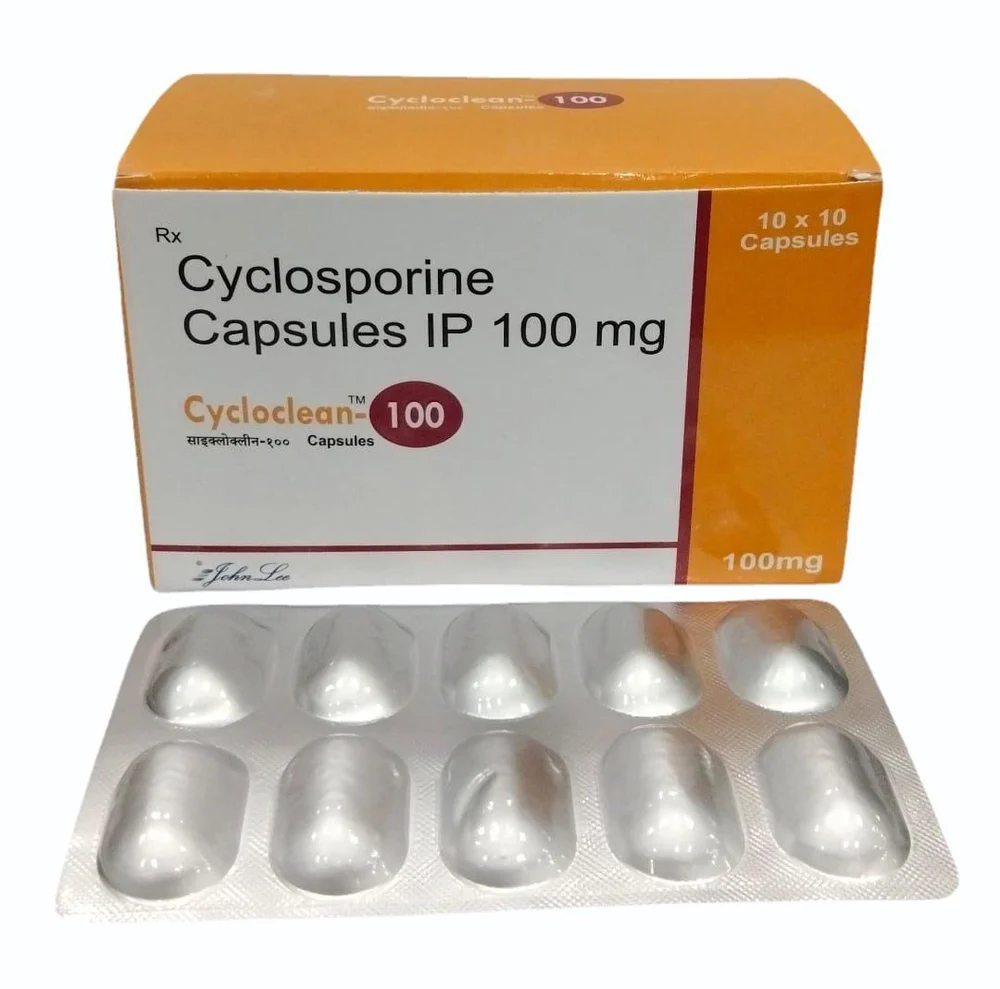
Cyclosporine Capsule 100 mg
1. DESCRIPTION / WHAT IS IT?
Cyclosporine Capsule 100 mg contains 100 milligrams of the active ingredient cyclosporine. It is an oral medication, typically available as a soft gelatin capsule.1 Similar to other strengths, it comes in two primary oral formulations: modified (e.g., Neoral, Gengraf, or their generics, designed for consistent and reliable absorption via microemulsion formation) and non-modified (e.g., Sandimmune, which is oil-based and has more variable absorption). The “modified” formulation is generally preferred for its predictable pharmacokinetics and is more commonly prescribed today.
It is classified as a potent calcineurin inhibitor and, broadly, as an immunosuppressant.2
2. NATURE (Pharmacology and Mechanism of Action)
- Classification: Immunosuppressant, Calcineurin Inhibitor.3
- Mechanism of Action: Cyclosporine works by selectively and powerfully inhibiting the activity of T-lymphocytes, which are crucial white blood cells responsible for cell-mediated immune responses (e.g., recognizing and attacking foreign tissues, or self-tissues in autoimmune diseases).4
- It achieves this by binding to an intracellular protein called cyclophilin.5
- This complex then inhibits calcineurin, an enzyme vital for activating a transcription factor (NF-AT).6 This transcription factor is responsible for initiating the production of various inflammatory cytokines, particularly interleukin-2 (IL-2).7
- By blocking the synthesis and release of IL-2 and other related cytokines, cyclosporine effectively prevents the activation, proliferation, and differentiation of T-cells, thereby profoundly suppressing the immune response without causing significant bone marrow suppression.8
3. ADVANTAGES
- Powerful Immunosuppression: The 100 mg strength allows for higher initial dosing or maintenance dosing necessary to achieve significant immune suppression, which is crucial for preventing organ rejection in transplant patients and controlling severe autoimmune diseases.
- Critical in Transplant Medicine: Cyclosporine’s introduction revolutionized organ transplantation, dramatically increasing graft survival rates and improving long-term patient outcomes by effectively controlling rejection responses.
- Steroid-Sparing Potential: Its potent immunosuppressive action often allows for the reduction or avoidance of high-dose corticosteroids, thereby minimizing the numerous side effects associated with steroid therapy.
- Oral Convenience: Provides the benefit of daily oral administration, facilitating long-term patient compliance.
- Targeted Action: Its primary focus on T-cells makes it a highly effective and relatively specific immunosuppressant compared to broader cytotoxic agents.
4. USES (Indications)
Cyclosporine Capsule 100 mg is used for conditions requiring significant and sustained immune suppression:
- Organ Transplant Rejection Prophylaxis: This is a primary and critical indication.9 It is used in combination with other immunosuppressive agents to prevent the immune system from rejecting transplanted solid organs such as kidneys, liver, heart, and pancreas.10
- Severe Autoimmune Diseases: When other conventional treatments have failed or are not tolerated, cyclosporine 100 mg may be used for:
- Severe Active Rheumatoid Arthritis: For patients with severe, active, and progressive disease not adequately controlled by other disease-modifying antirheumatic drugs (DMARDs).
- Severe Psoriasis (Plaque Psoriasis): For adults with severe, disabling, or recalcitrant (stubborn) plaque psoriasis who are unresponsive to other systemic therapies or for whom other therapies are contraindicated.11
- Nephrotic Syndrome: Particularly in cases of steroid-dependent or steroid-resistant nephrotic syndrome, such as Minimal Change Disease (MCD) and Focal Segmental Glomerulosclerosis (FSGS).12
- Severe Atopic Dermatitis (Eczema): For chronic, severe cases in adults that are refractory to conventional treatments.
5. STORAGE
- Store Cyclosporine Capsules at room temperature, typically between 20°C to 25°C (68°F to 77°F).
- Keep the capsules in their original blister pack or bottle with the lid tightly closed to protect them from moisture, heat, and direct light.13
- It is crucial not to refrigerate or freeze cyclosporine capsules, as this can adversely affect the integrity of the capsule and the stability of the formulation, potentially altering its absorption characteristics.
- Keep out of reach of children.