
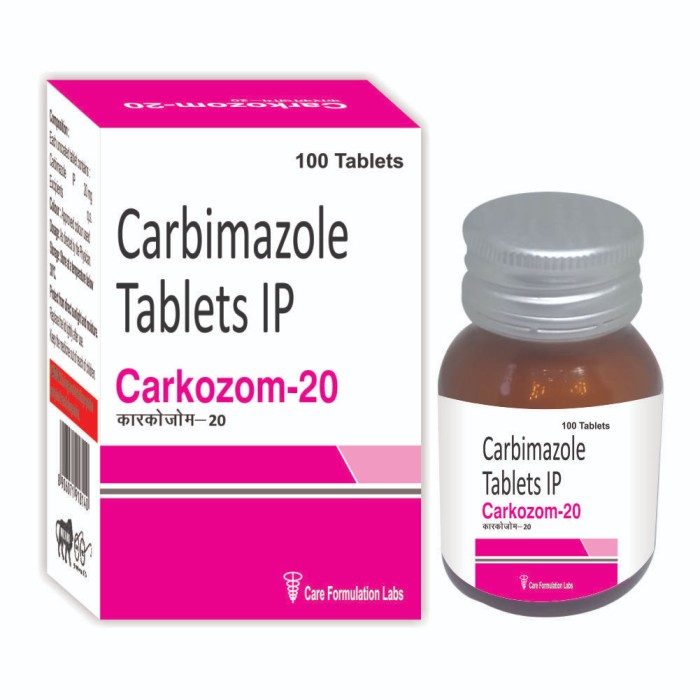
💊 Carbimazole Tablet 20 mg – As Licensed
📄 Description:
Carbimazole 20 mg is a high-strength antithyroid medication used in the treatment of hyperthyroidism. It inhibits the production of thyroid hormones by interfering with thyroid peroxidase, an enzyme involved in hormone synthesis.
It is a prodrug that is converted into the active compound methimazole in the body.
🧾 Prescription / Use:
Indications:
- Graves’ disease
- Toxic multinodular goitre
- Preparation before thyroid surgery
- Prior to radioactive iodine therapy
Dosage:
- Initial dose: 20–40 mg/day (1–2 tablets of 20 mg)
- Maintenance dose: 5–15 mg/day (dose tapered based on thyroid hormone levels)
- Duration: Typically 12–18 months, depending on response
Route: Oral
🔬 Nature:
- Class: Antithyroid drug (Thionamide)
- Mechanism: Inhibits thyroid peroxidase, reducing synthesis of T3 and T4
- Form: Tablet
- Conversion: Prodrug converted to methimazole
🌟 Advantages:
- High-dose formulation helps reduce pill burden in patients needing larger doses
- Non-surgical option for hyperthyroid treatment
- Controls symptoms and reduces thyroid hormone levels
- Can be used in adults, adolescents, and some pediatric cases under supervision
📦 Common Packaging:
- Supplied in blister strips of 10 or 15 tablets
- Each tablet clearly marked with strength, batch number, and expiry
- Comes in a labeled outer carton
🧊 Storage:
- Store at room temperature (below 25°C)
- Keep away from light and moisture
- Store in original packaging and out of reach of children
⚠️ Precautions:
Contraindications:
- Hypersensitivity to carbimazole or other thionamides
- History of agranulocytosis
- Severe liver disease
Use With Caution:
- Pregnancy: Use with caution; lower doses preferred, especially in the first trimester
- Breastfeeding: Can be used in low doses under medical supervision
- Liver or bone marrow disorders
Monitoring:
- Thyroid function tests, CBC, and liver function tests at regular intervals
Common Side Effects:
- Nausea
- Skin rash, itching
- Headache
- GI discomfort
Serious Side Effects:
- Agranulocytosis (sore throat, fever, mouth ulcers)
- Liver injury (jaundice, dark urine, fatigue)
- Joint pain, vasculitis
👩⚕️ Patient Advice:
- Take the medicine at the same time daily, preferably with meals
- Do not stop treatment suddenly unless advised by your doctor
- Contact your doctor immediately if you have:
- Fever
- Sore throat
- Mouth ulcers or unusual tiredness
- Attend all scheduled blood tests
- Inform your doctor if pregnant or planning pregnancy