
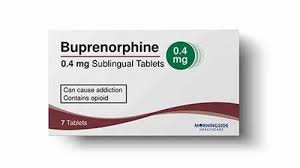
Here is the clinical profile for Buprenorphine Tablet (Sublingual) 0.4 mg — without brand names and in professional format:
💊 Buprenorphine Sublingual Tablet 0.4 mg
✅ DESCRIPTION
Buprenorphine is a partial opioid agonist, primarily used for pain management and opioid dependence treatment. The 0.4 mg sublingual tablet is a low-dose formulation used for mild pain or the initiation phase of opioid substitution therapy.
🧪 FORMULATION
- Active Ingredient: Buprenorphine Hydrochloride
- Strength: 0.4 mg
- Form: Sublingual tablet
- Route of Administration: Sublingual (under the tongue)
🌿 NATURE
- Class: Partial opioid agonist (µ-receptor) and antagonist (κ-receptor)
- Mechanism of Action: Binds to opioid receptors in the CNS, producing analgesia and suppressing withdrawal
- Potency: ~25–50 times stronger than morphine on a per mg basis
- Duration: Long-acting due to high receptor affinity
📌 USES
Approved Uses:
- Moderate to severe pain (acute or chronic)
- Opioid withdrawal management
- Opioid substitution therapy (OST) — usually in combination with other strengths/formulations
Off-label:
- Neuropathic pain
- Cancer pain (in opioid-tolerant patients)
- Step-down detox in opioid-dependent individuals
🌟 ADVANTAGES
- Ceiling effect for respiratory depression (safer than full agonists)
- Lower risk of overdose at this dose
- Useful in both pain and de-addiction management
- Long half-life allows less frequent dosing
- Lower abuse potential compared to full agonists
⚠️ PRECAUTIONS
Common Side Effects:
- Drowsiness, dizziness
- Constipation
- Dry mouth
- Nausea or vomiting
- Headache
Serious Risks:
- Respiratory depression (especially when combined with other CNS depressants)
- Withdrawal in opioid-dependent individuals if used improperly
- Hypotension, bradycardia
- Liver enzyme elevation
❌ CONTRAINDICATIONS
- Hypersensitivity to buprenorphine
- Severe respiratory insufficiency
- Acute intoxication with alcohol, sedatives, or other opioids
- Paralytic ileus
👩⚕️ USE IN SPECIAL POPULATIONS
- Pregnancy: Use only if clearly needed — may cause neonatal withdrawal
- Lactation: Secreted in breast milk; caution advised
- Elderly: Increased sensitivity possible
- Children: Use not established below 16 years
🔄 INTERACTIONS
- Benzodiazepines, alcohol, barbiturates → Increased CNS/respiratory depression risk
- Other opioids → Risk of withdrawal (due to receptor blocking)
- CYP3A4 inhibitors (e.g., ketoconazole, erythromycin) → May increase buprenorphine levels
- CYP3A4 inducers → May reduce effectiveness
💡 ADMINISTRATION ADVICE
- Place the tablet under the tongue and allow it to dissolve completely
- Do not chew, swallow, or crush
- Avoid eating or drinking until fully dissolved (~5–10 mins)
- Must be administered under medical supervision for opioid dependence
- Monitor closely during initiation and dose adjustments
🧊 STORAGE
- Store at 20–25°C (68–77°F)
- Protect from light and moisture
- Keep out of reach of children (risk of accidental overdose)
- Controlled substance — secure storage required