
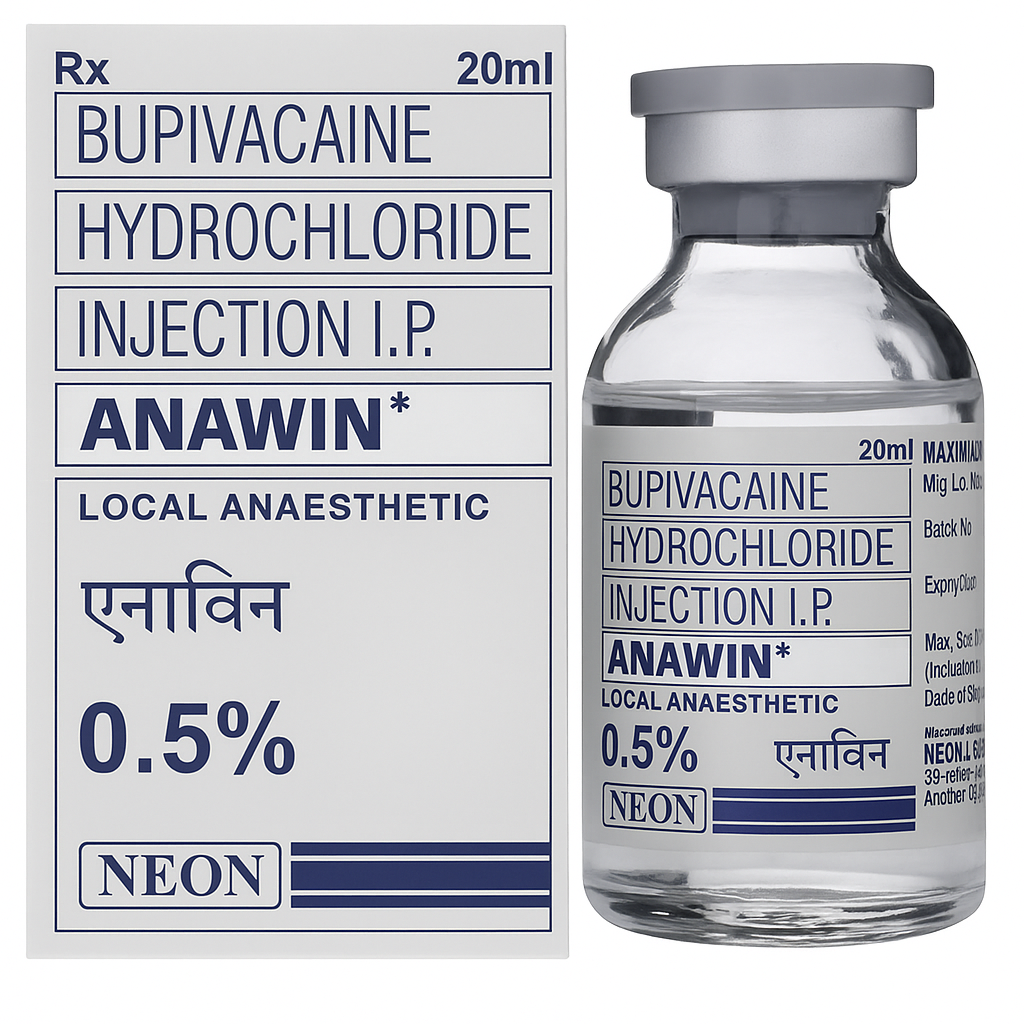
Bupivacaine Injection 0.5%
📘 Description
Bupivacaine Injection 0.5% is a sterile, non-pyrogenic, isotonic aqueous solution of bupivacaine hydrochloride, an amide-type long-acting local anesthetic. The 0.5% concentration provides 5 mg/mL of bupivacaine HCl, used for local or regional nerve block anesthesia in various surgical and obstetric procedures.
- Appearance: Clear, colorless or slightly yellow sterile solution
- Strength: 0.5% = 5 mg/mL
- Form: Injectable solution in glass ampoules or vials (commonly 10 mL or 20 mL)
- pH: Approximately 4.0 to 6.5
- Formulation may include: Sodium chloride (for tonicity) and preservatives (e.g., methylparaben), unless preservative-free for spinal use
📝 Prescription Information
- Route of Administration:
- Epidural, caudal, peripheral nerve block, spinal, and infiltration anesthesia
- NOT for intravenous injection
- Availability: Prescription-only (POM)
- ATC Code: N01BB01
💊 Uses
Bupivacaine 0.5% is commonly used for:
- Regional anesthesia in major surgeries (e.g., orthopedic, abdominal, gynecological)
- Epidural blocks – during labor, cesarean section, or postoperative pain control
- Spinal anesthesia – lower abdominal or limb procedures
- Peripheral nerve blocks – brachial plexus, femoral, sciatic
- Field blocks and infiltration anesthesia
- Postoperative pain relief – continuous infusion or single-shot injection
🌿 Nature
- Type: Long-acting amide local anesthetic
- Mechanism: Reversibly blocks sodium channels in nerves, preventing nerve signal transmission
- Onset: 10–20 minutes (depends on route and dose)
- Duration: 3–12 hours (depending on concentration and technique)
- Metabolism: Primarily in the liver
- Excretion: Renal
✅ Advantages
- Long duration of anesthesia – reduces need for repeated doses
- Potent sensory block – effective for major surgeries
- Suitable for epidural and nerve block
- Well-established safety profile when used correctly
- May be combined with epinephrine to prolong effect and reduce systemic absorption
⚠️ Precautions
- Cardiotoxicity – Accidental intravascular injection can cause arrhythmias, bradycardia, or cardiac arrest
- CNS toxicity – High plasma levels may cause dizziness, seizures, or unconsciousness
- Avoid IV use – Confirm needle position (aspirate before injection)
- Preservative-free only for spinal use
- Caution in:
- Elderly
- Patients with hepatic or renal impairment
- Pregnant women (adjust dosage)
- Resuscitation equipment must be available
- Test dose recommended before epidural or nerve blocks
📦 Common Packaging
- Ampoules or vials: 5 mL, 10 mL, 20 mL, 50 mL
- Preservative-free version required for intrathecal (spinal) administration
🧪 Storage
- Store below 25°C (77°F)
- Do not freeze
- Protect from light
- Use reconstituted solution within manufacturer’s recommended time (if applicable)