
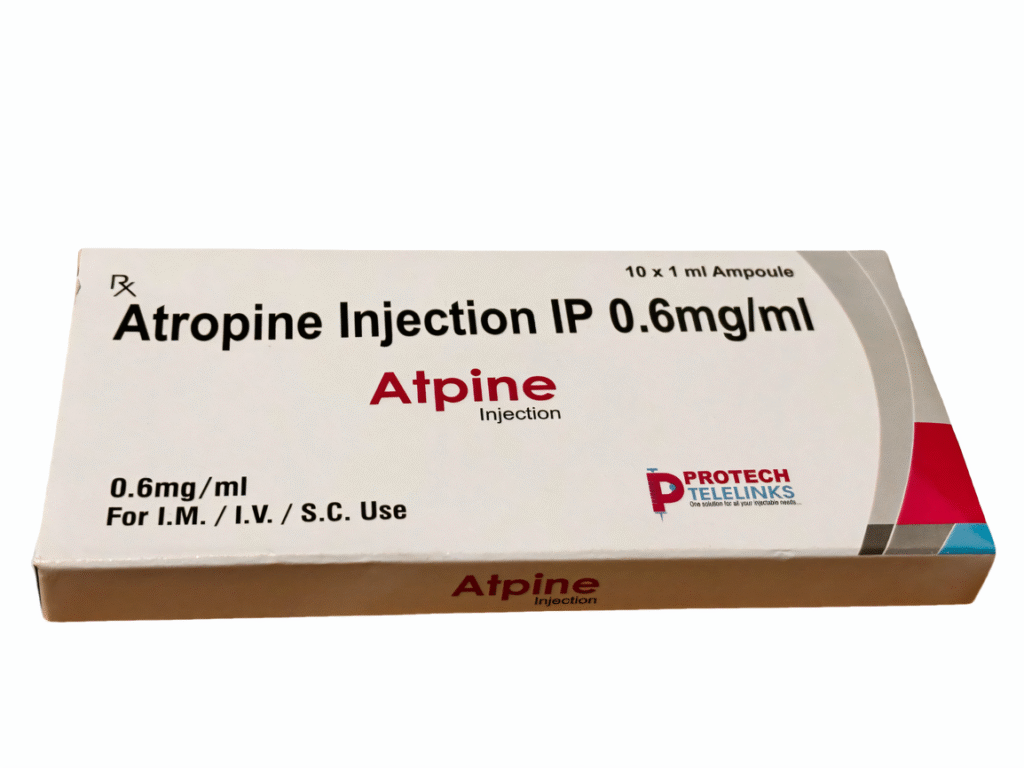
💉 Atropine Injection 0.6 mg/mL
📘 Description:
Atropine Injection 0.6 mg/mL is a sterile, non-pyrogenic injectable solution containing atropine sulfate, an anticholinergic (muscarinic antagonist) drug used to block the effects of the parasympathetic nervous system. It is most commonly used in emergency settings, anesthesia, and bradycardia management.
🔹 Formulation:
- Active Ingredient: Atropine Sulfate
- Concentration: 0.6 mg/mL
- Appearance: Clear, colorless sterile solution
- Packaging: Ampoules or vials (typically 1 mL, 2 mL)
- Route of Administration: IM, IV, or SC (depending on clinical need)
🧪 Nature / Mechanism of Action:
Atropine competitively inhibits acetylcholine at muscarinic receptors, particularly in the heart, salivary glands, and smooth muscles. This causes:
- Increased heart rate
- Reduced salivation
- Relaxation of smooth muscles
- Dilated pupils (mydriasis)
🩺 Uses / Indications:
- Bradycardia (low heart rate) – Emergency management
- Pre-anesthetic medication – To reduce secretions and prevent vagal reflexes
- Organophosphate or nerve agent poisoning – Antidote
- Reversal of neuromuscular blockade (with anticholinesterase)
- GI or urinary tract spasms – As an adjunct in some cases
✅ Advantages:
- Rapid onset of action (especially IV)
- Life-saving in bradycardia and poisoning
- Prevents anesthesia-related bradycardia
- Reduces risk of secretions during surgery
⚠️ Precautions:
- Use with caution in:
- Glaucoma (may increase intraocular pressure)
- Prostatic hypertrophy
- Tachycardia
- Myasthenia gravis
- Not recommended for long-term use unless indicated
- Avoid overdose (toxic symptoms include delirium and tachyarrhythmia)
📏 Typical Adult Dose (IV for Bradycardia):
- 0.5 mg every 3–5 minutes as needed
- Maximum total dose: 3 mg
- Pediatric and other doses must be titrated by physician
📦 Storage:
- Store below 25°C
- Protect from light
- Do not freeze
- Use aseptically and discard unused portion