
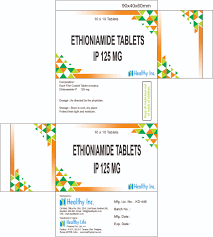
Here’s the structured profile for Ethionamide Tablet 125 mg 👇
💊 Ethionamide Tablet 125 mg
📘 Description:
- Ethionamide is a second-line antituberculosis drug.
- Mechanism: Prodrug activated by Mycobacterium tuberculosis enzyme → inhibits mycolic acid synthesis, an essential component of the bacterial cell wall.
- Mainly used for drug-resistant tuberculosis (MDR-TB, XDR-TB) or when first-line drugs cannot be used.
📄 Prescription / Indications:
- Multidrug-resistant TB (MDR-TB).
- XDR-TB regimens (with other 2nd line drugs).
- Sometimes used in leprosy when other drugs are not tolerated.
🌿 Nature / Drug Class:
- Antimycobacterial drug
- Thioamide derivative (structurally similar to isoniazid)
✅ Advantages:
- Effective against Mycobacterium tuberculosis, including resistant strains.
- Can penetrate into macrophages → active against intracellular bacilli.
- Works in combination regimens to improve outcomes.
⚠️ Precautions:
Contraindications:
- Hypersensitivity to Ethionamide.
Use with caution in:
- Liver disease (risk of hepatotoxicity).
- Diabetes (can worsen glycemic control).
- Psychiatric illness (may exacerbate depression/psychosis).
- Pregnancy – use only if absolutely necessary.
Adverse Effects:
- GI intolerance: nausea, vomiting, metallic taste, abdominal pain.
- Neurological: dizziness, depression, psychosis, seizures.
- Hepatotoxicity.
- Hypothyroidism (esp. with PAS).
- Peripheral neuropathy (reduced by pyridoxine supplementation).
💊 Dosage (Adults):
- 15–20 mg/kg/day in divided doses.
- Usual adult dose: 500–750 mg/day.
- 125 mg tablet helps with dose titration and gradual escalation (to improve tolerance and reduce GI side effects).
📦 Common Packaging:
- 125 mg and 250 mg tablets (blister/strip packs).
- Often supplied as part of second-line TB kits.
❄️ Storage:
- Store in a cool, dry place below 25°C.
- Protect from light and moisture.