
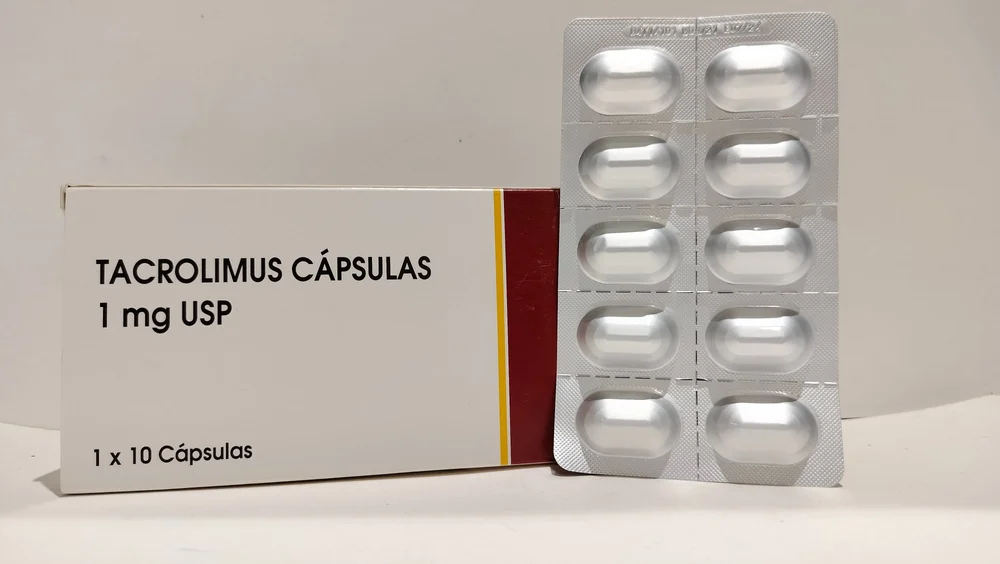
Tacrolimus Capsule 1 mg is essentially the same medication as the 0.5 mg capsule, with the key difference being the strength of the active ingredient. This higher strength capsule is used when a patient requires a larger dose of tacrolimus to achieve the desired immunosuppressive effect.
Here’s a summary, reiterating and expanding on the information for the 1 mg strength:
Description:
- Tacrolimus 1 mg capsules are hard gelatin capsules containing 1 milligram of tacrolimus.
- Like the 0.5 mg strength, the exact color and markings can vary depending on the manufacturer (e.g., Prograf, Hecoria, or various generic brands).
- It is a macrolide immunosuppressant that acts as a calcineurin inhibitor. This means it works at a cellular level to prevent the immune system’s T-lymphocytes from activating and attacking a transplanted organ.
Advantages/Benefits:
- Effective Immunosuppression: Provides a higher dose of tacrolimus when needed, which is crucial for preventing organ rejection in transplant recipients (kidney, liver, heart, lung).
- Improved Organ Survival: By effectively suppressing the immune response, it significantly increases the chances of the transplanted organ being accepted and functioning long-term.
- Flexibility in Dosing: Having different strengths (like 0.5 mg, 1 mg, 5 mg) allows doctors to precisely tailor the dosage to the individual patient’s needs and achieve optimal therapeutic blood levels.
Uses:
- Primary Use: Prophylaxis (prevention) of organ rejection in adult and pediatric patients who have received an allogeneic (from another person) organ transplant (liver, kidney, heart, lung).
- Management of Ongoing Rejection: Can also be used to treat existing organ rejection episodes.
- Off-label uses: In some cases, it may be used for certain severe autoimmune conditions like:
- Severe atopic dermatitis (though topical forms are more common for skin)
- Crohn’s disease (fistulizing)
- Graft-versus-host disease (GVHD)
- Other autoimmune disorders where immunosuppression is required.
Nature:
- Potent Immunosuppressant: It profoundly suppresses the immune system.
- Calcineurin Inhibitor: Its mechanism of action involves inhibiting calcineurin, an enzyme vital for T-cell activation.
- Narrow Therapeutic Index: This is a critical characteristic. Small changes in dose or blood levels can lead to either sub-therapeutic effects (risk of rejection) or toxic side effects. This is why therapeutic drug monitoring (TDM) is essential, involving regular blood tests to measure tacrolimus trough levels.
- Oral Administration: Taken by mouth.
- Highly Individualized Dosing: The 1 mg capsule is part of a flexible dosing regimen determined by the transplant type, patient’s weight, overall health, and the results of blood level monitoring.
Storage:
- Store below 30°C (86°F): Keep at room temperature.
- Protect from light and moisture: Store in the original container, away from direct sunlight and humidity.
- Keep out of reach of children: Always ensure medications are safely stored away from children.
- Do not chew or crush: The capsules should be swallowed whole.
- Proper Disposal: Dispose of any unused or expired medication safely, often through pharmacy take-back programs.