
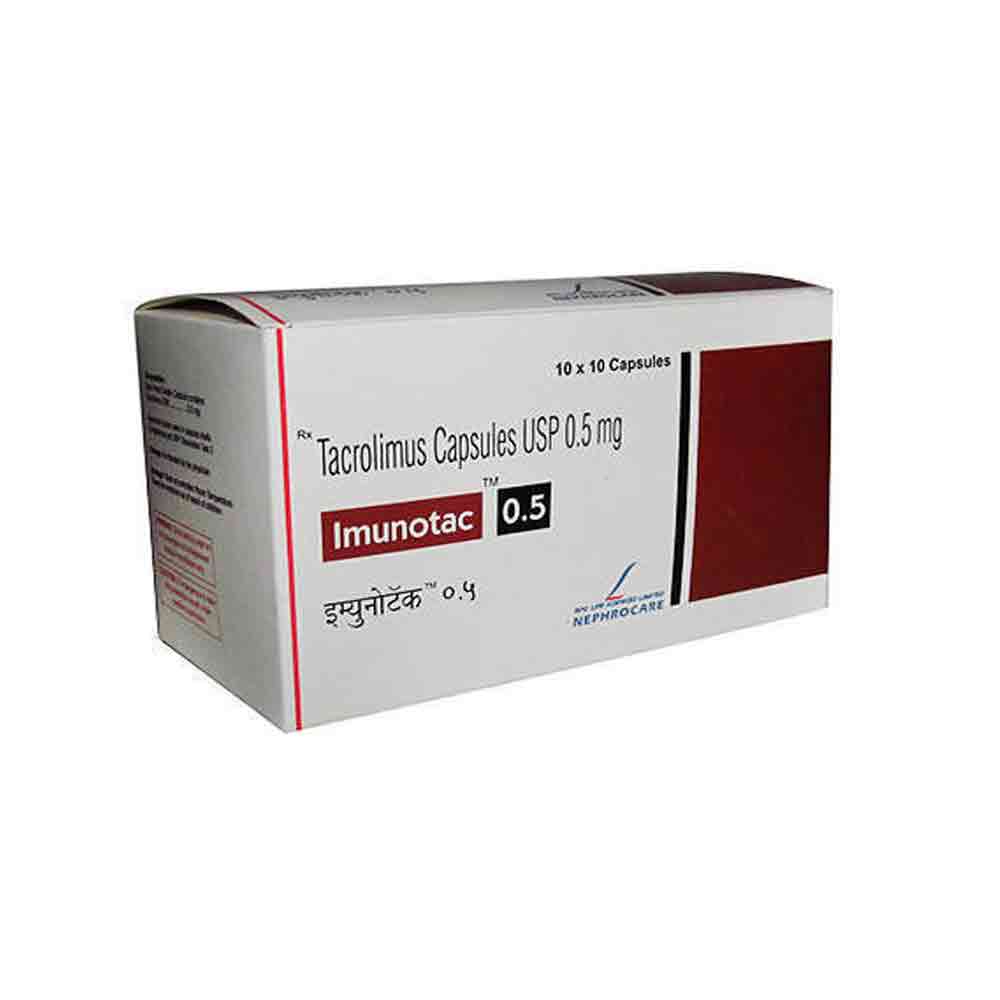
Tacrolimus Capsule 0.5 mg is a medication primarily used to prevent the body from rejecting a transplanted organ (such as a kidney, liver, heart, or lung).1 It belongs to a class of drugs known as immunosuppressants.2
Here’s a breakdown of its description, advantages, uses, nature, and storage:
Description:
- Tacrolimus 0.5 mg capsules are typically hard gelatin capsules.3 The exact appearance (color, markings) can vary by manufacturer.4
- The active ingredient, tacrolimus, is a macrolide immunosuppressant.5
- It works by suppressing the immune system to prevent the body’s white blood cells from attacking and rejecting the transplanted organ.6
Advantages/Benefits:
- Prevention of Organ Rejection: This is the primary and most significant benefit. Tacrolimus significantly increases the likelihood of a successful organ transplant by helping the body accept the new organ as its own.
- Often used in combination: It’s frequently used with other immunosuppressive medications to achieve a more robust and effective suppression of the immune system.7
Uses:
- Prevention of organ rejection in patients who have undergone:
- Kidney transplant
- Liver transplant
- Heart transplant8
- Lung transplant9
- In some cases, it may be used off-label for certain autoimmune diseases or other conditions, such as:
- Crohn’s disease (fistulizing)
- Graft-versus-host disease (GVHD)
- Myasthenia gravis
- Rheumatoid arthritis
- Severe atopic dermatitis (topical formulation)
Nature:
- Immunosuppressant: Tacrolimus is a powerful immunosuppressive agent.10 This means it weakens the body’s immune response.11
- Calcineurin Inhibitor: Specifically, it’s a calcineurin inhibitor.12 It works by binding to a protein called FKBP-12, and this complex then inhibits calcineurin, an enzyme crucial for T-lymphocyte activation and immune responses.
- Narrow Therapeutic Index Drug: Tacrolimus has a narrow therapeutic index, meaning there’s a small difference between an effective dose and a dose that causes significant side effects.13 This necessitates careful monitoring of blood levels.
- Oral Administration: It is typically taken by mouth.14
- Dosage is highly individualized: The dose is determined by the doctor based on factors like body weight, the type of transplant, and laboratory test results (e.g., tacrolimus trough levels in the blood).15
Storage:
- Store below 30 °C (86 °F): It’s generally recommended to store tacrolimus capsules at room temperature.
- Protect from light: Keep the medication in its original packaging and protect it from direct sunlight.16
- Keep in a cool, dry place: Avoid excessive heat and moisture.17
- Keep out of reach of children: As with all medications, ensure it’s stored safely away from children.
- Do not chew or crush: The capsules should be swallowed whole.18
- Dispose of safely: Ensure any leftover or expired medication is disposed of properly, often through medicine take-back programs.