
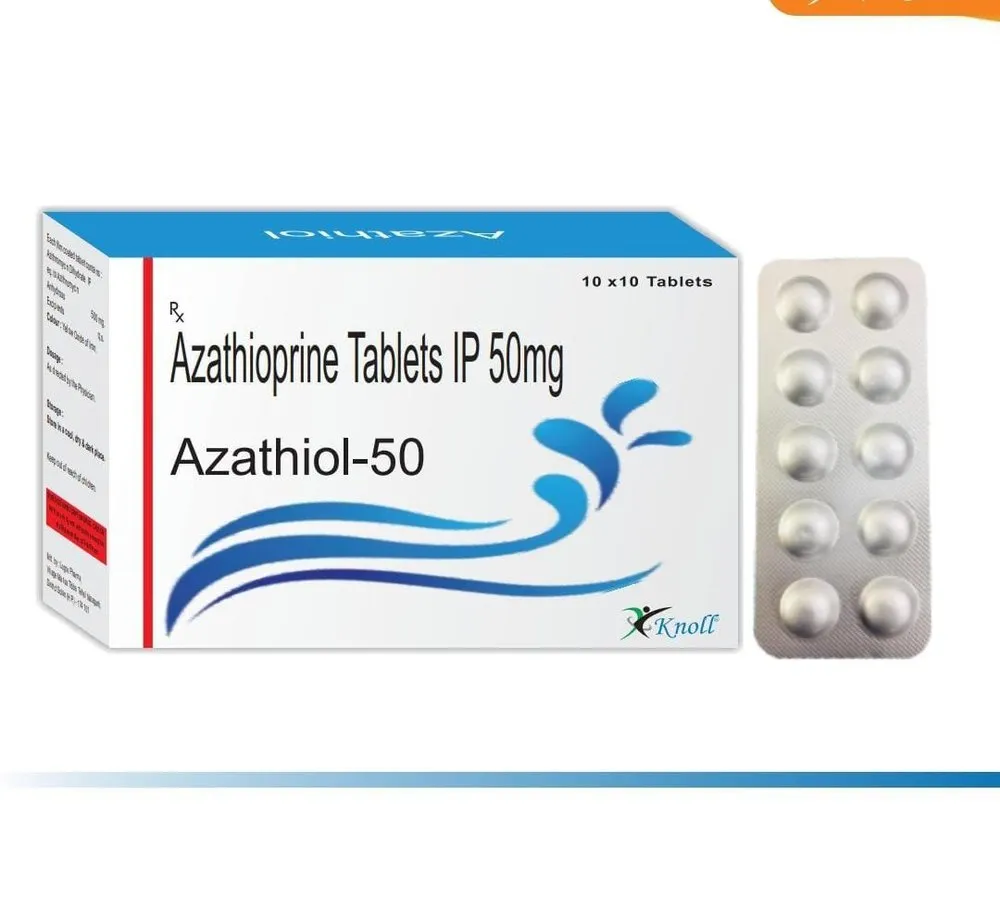
Azathioprine Tablet 50 mg
1. DESCRIPTION / WHAT IS IT?
Azathioprine is an oral medication containing 50 milligrams of the active pharmaceutical ingredient azathioprine. It is classified as an immunosuppressant drug and an antimetabolite. This means it works by dampening the activity of the body’s immune system.
It is considered a prodrug, meaning it’s inactive when administered but gets converted in the body (primarily in the liver) into its active metabolites, most notably 6-mercaptopurine (6-MP). These metabolites then exert the therapeutic effect.
The tablets are typically pale yellow, biconvex, and may be scored on one side for ease of breaking, though specific product characteristics can vary by manufacturer.
2. NATURE (Pharmacology and Mechanism of Action)
- Classification: Immunosuppressant, Antimetabolite (specifically, a purine analogue).
- Mechanism of Action: Azathioprine, via its active metabolites (like 6-MP), interferes with the synthesis of DNA and RNA. This primarily affects cells that rapidly divide and proliferate, such as various immune cells (T-lymphocytes and B-lymphocytes) that are crucial for mounting an immune response.
- By inhibiting the proliferation and function of these immune cells, azathioprine effectively suppresses the immune system’s activity.
- This suppression is beneficial in conditions where the immune system is overactive (autoimmune diseases) or needs to be prevented from attacking foreign tissues (organ transplantation).
- It is often considered a “steroid-sparing” agent, meaning it can allow for the reduction of corticosteroid doses in patients, thereby minimizing corticosteroid-related side effects.
3. ADVANTAGES
- Effective Immunosuppression: Highly effective in reducing immune system activity for preventing organ rejection and managing autoimmune diseases.
- Steroid-Sparing Effect: Its use often allows for the reduction or even discontinuation of corticosteroids, thereby decreasing the significant side effects associated with high-dose and long-term steroid use.
- Established Use: Has a long history of clinical use with extensive data supporting its efficacy in its approved indications.
- Oral Administration: Convenient for long-term daily management compared to injectable immunosuppressants.
- Versatile: Can be used alone or, more commonly, in combination with other immunosuppressants (like corticosteroids or cyclosporine) to achieve optimal immune modulation.
4. USES (Indications)
Azathioprine Tablet 50 mg is used in various conditions where immune system modulation is required:
- Organ Transplant Rejection Prevention:
- Most commonly used as an adjunct (in combination with other drugs, usually corticosteroids) to prevent the rejection of transplanted organs, such as kidneys, hearts, and livers. It helps the body accept the new organ by suppressing the immune response that would otherwise attack it.
- Autoimmune Diseases: Used for the management of severe, active, or refractory autoimmune conditions, often when other treatments (like corticosteroids) are insufficient or cause unacceptable side effects. These include:
- Rheumatoid Arthritis (Severe): To reduce pain, inflammation, stiffness, and slow down joint damage and disease progression.
- Systemic Lupus Erythematosus (SLE): To control inflammation affecting various organs.
- Inflammatory Bowel Disease (IBD): Such as Crohn’s Disease and Ulcerative Colitis, to induce and maintain remission.
- Dermatomyositis and Polymyositis: Inflammatory muscle diseases.
- Autoimmune Chronic Active Hepatitis: Chronic inflammation of the liver caused by the immune system.
- Pemphigus Vulgaris / Bullous Pemphigoid: Severe blistering skin disorders.
- Polyarteritis Nodosa: A type of vasculitis affecting blood vessels.
- Autoimmune Hemolytic Anemia: A blood disorder where the immune system attacks red blood cells.
- Chronic Refractory Idiopathic Thrombocytopenic Purpura (ITP): A blood disorder causing low platelet count.
- Sometimes used off-label for other conditions like Multiple Sclerosis (MS), though it’s not FDA-approved for this indication.
5. STORAGE
- Store Azathioprine tablets at room temperature, typically between 20°C to 25°C (68°F to 77°F).
- Keep the tablets in their original container, tightly closed, to protect them from moisture, heat, and direct light.
- Do not store in the bathroom or near the kitchen sink as humidity can affect the tablets.
- Keep out of reach of children and pets.