
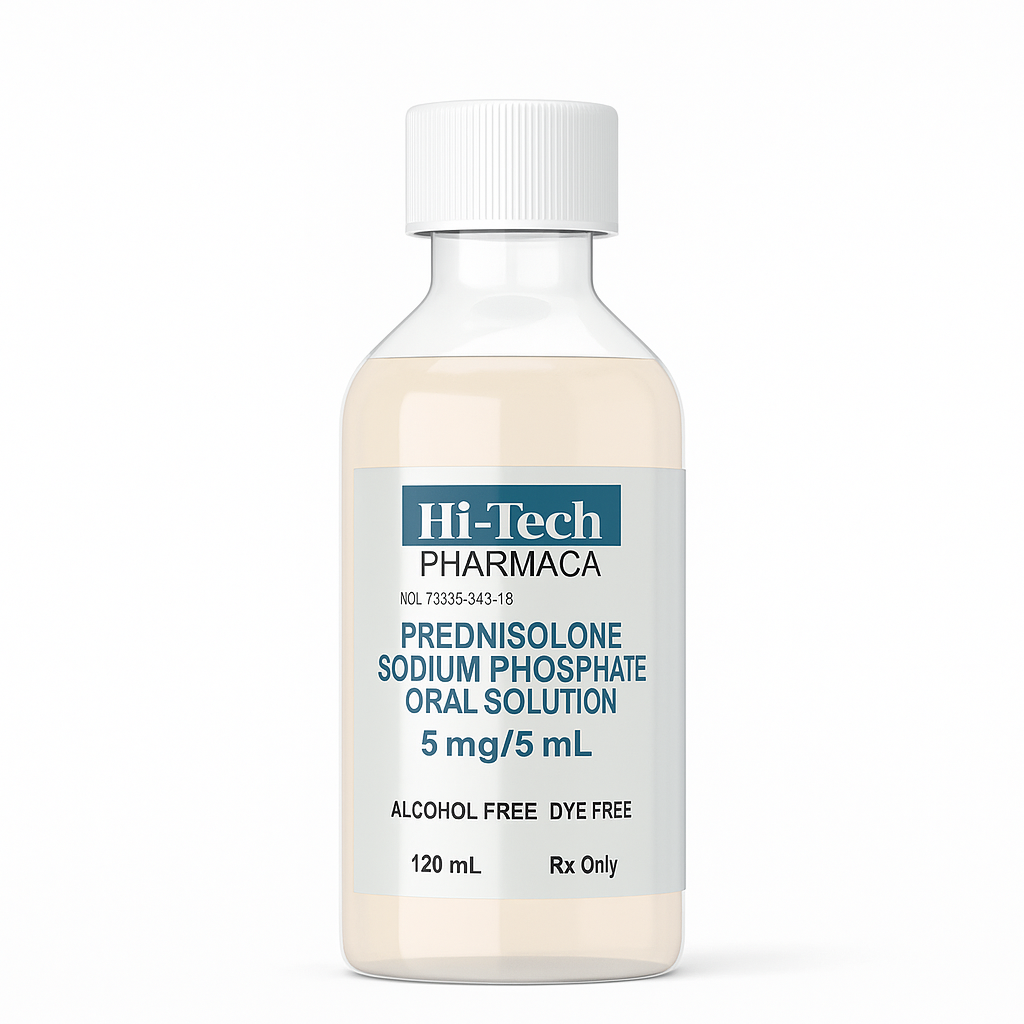
Prednisolone Oral Liquid 5 mg/5 mL
1. WHAT IS IT?
Prednisolone Oral Liquid 5 mg/5 mL means that every 5 milliliters (mL) of the liquid contains 5 milligrams (mg) of prednisolone. This makes it a 1 mg/mL concentration. It’s a synthetic corticosteroid (glucocorticoid), designed for oral administration. The liquid form allows for flexible and accurate dosing, especially for doses smaller than a full tablet or for patients needing very precise adjustments.
2. NATURE (Pharmacology and Mechanism of Action)
- Classification: Glucocorticoid (a type of corticosteroid).
- Mechanism of Action:
- Anti-inflammatory: It effectively reduces inflammation by suppressing the release of inflammatory mediators and altering the body’s immune response. This leads to a decrease in swelling, pain, redness, and heat.
- Immunosuppressive: It dampens the activity of the immune system, making it useful in autoimmune diseases where the immune system mistakenly attacks the body’s own tissues.
- Replacement Therapy: It can replace natural corticosteroids in conditions where the adrenal glands produce insufficient amounts.
3. ADVANTAGES
- Precise Dosing: The liquid form allows for very accurate dose adjustments, which is crucial, especially in children where dosing is often weight-based (mg/kg). A calibrated measuring device (syringe or spoon) is usually provided.
- Ease of Administration: Ideal for children, infants, and adults who have difficulty swallowing tablets or capsules.
- Faster Absorption (Potentially): Liquid forms can sometimes be absorbed more quickly than solid tablets.
- Versatility: Can be diluted if needed (though typically not recommended unless advised by a pharmacist) or mixed with food/drink (check specific product instructions).
4. USES (Common Indications for 5 mg/5 mL Strength)
This strength is very common for a wide range of conditions due to its flexible dosing.
- Allergies: Allergic rhinitis, asthma, skin rashes (eczema, dermatitis), severe allergic reactions.
- Respiratory Conditions: Acute asthma exacerbations, croup in children.
- Inflammatory Conditions:
- Arthritis: Rheumatoid arthritis, juvenile idiopathic arthritis, gout.
- Gastrointestinal: Inflammatory bowel disease (Crohn’s, ulcerative colitis) flare-ups.
- Skin: Psoriasis, severe eczema, other inflammatory dermatoses.
- Eye: Inflammatory eye disorders (e.g., uveitis).
- Autoimmune Diseases: Systemic lupus erythematosus, certain vasculitides.
- Blood Disorders: Certain anemias, ITP (idiopathic thrombocytopenic purpura).
- Adrenal Insufficiency: As a replacement therapy.
- Certain Cancers: As part of chemotherapy regimens.
- Central Precocious Puberty: For diagnosis and management.
5. PRECAUTIONS
The precautions for oral liquid prednisolone are largely the same as for tablets, but the ease of administration can sometimes lead to less vigilance.
- Do NOT Stop Abruptly: This is paramount. If taken for more than a few weeks or at high doses, sudden discontinuation can lead to adrenal insufficiency (withdrawal symptoms), which can be life-threatening. The dose must be tapered down gradually under a doctor’s supervision.
- Increased Risk of Infection: Suppresses the immune system, increasing susceptibility to infections (bacterial, viral, fungal, parasitic) and masking their symptoms. Avoid exposure to people with contagious diseases (e.g., chickenpox, measles). Report any signs of infection (fever, sore throat, unusual pain) immediately.
- Existing Medical Conditions: Use with extreme caution and inform your doctor if you or the patient have:
- Diabetes: Can significantly raise blood sugar.
- High Blood Pressure: Can worsen hypertension.
- Osteoporosis: Can lead to bone thinning.
- Stomach Ulcers/GI Bleeding: Can worsen or cause ulcers; often prescribed with a stomach protector (e.g., PPI).
- Heart Conditions: Can lead to fluid retention and worsen heart failure.
- Kidney or Liver Disease: May alter drug metabolism.
- Glaucoma/Cataracts: Can worsen or cause these eye conditions with long-term use.
- Mental Health Issues: Can cause mood swings, anxiety, depression, rarely psychosis.
- Any active infections (especially fungal or viral like herpes simplex eye infection).
- Children:
- Can suppress growth in children with long-term use. Growth should be closely monitored by a pediatrician.
- Careful dosing is essential, often calculated based on weight.
- Pregnancy and Breastfeeding: Should be used only if clearly needed and after careful risk-benefit assessment by a doctor. Small amounts may pass into breast milk; discuss with your doctor.
- Vaccinations: Live vaccines should generally be avoided during high-dose or long-term prednisolone therapy.
- “Steroid Card”: If on long-term or high-dose therapy, carrying a “steroid card” is essential to inform medical professionals.
- Alcohol/Sugar Content: Some liquid formulations may contain alcohol, sugar, or aspartame. Check the label if the patient has sensitivities or conditions like diabetes or PKU.
6. STORAGE
- Store Prednisolone Oral Liquid at room temperature (typically 20°C to 25°C or 68°F to 77°F), unless otherwise specified on the label.
- Do not freeze (freezing can affect the suspension or solution).
- Keep in the original, tightly closed bottle to protect from light and moisture.
- Keep out of reach of children.
- Always use the calibrated measuring device provided with the medication for accurate dosing; household spoons are inaccurate.