
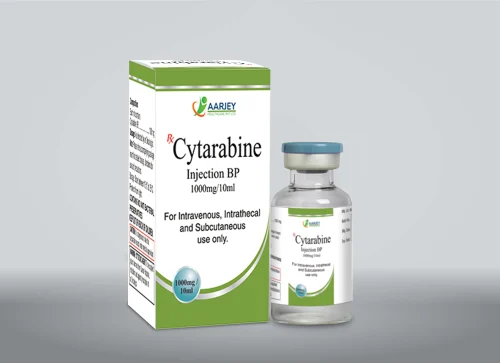
💊 Medicine Name:
Cytosine Arabinoside
(Common name: Cytarabine)
💉 Formulation:
Injection – Lyophilized powder for reconstitution, for IV, SC, or intrathecal administration
💪 Strength:
1000 mg (1 gram) per vial
📜 Description:
Cytarabine is a pyrimidine antimetabolite used extensively in the chemotherapy of hematological malignancies, particularly acute myeloid leukemia (AML). It inhibits DNA synthesis and targets cells actively dividing in the S-phase of the cell cycle.
🌿 Nature:
- Cytotoxic antineoplastic agent
- Antimetabolite class (pyrimidine analogue)
- Cell cycle specific (S-phase)
- Water-soluble lyophilized powder
- Administered systemically or directly into the cerebrospinal fluid for CNS prophylaxis/treatment
🌟 Advantages:
- Standard and high-dose regimens available for different stages of AML treatment (induction, consolidation, maintenance)
- High-dose formulations (like 1 g vials) reduce the need for multiple small-dose vials during intensive regimens
- Crucial in CNS leukemia treatment when given intrathecally
- Plays a key role in pediatric and adult leukemia protocols
- Effective and widely studied; included in numerous standardized treatment regimens worldwide
🧾 Prescription:
- Prescription-only medicine (Rx)
- For use only under supervision of hematologists or oncologists in a hospital/chemotherapy center
🎯 Indications / Uses:
- Acute Myeloid Leukemia (AML) – induction, consolidation, maintenance
- Acute Lymphoblastic Leukemia (ALL)
- Blast crisis of Chronic Myeloid Leukemia (CML)
- CNS leukemia
- Occasionally in non-Hodgkin lymphoma as part of combination therapy
📦 Packaging:
- Supplied as a sterile, lyophilized powder in clear glass vials
- Requires reconstitution with sterile water for injection or other approved diluents
- May come with labeling such as “Cytotoxic – Handle with gloves”
🧊 Storage:
- Store dry powder at 15–25°C
- Keep away from light and moisture
- After reconstitution, use promptly or store according to specific stability guidance
- Do not freeze the reconstituted solution
👨⚕️ Patient Advice:
- Treatment must be given in a controlled medical setting
- Patients will undergo frequent blood tests to monitor bone marrow activity
- Ophthalmic drops may be required during high-dose therapy to prevent eye toxicity
- Report any signs of infection, bleeding, or neurological symptoms immediately
- Avoid live vaccines and contact with sick people during therapy