
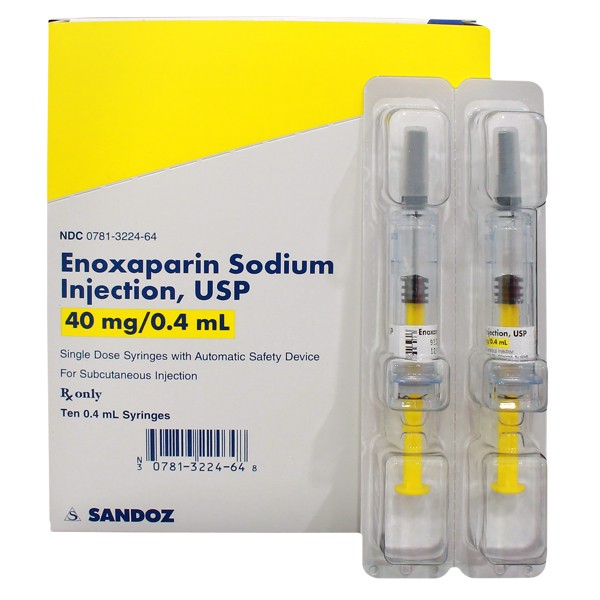
💉 Enoxaparin Injection 40 mg/0.4 mL
🔹 1. Prescription / Indication:
Enoxaparin 40 mg/0.4 mL is a low molecular weight heparin (LMWH) anticoagulant used for:
- Prevention of Deep Vein Thrombosis (DVT) in:
- Hospitalized patients
- Post-surgical patients (especially orthopedic or abdominal surgery)
- Prophylaxis of Pulmonary Embolism (PE)
- Used during immobility (e.g., prolonged bed rest)
🩸 This is a prophylactic (preventive) dose, not a therapeutic dose.
🔹 2. Description:
- Form: Pre-filled syringe for subcutaneous injection
- Strength: 40 mg of enoxaparin in 0.4 mL solution
- Appearance: Clear to pale yellow liquid
- Administration: Subcutaneous (under the skin), usually into the abdominal area
🔹 3. Advantages:
- Predictable anticoagulant effect — routine monitoring of clotting is usually not required
- Longer half-life than unfractionated heparin
- Lower risk of heparin-induced thrombocytopenia (HIT)
- Can be self-administered by trained patients at home
- Convenient once-daily dosing for prophylaxis
🔹 4. Nature / Pharmacological Class:
- Class: Anticoagulant, Low Molecular Weight Heparin (LMWH)
- Mechanism of Action:
- Inhibits Factor Xa and thrombin (Factor IIa)
- Prevents formation of blood clots
🔹 5. Common Packaging:
- Available as pre-filled syringes containing:
- 40 mg/0.4 mL
- Pack sizes: Single syringes or boxes of 2, 10, or more
- With or without automatic needle safety system
🔹 6. Storage:
- Store at room temperature (15–25°C / 59–77°F)
- Do not freeze
- Protect from light and moisture
- Keep out of reach of children
🔹 7. Patient Advice / Counseling Points:
- Use exactly as prescribed
- Inject into fatty tissue (abdomen or thigh) – rotate sites
- Do not rub the site after injection to avoid bruising
- Dispose of syringe safely in sharps container
- Do not use if solution is cloudy, discolored, or contains particles
- Inform doctor of:
- Bleeding problems
- Low platelet count (thrombocytopenia)
- Kidney disease
- Upcoming spinal/epidural anesthesia
- Avoid NSAIDs, aspirin, or other anticoagulants unless prescribed
- Watch for signs of bleeding:
- Unusual bruising
- Blood in urine or stools
- Nosebleeds or gum bleeding
- Dizziness or headache (signs of internal bleeding)
🔹 8. Purpose / Use:
- Prevent blood clots (DVT and PE) in:
- Postoperative patients (especially hip/knee surgery)
- Hospitalized or immobile patients
- Often used in pregnancy or cancer patients to prevent clots (under supervision)