
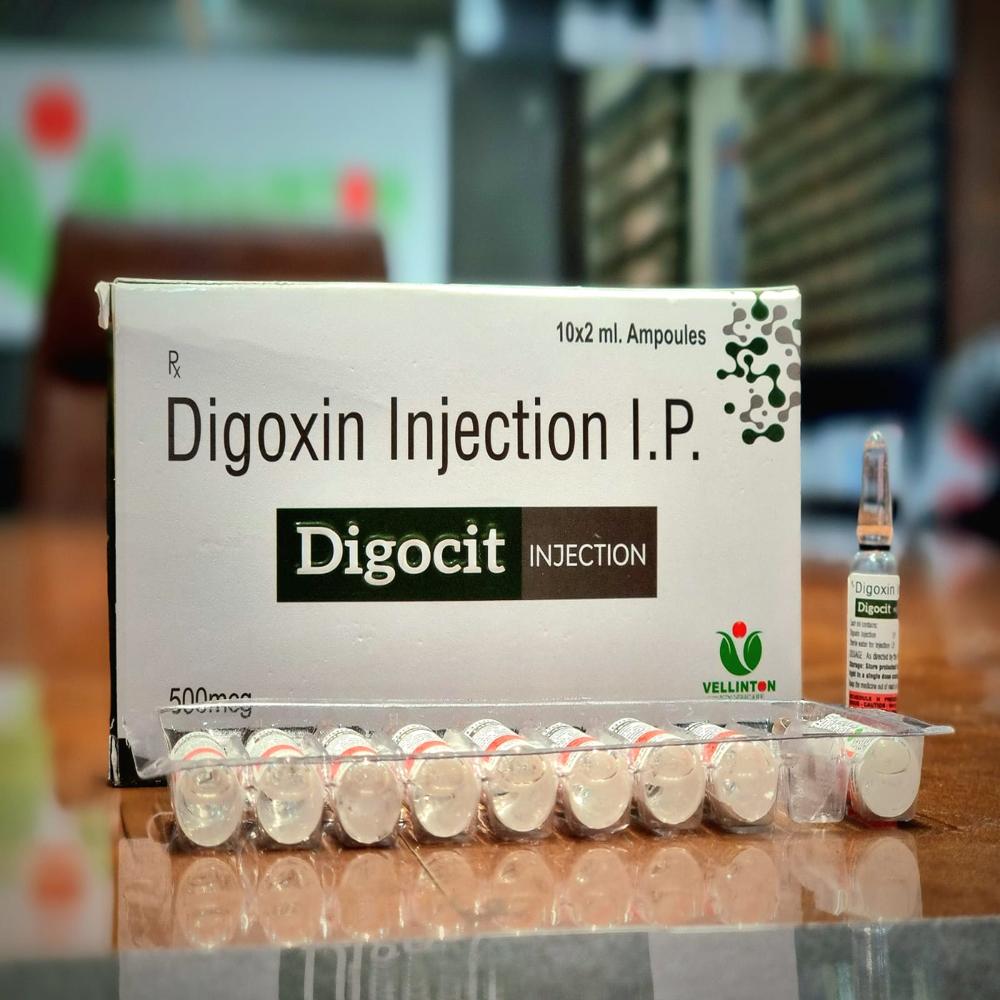
📌 Medicine Name:
Digoxin Injection 0.25 mg/mL
(Generic name: Digoxin)
Also written as 250 micrograms/mL
📋 Description / Prescription:
- Type: Cardiac glycoside
- Form: Sterile injectable solution
- Strength: 0.25 mg (250 mcg) per mL
- Route: Intravenous (IV) or intramuscular (IM) – IV preferred
- Prescription: ✅ Required
- Schedule: Rx-only / Schedule H
💉 Indications / Uses:
- Rapid digitalization in urgent settings
- Atrial fibrillation and atrial flutter (to control ventricular rate)
- Heart failure, especially in patients who can’t take oral medications
🔬 Nature / Mechanism of Action:
- Inhibits Na⁺/K⁺ ATPase, causing intracellular sodium buildup
- This leads to increased intracellular calcium, improving cardiac contractility (positive inotropy)
- Enhances vagal tone, slowing AV node conduction (rate control in AF)
- Therapeutic index is narrow – close monitoring is essential
✅ Advantages / Benefits:
- ✅ Fast onset – useful for emergency stabilization
- ✅ Suitable when oral route is not feasible
- ✅ Lower doses achieve effective blood levels quickly
- ✅ Helps reduce symptoms and hospitalization in heart failure
📦 Packaging:
- Supplied in ampoules or vials
- Common packs:
- 2 mL ampoules = 0.5 mg total
- Often packaged in blister or carton boxes
- Clear, colorless or pale yellow solution
- Single-use vial/ampoule (discard unused portion)
🌡️ Storage Instructions:
- Store at 15°C to 25°C (59°F–77°F)
- Protect from light
- Do not refrigerate or freeze
- Keep in original packaging until use
- Use immediately after opening
⚠️ Precautions / Contraindications:
❌ Contraindications:
- Ventricular fibrillation
- Digoxin hypersensitivity
- Advanced AV block without pacemaker
- Digitalis toxicity symptoms
⚠️ Use with Caution in:
- Renal impairment (adjust dose)
- Elderly patients
- Electrolyte imbalance (hypokalemia, hypomagnesemia, hypercalcemia)
- Thyroid disorders (affects metabolism)
- Concomitant use with interacting drugs:
- Amiodarone
- Verapamil
- Quinidine
- Diuretics
💉 Administration Advice
- Administer IV slowly over 5 minutes or more
- Dilute in normal saline if needed
- Monitor heart rate and rhythm during administration
- IM use is less preferred due to pain and risk of tissue damage
👩⚕️ Patient Advice
- Explain why injection is being used (e.g., emergency heart control)
- Inform about signs of toxicity
- Let healthcare staff know about any other medications or kidney issues
- May switch to oral therapy once stable