
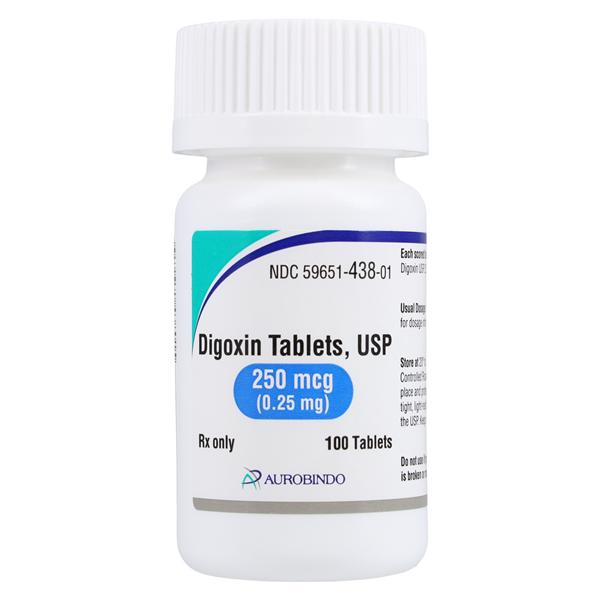
📌 Medicine Name
Digoxin Tablet 0.25 mg
(Also known as digitalis; derived from the Digitalis lanata plant)
📋 Description / Prescription
- Type: Cardiac glycoside
- Form: Oral tablet
- Strength: 0.25 mg (250 micrograms)
- Prescription: ✅ Required
- Schedule: Often Schedule H (in India) or Rx-only (globally)
- Used for:
- Heart failure (especially with reduced ejection fraction)
- Atrial fibrillation and atrial flutter (for rate control)
🔬 Nature / Mechanism of Action
Digoxin increases the force of myocardial contractions and slows conduction through the atrioventricular (AV) node.
- Inhibits sodium-potassium ATPase pump → ↑ intracellular sodium → ↑ calcium in heart cells → stronger contraction (positive inotropic effect)
- Enhances vagal tone → slows AV node conduction → helps control heart rate in AF/flutter
Onset of Action (oral): ~1–2 hours
Half-life: 36–48 hours (longer in elderly or kidney disease)
Narrow therapeutic index — requires blood level monitoring
✅ Advantages / Benefits
- ✅ Improves cardiac output in heart failure
- ✅ Helps control ventricular rate in atrial fibrillation
- ✅ Especially helpful in patients with heart failure and AF
- ✅ Once-daily dosing due to long half-life
- ✅ Reduces hospitalization for heart failure
- ✅ Available as oral and injectable forms
📦 Packaging
- Commonly available in blister strips or plastic bottles
- Each tablet contains 0.25 mg of digoxin
- Available pack sizes: 10, 30, 100 tablets
- Tablets are usually small, round, and white or yellow in color
- May be scored for dose adjustment
🌡️ Storage Conditions
- Store at 15°C–25°C (59°F–77°F)
- Protect from light and moisture
- Keep in original container
- Keep out of reach of children
⚠️ Precautions / Contraindications
❌ Do NOT use in:
- Ventricular fibrillation
- Hypersensitivity to digoxin or digitalis
- Advanced AV block without pacemaker
- Digoxin toxicity history
⚠️ Use with caution in:
- Elderly patients (increased toxicity risk)
- Renal impairment (renally excreted — dose must be adjusted)
- Electrolyte imbalances:
- Hypokalemia
- Hypercalcemia
- Hypomagnesemia
- Thyroid disorders (affect digoxin metabolism)
- Use with interacting drugs: diuretics, amiodarone, verapamil, quinidine, erythromycin, etc.
👩⚕️ Patient Advice / Counseling Points
✅ How to Take:
- Take once daily, at the same time each day
- Can be taken with or without food
- Do not skip or double dose
- If a dose is missed, take it as soon as possible unless it’s close to the next dose
✅ What to Avoid:
- Avoid antacids, kaolin-pectin, cholestyramine within 2 hours of digoxin (reduces absorption)
- Avoid over-the-counter herbal products without doctor approval
- Avoid abrupt discontinuation
✅ Monitor for Side Effects / Toxicity:
- Nausea, vomiting, loss of appetite
- Visual changes (yellow or blurred vision)
- Confusion, dizziness
- Irregular or slow heartbeat