
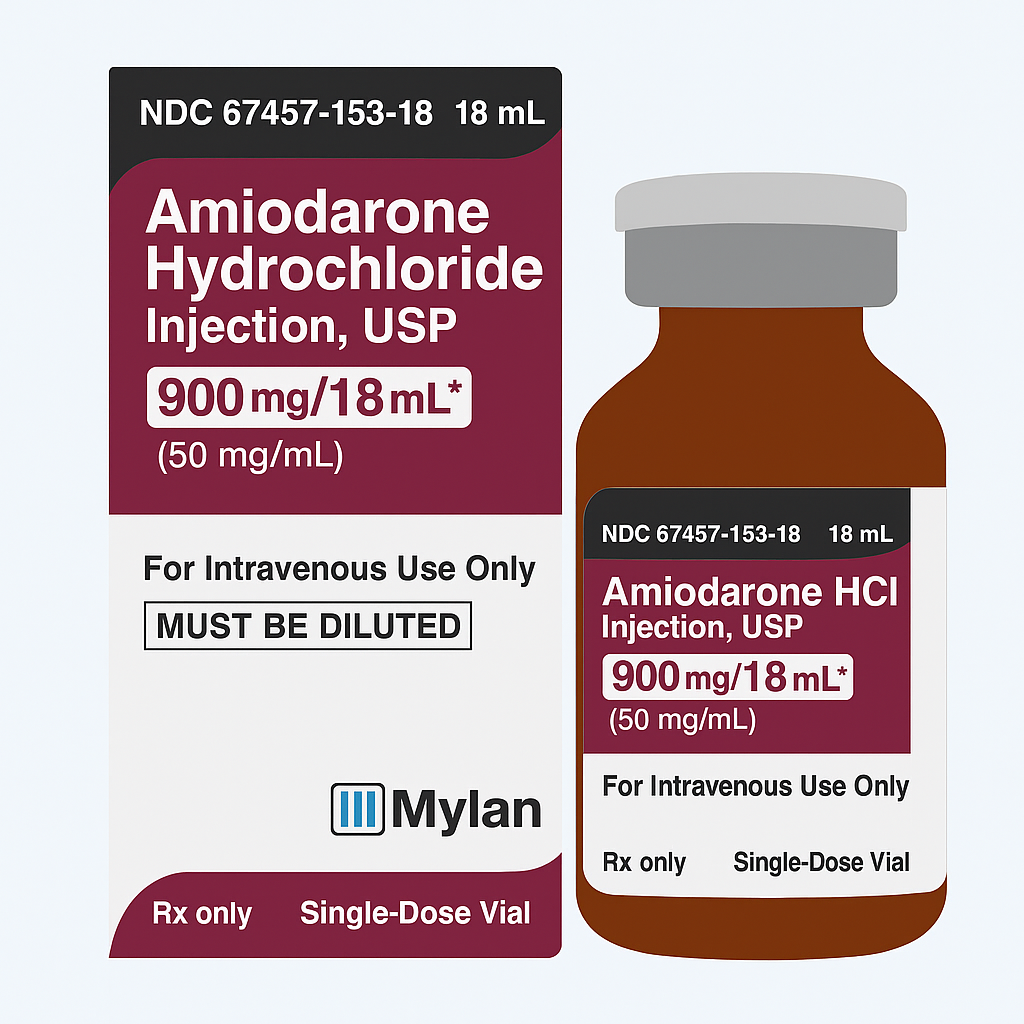
📌 Medicine Name:
Amiodarone Injection 50 mg/mL
(Also known as Amiodarone Hydrochloride for Injection)
📋 Description / Prescription:
Amiodarone injection is a prescription-only, Class III antiarrhythmic drug used intravenously (IV) in emergency or acute settings to treat life-threatening ventricular arrhythmias.
- Form: Injectable solution
- Strength: 50 mg/mL
- Available concentrations: Typically in 3 mL ampoules or 150 mg/3 mL vials
- Route: Intravenous infusion (IV only, not for IM or SC use)
- Prescription Required: ✔️ Yes
🩺 Indications / Uses:
- Ventricular tachycardia (VT) – especially hemodynamically unstable or pulseless
- Ventricular fibrillation (VF) – refractory to defibrillation and epinephrine
- Prevention of recurrent arrhythmias during or after cardiac resuscitation
- Temporary arrhythmia control before oral therapy initiation
🔬 Nature / Mechanism of Action:
Amiodarone primarily blocks potassium channels (Class III), which prolongs repolarization and the action potential duration.
It also:
- Inhibits sodium channels (Class I)
- Shows beta-blocking (Class II) and calcium channel blocking (Class IV) effects
- Slows SA node and AV node conduction, prolongs QT interval
🧪 Highly lipophilic, extensive tissue distribution
⏳ Half-life (IV): Shorter than oral, but effects may persist due to tissue binding
✅ Advantages / Benefits:
- ✅ Rapid action during cardiac emergencies
- ✅ Effective for both atrial and ventricular arrhythmias
- ✅ Can be used when oral route is not feasible
- ✅ Low proarrhythmic risk compared to other antiarrhythmics
- ✅ Can convert or stabilize rhythm before cardioversion
💉 Common Dosage & Administration:
🔹 For Pulseless VT/VF (Advanced Cardiac Life Support – ACLS):
- Initial dose: 300 mg IV push (undiluted)
- May repeat: 150 mg IV push if arrhythmia persists
🔹 For Stable Wide-Complex Tachycardia / Recurrent VT/VF:
- Loading dose: 150 mg in 100 mL D5W over 10 minutes
- Followed by:
- 360 mg over next 6 hours (1 mg/min)
- Then 540 mg over 18 hours (0.5 mg/min)
- Max dose (per 24 h): Typically 2.2 g
🧴 Diluent: Use D5W (5% dextrose in water)
❗ Always use an in-line filter (0.22 micron) during IV infusion
📦 Common Packaging:
- Glass ampoules or vials:
- 150 mg/3 mL (50 mg/mL)
- May also come in pre-filled syringes
- Supplied in boxes with 1, 5, or 10 ampoules/vials
- Amber-colored to protect from light
🌡️ Storage Conditions:
- Store at 15–25°C (59–77°F)
- Protect from light (photosensitive)
- Do not refrigerate – may cause crystallization
- Inspect for precipitation or discoloration before use
⚠️ Precautions / Warnings:
Contraindications:
- Severe sinus node dysfunction or AV block (without pacemaker)
- Bradycardia, cardiogenic shock
- Known iodine sensitivity
- Hypotension unresponsive to treatment
Caution in:
- Liver, lung, or thyroid disease
- Prolonged QT interval or electrolyte imbalance
- Use with other QT-prolonging agents
🧪 Monitor:
- ECG continuously during infusion
- Blood pressure (risk of hypotension)
- Liver enzymes, pulmonary function, thyroid function
- Signs of bradycardia, torsades de pointes, or heart block
Adverse Effects (IV use):
- Hypotension (most common, especially with bolus)
- Bradycardia
- Phlebitis (prefer central line if long-term infusion)
- Arrhythmia worsening (rare)
- Liver enzyme elevation
👩⚕️ Patient Advice (if conscious):
- Explain possible effects: dizziness, flushing, slow heartbeat
- Warn about light sensitivity and the need for sun protection post-discharge
- After stabilization, oral amiodarone may be continued
- Report symptoms like:
- Persistent cough, breathing difficulty
- Vision changes
- Weight gain/loss, fatigue (thyroid signs)