
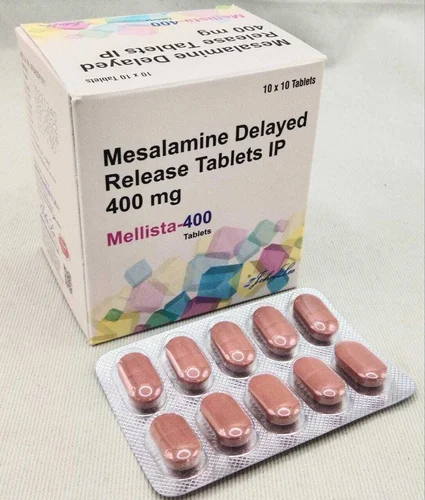
💊 5-Aminosalicylic Acid (Mesalazine) Tablet 400 mg – As Licensed
📄 Description:
5-Aminosalicylic Acid (5-ASA), also known as Mesalazine / Mesalamine, is an anti-inflammatory agent used in the treatment of inflammatory bowel diseases (IBD) such as ulcerative colitis and Crohn’s disease. It acts locally in the colon to reduce inflammation.
🧾 Prescription / Indications:
Prescribed for:
- Induction and maintenance of remission in ulcerative colitis
- Mild-to-moderate Crohn’s colitis (in some cases)
- Proctosigmoiditis and distal colitis
Typical adult dose:
- 400 mg to 800 mg 2–3 times daily (total 2.4–4.8 g/day depending on severity)
- Dosing may vary based on formulation and clinical response
Pediatric use:
- May be used with adjusted dose under specialist supervision
🔬 Nature:
- Form: Enteric-coated or modified-release tablets
- Strength: 400 mg
- Route: Oral
- Drug Class: Anti-inflammatory (Aminosalicylate)
🌟 Advantages:
- Targets inflammation locally in the gut
- Minimal systemic absorption, reducing systemic side effects
- Suitable for long-term maintenance therapy
- Reduces frequency and severity of flares in ulcerative colitis
📦 Common Packaging:
- Blister packs or bottles
- Usually packed in 10 or 15 tablets per strip
- Supplied in protective foil to maintain stability
🧊 Storage:
- Store at room temperature (15–25°C)
- Protect from moisture and heat
- Keep in original packaging until use
⚠️ Precautions:
- Caution in patients with:
- Kidney disease (monitor renal function regularly)
- Hypersensitivity to salicylates or sulfasalazine
- Liver impairment
- Rarely may cause:
- Blood disorders (e.g., agranulocytosis)
- Pancreatitis
- Nephrotoxicity
Common side effects:
- Headache
- Nausea
- Abdominal pain
- Flatulence
- Rash (rare)
👩⚕️ Patient Advice:
- Do not crush or chew the tablet (enteric coating is essential for release in colon)
- Take with or after food to minimize GI discomfort
- Inform your doctor about kidney or liver disease before starting
- Report symptoms like fever, rash, unusual fatigue, or dark urine
- Regular blood and kidney function tests may be required during long-term use