
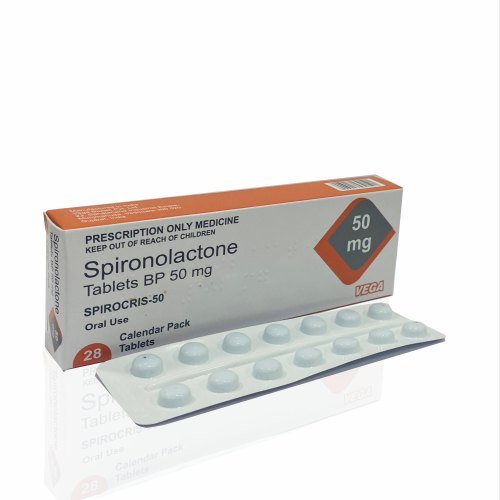
💊 Spironolactone Tablet 50 mg – As Licensed
📄 Description:
Spironolactone 50 mg tablet is a potassium-sparing diuretic and aldosterone antagonist used for the management of fluid retention, high blood pressure, heart failure, hyperaldosteronism, and conditions with excess androgen activity (like PCOS or hirsutism).
🧾 Prescription / Uses:
Indications:
- Congestive heart failure (edema, mortality reduction)
- Cirrhosis with ascites and edema
- Nephrotic syndrome
- Primary hyperaldosteronism
- Essential hypertension (especially resistant)
- Hypokalemia (treatment or prevention)
- Acne, hirsutism, PCOS (off-label)
Dosage (Adults):
- Typical range: 25 mg to 200 mg per day, in divided doses
- Starting dose for edema: 50–100 mg/day
- Dose adjusted per patient response and potassium levels
Route: Oral
🔬 Nature:
- Class: Potassium-sparing diuretic / Aldosterone antagonist
- Action: Inhibits aldosterone in the distal nephron, promoting sodium and water excretion and conserving potassium
- Onset: Slow (may take days for full effect)
🌟 Advantages:
- Reduces fluid overload without potassium loss
- Helps manage resistant hypertension
- Improves survival in heart failure patients
- Used in hormonal disorders involving androgen excess
- Helps prevent hypokalemia from other diuretics
📦 Common Packaging:
- Supplied in strips or blister packs
- Usually available in packs of 10 tablets per strip
- Also available in 25 mg, 100 mg dosages
🧊 Storage:
- Store below 25°C, in a dry place
- Protect from light and moisture
- Keep away from children
⚠️ Precautions:
Contraindications:
- Hyperkalemia
- Severe renal impairment
- Addison’s disease
- Known hypersensitivity
Caution in:
- Elderly patients
- Concurrent use of potassium supplements, ACE inhibitors, ARBs
- Monitoring needed for renal function and serum potassium
Possible Side Effects:
- Gynecomastia
- Menstrual irregularities
- Hyperkalemia
- GI disturbances
- Fatigue, dizziness
- Breast tenderness
👩⚕️ Patient Advice:
- Take with food to reduce nausea
- Avoid salt substitutes containing potassium
- Report signs of high potassium: muscle weakness, slow heartbeat, confusion
- Regular blood tests may be required
- Inform your doctor about all medicines, especially NSAIDs or antihypertensives
- Do not stop abruptly without medical advice