
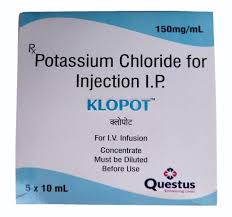
Here is the complete clinical profile for:
💉 Potassium Chloride Injection – 150 mg/mL
✅ DESCRIPTION
Potassium chloride (KCl) injection is a high-concentration intravenous electrolyte solution used to treat or prevent acute or severe hypokalemia (low potassium levels in the blood). It must always be diluted before IV administration and used under strict medical supervision.
🔢 STRENGTH
- 150 mg/mL = 2 mEq of potassium per mL
🌿 NATURE
- Sterile, non-pyrogenic solution for injection
- Electrolyte replacement therapy
- Concentrated solution (requires dilution)
📌 USES
- Treatment of moderate to severe hypokalemia, particularly when:
- Oral therapy is not possible
- Rapid correction is required
- Used in:
- Post-surgical patients
- Critically ill (ICU)
- Patients on diuretics, dialysis, or with fluid loss
🌟 ADVANTAGES
- Rapid correction of potassium deficit
- IV route for patients unable to take oral potassium
- Precise potassium dosing in emergencies
⚠️ PRECAUTIONS
- MUST be diluted before use — typically in normal saline or dextrose solutions
- Administer slowly via infusion pump (not IV push)
- Cardiac monitoring required if given rapidly or in large doses
- Use cautiously in:
- Renal impairment
- Cardiac disease
- Acidosis
❌ CONTRAINDICATIONS
- Hyperkalemia
- Renal failure with oliguria or anuria
- Untreated Addison’s disease
- Use with potassium-sparing diuretics (unless medically supervised)
💢 SIDE EFFECTS
- Local pain or phlebitis at injection site
- Arrhythmias or cardiac arrest (if infused too rapidly)
- Nausea, vomiting, or paresthesia
- Hyperkalemia — potentially life-threatening
📦 PACKING
- Available in ampoules or vials, commonly 10 mL or 15 mL
- Also available as additive vials for infusion bags
🧊 STORAGE
- Store below 25°C, protected from light
- Do not freeze
- Use only clear, particle-free solutions