
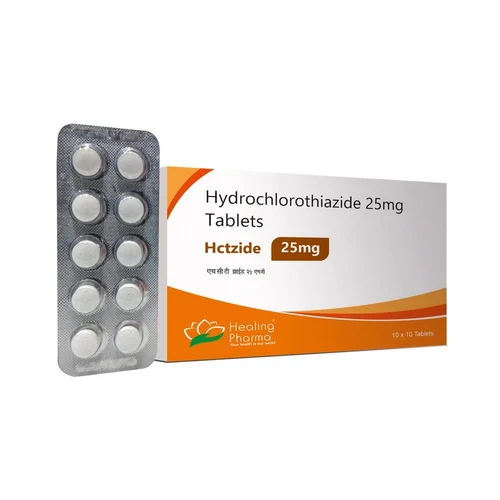
💊 Hydrochlorothiazide Tablet 25 mg – As Licensed
📄 Description:
Hydrochlorothiazide is a thiazide diuretic used for the treatment of hypertension, edema, and conditions associated with fluid retention. It works by reducing sodium reabsorption in the distal tubules of the kidney, leading to increased excretion of sodium, chloride, and water.
🧾 Prescription / Use:
Indications:
- Essential hypertension (alone or with other antihypertensives)
- Edema due to congestive heart failure, liver cirrhosis, or renal disease
- Calcium nephrolithiasis (prevention of recurrent kidney stones)
- Nephrogenic diabetes insipidus
Dosage:
- Adults: 25–100 mg per day, in single or divided doses
- Geriatric: Start at lower dose (12.5–25 mg)
- Children: 1–2 mg/kg/day in single or divided doses
Route: Oral
Frequency: Once or twice daily, preferably in the morning
🔬 Nature:
- Drug class: Thiazide diuretic
- Action: Inhibits Na⁺/Cl⁻ reabsorption in the distal tubule
- Effect: Diuresis, natriuresis, potassium loss, antihypertensive effect
🌟 Advantages:
- Effective BP control in mild to moderate hypertension
- Useful in combination with ACE inhibitors or ARBs
- Low cost, well tolerated
- Can help reduce risk of stroke and cardiovascular events
📦 Common Packaging:
- Blister strips or plastic bottles
- Each tablet contains 25 mg of Hydrochlorothiazide
- Packs of 10, 30, or 100 tablets
- Clearly labeled with dosage, batch number, manufacturing/expiry dates
🧊 Storage:
- Store at room temperature (15–30°C)
- Protect from moisture and light
- Keep in original packaging until use
⚠️ Precautions:
Contraindications:
- Anuria
- Severe electrolyte imbalance
- Sulfonamide hypersensitivity
Cautions:
- May cause hypokalemia, hyponatremia, hypomagnesemia
- Use carefully in patients with gout, diabetes, renal impairment, liver disease
- Monitor for orthostatic hypotension especially in elderly
Drug Interactions:
- NSAIDs may reduce efficacy
- Increased risk of lithium toxicity
- May potentiate effects of other antihypertensives
- May increase blood glucose and cholesterol levels
Monitoring:
- Electrolytes, renal function, BP, blood glucose, uric acid
👩⚕️ Patient Advice:
- Take dose in the morning to avoid frequent nighttime urination
- Report symptoms of dizziness, dry mouth, muscle cramps, palpitations
- Maintain adequate hydration
- May require potassium supplementation or potassium-rich diet
- Do not stop suddenly without medical advice
- May take a few weeks to show full BP-lowering effect