
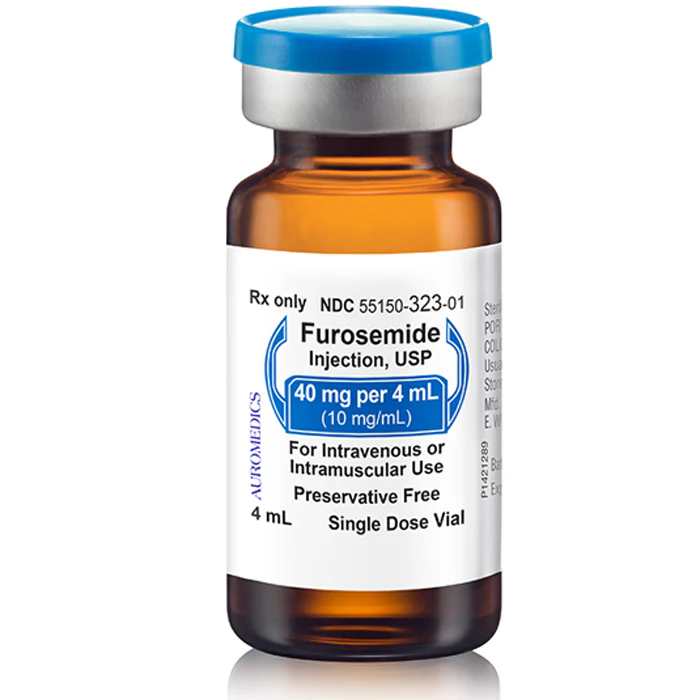
💉 Furosemide Injection 10 mg/mL – As Licensed
📄 Description:
Furosemide injection is a fast-acting loop diuretic used to treat acute fluid overload, hypertension, and emergency edema, especially when oral administration is not possible or rapid diuresis is needed.
🧾 Prescription / Use:
Indications:
- Acute pulmonary edema
- Edema due to heart failure, renal impairment, or liver cirrhosis
- Hypertensive crises
- Forced diuresis in poisoning
Dosage:
- Adults: 20–40 mg IV or IM initially, may be increased by 20 mg every 2 hours if needed
- Children: 0.5–1 mg/kg/dose IV, max 6 mg/kg/day
- Route: Intravenous (IV) or Intramuscular (IM)
- Frequency: Once or multiple times a day depending on response
Onset: Within 5 minutes IV
Peak: 30 minutes
Duration: 2 hours or more
🔬 Nature:
- Pharmacologic Class: Loop diuretic
- Mechanism: Inhibits sodium and chloride reabsorption in the ascending loop of Henle
- Effect: Powerful diuresis and sodium loss
🌟 Advantages:
- Rapid onset – critical in emergency settings
- Useful in patients unable to take oral medications
- Controlled dosing for hospital-based management
- Effective in renal failure when kidneys still produce urine
📦 Common Packaging:
- Ampoules: 2 mL (20 mg), 4 mL (40 mg), 10 mL (100 mg)
- Glass ampoules or plastic vials
- Labeled with batch no., expiry, and storage instructions
🧊 Storage:
- Store at 15–25°C
- Protect from light and freezing
- Do not use if solution is discolored or contains particles
- Use immediately after opening ampoule
⚠️ Precautions:
Contraindications:
- Anuria
- Severe hypokalemia or hyponatremia
- Hypovolemia, dehydration
- Sulfonamide hypersensitivity
Caution in:
- Patients with hypotension, diabetes, gout, hepatic encephalopathy
- Elderly – increased sensitivity
- Neonates – risk of nephrocalcinosis
Monitoring:
- Electrolytes: Na⁺, K⁺, Mg²⁺
- Renal function
- BP and urine output
- Risk of ototoxicity, especially with rapid IV injection
Drug Interactions:
- Increased toxicity with aminoglycosides, cisplatin
- Reduced efficacy with NSAIDs
- Potentiates antihypertensive effect
👩⚕️ Patient Advice:
- Used in hospital settings only; not for self-injection
- Report hearing changes, dizziness, muscle weakness, excess urination
- IV form may cause transient discomfort at injection site
- Will require close monitoring of blood tests and vitals
- Fluid intake may be restricted or guided during treatment