
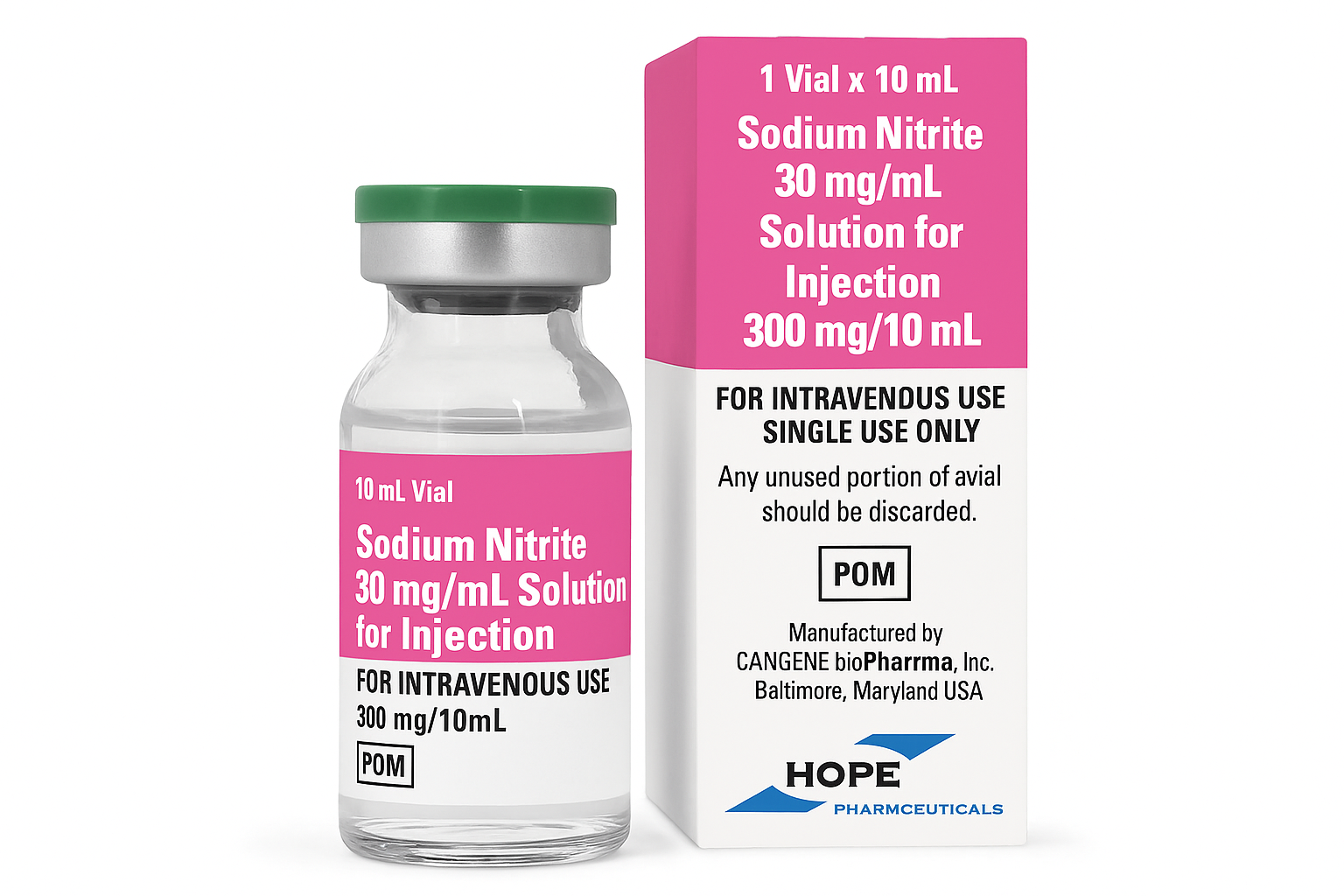
💉 Sodium Nitrite Injection 30 mg/mL
📌 Description:
Sodium nitrite injection is a sterile aqueous solution used as an antidote for cyanide poisoning. It acts by inducing methemoglobinemia, which binds to cyanide and prevents it from interfering with cellular respiration.
- Concentration: 30 mg/mL
- Color: Clear, colorless to slightly yellow solution
- Route: Intravenous (IV)
📜 Prescription:
- Prescription-only medication
- Used as part of a cyanide antidote kit, usually with Sodium Thiosulfate and sometimes Hydroxocobalamin.
- Dose is based on body weight and clinical severity:
- Adults: ~300 mg (10 mL of 30 mg/mL solution) IV over 2–4 minutes.
- Pediatric doses vary (usually 0.2 mL/kg).
🌿 Nature:
- Inorganic compound
- Vasodilator and oxidizing agent
- Converts hemoglobin to methemoglobin, which binds cyanide
✅ Advantages:
- Acts rapidly in cyanide toxicity.
- Methemoglobin formed binds cyanide, freeing cytochrome oxidase to resume normal cellular respiration.
- Life-saving in acute, confirmed or suspected cyanide exposure.
⚠️ Precautions:
- Methemoglobinemia risk: Excess dosing can impair oxygen delivery.
- Use cautiously in:
- Patients with anemia, G6PD deficiency, or cardiopulmonary disease.
- Monitor for:
- Hypotension
- Headache, dizziness, syncope
- Excess methemoglobinemia
- Continuous monitoring of vitals, methemoglobin levels, and oxygenation required.
🧊 Storage:
- Store at 20°C to 25°C (68°F to 77°F)
- Do not freeze.
- Protect from light and excessive heat
- Use only clear solutions; discard if discolored or precipitated.
📦 Common Packaging:
- Supplied in glass ampoules or vials
- Volume: typically 10 mL per vial (300 mg)
- Labeled with concentration, lot number, and expiration date
- Often included in cyanide antidote kits
👨⚕️ Patient Advice
- This injection is used in emergencies for cyanide poisoning.
- Given through a vein under strict medical supervision.
- May cause temporary dizziness, low blood pressure, or headache.
- It works by neutralizing the poison inside the body.
- You may feel tired or short of breath after; this usually passes.
- Tell doctors if you have any history of anemia or heart/lung disease.
- You may need blood tests after treatment to check oxygen levels.
- Stay under observation for a few hours after injection.