
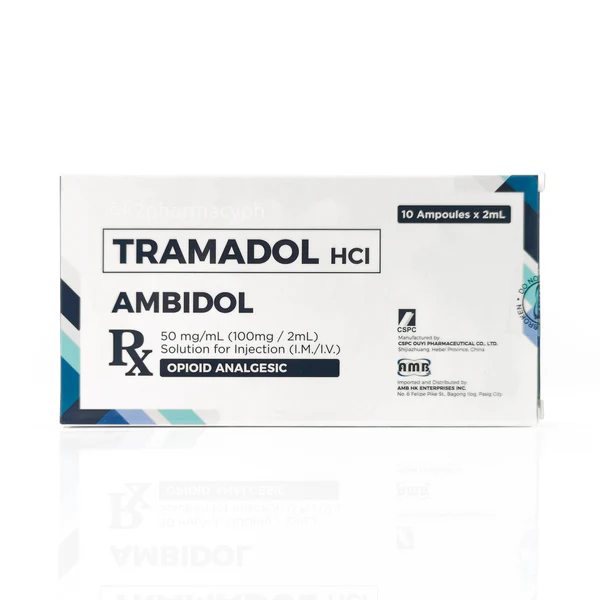
💉 Tramadol Injection 50 mg/mL
📘 Description:
Tramadol Injection 50 mg/mL is a centrally acting synthetic opioid analgesic used for the management of moderate to severe pain, particularly in settings where oral administration is not feasible. It is typically supplied as a clear, sterile solution in ampoules for intravenous (IV), intramuscular (IM), or subcutaneous (SC) injection.
🔬 Nature / Pharmacologic Class:
- Class: Opioid analgesic (Schedule H/Narcotic)
- Mechanism of Action:
- Binds to μ-opioid receptors
- Inhibits reuptake of norepinephrine and serotonin
- Alters pain perception in the central nervous system (CNS)
🩺 Prescription / Medical Uses:
| Indication | Purpose |
|---|---|
| Postoperative pain | Short-term analgesia |
| Trauma-related pain | Moderate to severe acute pain |
| Pain during medical procedures | Minor surgeries, labor |
| Pain unresponsive to oral meds | When oral route not tolerated |
✅ Advantages:
- Fast onset of action (IV onset: 5-10 min)
- Less risk of respiratory depression compared to morphine
- Dual action: opioid and monoaminergic activity
- Useful in ambulatory and emergency settings
⚠️ Precautions:
- Use with caution in patients with:
- Seizure disorders
- Respiratory disorders (COPD, asthma)
- Liver or kidney dysfunction
- Avoid alcohol and other CNS depressants
- Not recommended in:
- Children <12 years
- Post-tonsillectomy in pediatric patients
- Patients with acute intoxication (alcohol, sedatives)
💉 Dosage & Administration:
| Route | Adult Dose | Max Dose |
|---|---|---|
| IM/IV/SC | 50–100 mg every 4–6 hours | Max: 400 mg/day (adults) |
| Elderly / renal impairment | Lower dose/frequency recommended | Max: 300 mg/day |
IV should be given slowly over 2–3 minutes to reduce side effects (e.g., dizziness, nausea).
📦 Storage Guidelines:
- Store below 25°C, protect from light
- Do not freeze
- For single use only; discard unused portion