
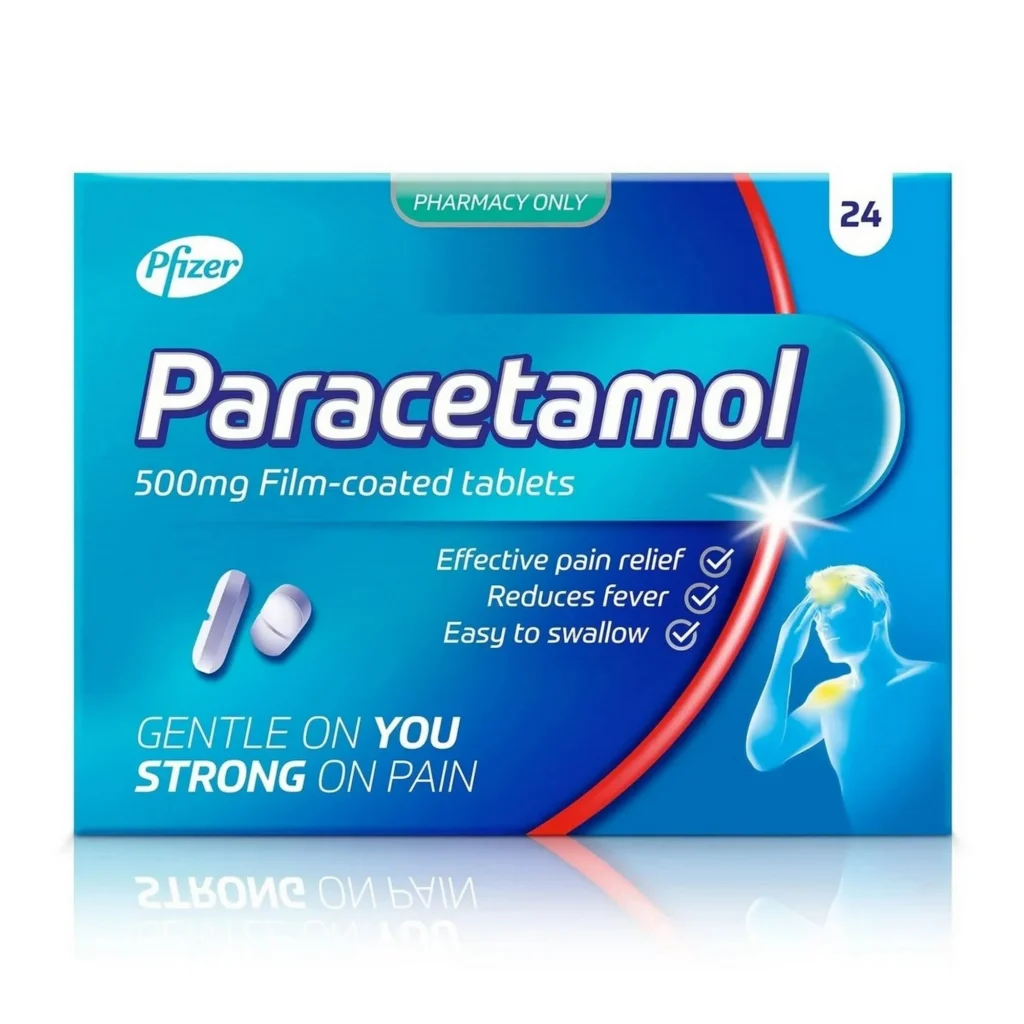
Paracetamol Tablet 500 mg
📘 Description:
Paracetamol (also known as acetaminophen) is one of the most widely used analgesic (pain-reliever) and antipyretic (fever-reducer) medications. The 500 mg tablet is the standard adult dose for managing mild to moderate pain and fever.
🔬 Nature / Mechanism of Action:
Paracetamol acts centrally in the brain to:
- Inhibit prostaglandin synthesis, particularly in the hypothalamus, to reduce fever.
- Elevate pain threshold without significant anti-inflammatory effect (unlike NSAIDs).
It does not cause gastric irritation or affect platelet function like NSAIDs.
🩺 Prescription / Uses:
| Indication | Purpose |
|---|---|
| Fever (any cause) | Viral, bacterial, post-vaccination |
| Headache | Including tension-type headache |
| Toothache | Dental infections or post-extraction |
| Muscle pain | Minor injuries, overexertion |
| Back pain | Mild to moderate |
| Osteoarthritis | As part of multi-drug approach |
| Post-surgical pain | For mild to moderate pain relief |
✅ Advantages:
- Safe for most patients, including children and elderly
- No gastric irritation (unlike NSAIDs)
- No effect on bleeding time or platelets
- Can be used in pregnancy (under medical advice)
- Available in multiple forms: tablet, syrup, injection, suppository
⚠️ Precautions:
- Liver disease (hepatotoxicity risk)
- Alcohol use – increases risk of liver damage
- Overdose can cause acute liver failure
- Caution in patients with chronic malnutrition or on enzyme inducers (e.g., some TB or epilepsy drugs)
📏 Typical Dosage:
| Age Group | Dose | Frequency |
|---|---|---|
| Adults | 500–1000 mg | Every 4–6 hours (max 4g/day) |
| Children (6–12 yrs) | 250–500 mg | Every 6 hours |
💡 Do not exceed 4,000 mg/day in adults (i.e., max 8 x 500 mg tablets)
📦 Storage:
- Store at room temperature (15–25°C)
- Protect from moisture and direct sunlight
- Keep out of reach of children