
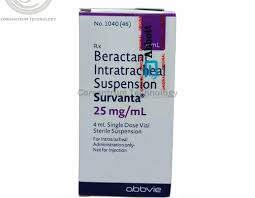
Here is the detailed information for Surfactant Suspension for Intratracheal Instillation (as licensed):
🫁 Surfactant Suspension (For Intratracheal Instillation)
🔹 Description
A sterile, pulmonary surfactant preparation used for intratracheal instillation in premature infants to reduce surface tension in the lungs and improve breathing.
💡 Uses
- Treatment of neonatal respiratory distress syndrome (RDS).
- Prophylactic administration in premature infants at risk of RDS.
- Improves lung compliance and oxygenation.
- Reduces mortality and pulmonary complications in neonates.
⚗️ Nature
- Mixture of phospholipids (mainly dipalmitoylphosphatidylcholine) and surfactant proteins.
- Can be natural (extracted from bovine or porcine lungs) or synthetic.
- Administered directly into the lungs via endotracheal tube.
✅ Advantages
- Rapid improvement in lung function and oxygenation.
- Reduces the need for mechanical ventilation.
- Decreases risk of pneumothorax and chronic lung disease.
- Proven to lower infant mortality from RDS.
⚠️ Precautions
- Administer only under the supervision of trained neonatal professionals.
- Ensure proper placement of the endotracheal tube.
- Monitor for:
- Bradycardia
- Oxygen desaturation
- Pulmonary hemorrhage
- Endotracheal tube blockage
- Use aseptic technique during administration.
💉 Prescription Information
- Form: Suspension for intratracheal use
- Route: Intratracheal instillation via endotracheal tube
- Dose: Varies based on weight (typically 100–200 mg/kg body weight)
- Repeat doses: May be given every 6–12 hours if needed (up to 3 total)
📦 Packaging
- Comes in sterile vials (single-use only)
- Usually contains 50 mg/mL to 80 mg/mL phospholipid concentration
- Vial sizes: 1.5 mL, 3 mL, 6 mL, etc., depending on brand
❄️ Storage
- Store at 2°C to 8°C (refrigerated)
- Do not freeze
- Protect from light
- Use immediately after opening
- Discard any unused portion